How Do Toilets Work Without Power?
You don’t need power for most toilets to flush because they rely on gravity and water pressure, not electricity. When you push the handle, it lifts a flapper that lets water rush from the tank into the bowl, carrying waste away.
The tank refills using water flowing through a float-controlled valve. So, as long as your water supply is on, the toilet works just fine without any power.
If you want to handle longer outages or have a smart toilet, you’ll find useful info ahead. Let’s explore how toilets keep working even when the power goes out!
Key Takeaways
- Gravity-flush toilets use water and gravity to flush without electricity or pumps.
- Toilet tanks refill automatically via water pressure, not requiring power.
- You can also flush manually by pouring water into the toilet bowl or tank.
- Pump-assisted toilets rely on electric pumps and may fail during power outages.
- But if you store water before outages, you can still flush and keep things sanitary without power.
Understanding Gravity-Flush Toilets
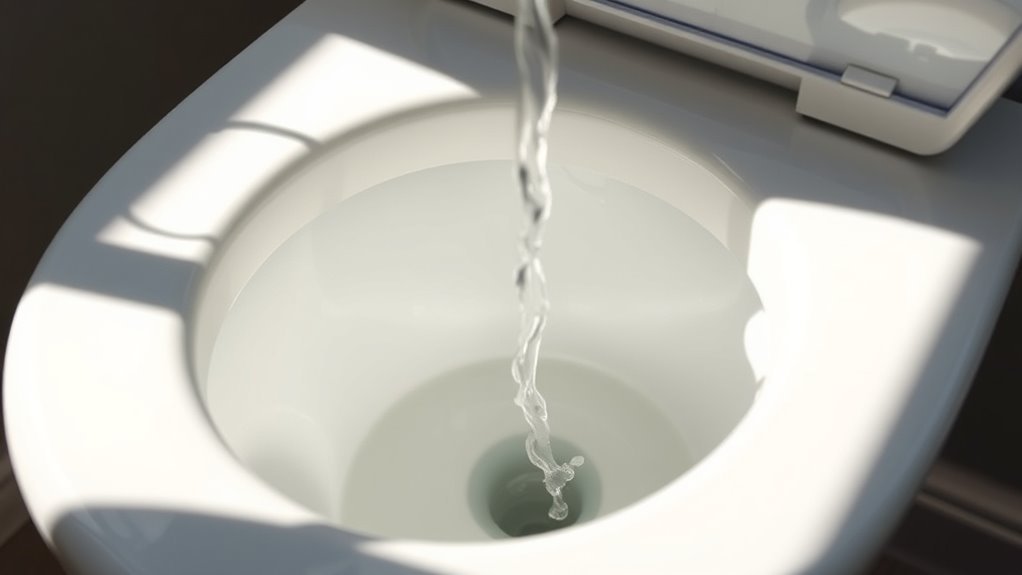
When you press the handle on a gravity-flush toilet, it lifts a flapper that lets water rush from the tank into the bowl. This water carries waste away using only the force of gravity. Gravity-flush toilets operate without electricity, relying on this simple yet effective mechanism.
After flushing, a float mechanism opens the inlet valve to refill the tank with water, preparing it for the next use. Because these toilets don’t depend on electrical power, they continue working normally during power outages. That makes them pretty reliable in such situations.
Their design depends solely on gravity and the water supply to function. So, you don’t need to worry about losing flushing capability when the electricity goes out. This simplicity makes gravity-flush toilets a practical choice for many households.
The Role of Water Supply in Toilet Flushing
While gravity-flush toilets rely on stored water to operate without electricity, the water supply itself plays a significant role in keeping your toilet ready to flush. Most toilets receive water from municipal systems through pressurized pipes, which usually stay active during power outages.
This steady water supply guarantees your tank refills automatically, allowing gravity to flush waste efficiently. However, if your toilet depends on a well with electric pumps, a power loss means no refill, and no flush.
In emergencies, you can perform a manual flush by adding water directly into the tank or bowl, using stored or emergency water supply. This simple action restores enough water for gravity to flush properly, keeping your toilet functional even when power’s out.
Differences Between Gravity-Flush and Pump-Assisted Toilets
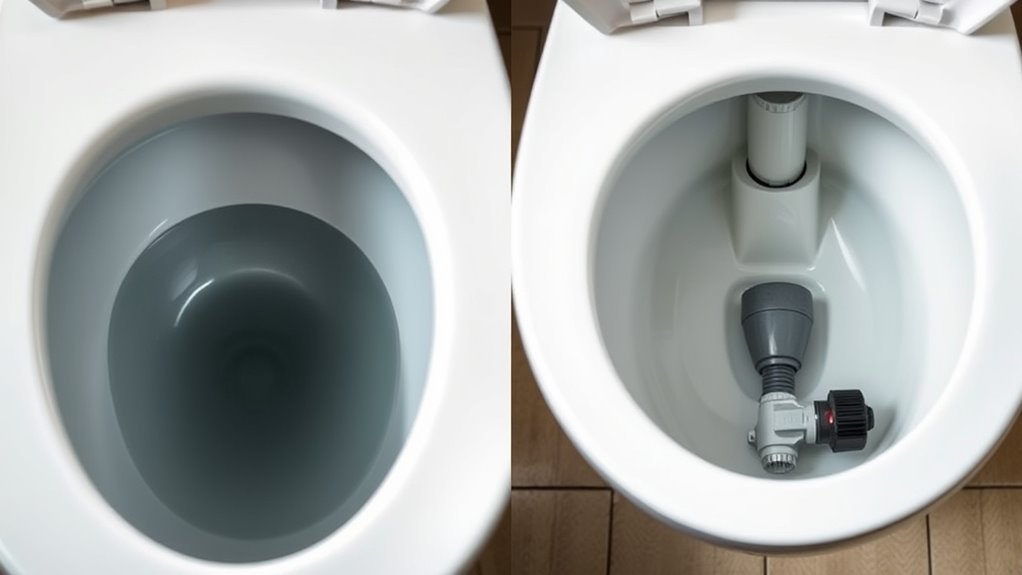
Although both gravity-flush and pump-assisted toilets serve the same basic purpose, they operate quite differently.
Gravity-flush toilets rely on gravity and water pressure alone, so they keep working during power outages if connected to municipal water. You can also perform a manual flush by pouring water into the tank or bowl.
Pump-assisted toilets, however, use electric pumps to move water, meaning they won’t flush without power.
| Feature | Gravity-Flush | Pump-Assisted |
|---|---|---|
| Power Dependency | No | Yes |
| Manual Flush | Yes (pour water) | No |
| Operation During Outage | Works if water available | Does not function |
Understanding these differences helps you choose a toilet that fits your needs, especially during power loss. So, if you want something reliable even when the power goes out, gravity-flush might be your best bet.
Managing Toilet Use During Extended Power Outages
When the power goes out, you’ll need to plan how to store water for flushing, especially if your home relies on a well system. Filling your toilet tank with emergency water before an outage lets you flush manually when needed.
Using these water storage and manual flushing techniques helps keep your bathroom functional and sanitary during extended outages. It’s a simple step that can make a big difference when the power’s down.
Water Storage Strategies
If you expect a power outage, filling your toilet tank with stored water lets you flush manually when electricity is gone. You can use buckets, rain barrels, or even pool water as emergency sources to refill the tank or bowl. This water storage approach guarantees you maintain sanitation and reduce health risks during extended outages.
| Water Source | Typical Capacity | Approximate Flushes Supported |
|---|---|---|
| Well Reservoir | 10-50 gallons | 7-39 flushes |
| Stored Containers | Varies | Depends on size |
| Rain Barrels | 50+ gallons | 35+ flushes |
Keeping a supply of stored water ready guarantees you can perform a manual flush anytime without power. It’s a simple step that really pays off when the lights go out. So, having that water on hand? Definitely worth it.
Manual Flushing Techniques
Having a supply of stored water sets you up to handle toilet flushing without power. Manual flushing means pouring water directly into the toilet bowl or tank to trigger the flush mechanism.
Before a power outage, fill the toilet’s back tank with stored water so you can flush easily when needed. During an extended power outage, you can also use buckets or water saved from a bathtub for manual flushing.
For gravity-flush toilets, about 1-2 gallons poured into the bowl or tank usually works well. To stay prepared, practice manual flushing techniques regularly.
This way, you won’t be caught off guard during emergencies, and you’ll confidently manage toilet use without relying on electricity or plumbing systems.
Smart Toilets and Power Dependency
How do smart toilets maintain functionality during power outages? When the power goes, you might worry about losing all features, but smart toilets usually have a manual flush option that still works.
Here’s what you can expect:
- Manual flush remains operational, letting you flush without electricity.
- Electronic features like heated seats, bidets, and automatic lids stop working since they need power.
- Some models include backup batteries to keep essential functions, like flushing, active during outages.
Practical Tips for Maintaining Toilet Functionality Without Electricity
While smart toilets offer convenience with electronic features, their reliance on power means you’ll want to prepare for times when electricity isn’t available. Gravity-flush toilets are your best bet—they work without electricity by using water stored in the tank to create flushing power.
To maintain toilet functionality without electricity, keep the tank filled before outages so you can perform a manual flush by pouring water directly into the bowl or tank. If your water supply is interrupted, use buckets or stored water from sources like bathtubs or pools to flush.
Avoid pump-assisted toilets during outages since they depend on electric pumps. Regularly maintaining a backup water supply ensures you can keep toilets functional and sanitary during extended power failures.
Frequently Asked Questions
Is It Okay to Shower When the Power Is Out?
Yes, you can shower during a power outage if you have a gas or propane heater, stored hot water, or solar backup.
Just take quick showers to conserve water and energy until power returns.
Can I Still Use the Bathroom With No Power?
Yes, you can still use the bathroom without power! Like a pioneer with a chamber pot, you’ll manage by flushing gravity toilets or manually pouring water to flush pump-assisted ones.
Keep wipes handy for longer outages. It’s all about being prepared and a little creative!
How Do Power Toilets Work?
Power toilets use electricity to operate features like automatic flushing and heated seats. When you use one, sensors detect your presence, triggering motors and valves to flush and activate bidet functions seamlessly.
It’s pretty neat how everything works together. The sensors make sure the toilet knows exactly when to start and stop, so you don’t have to do a thing. Plus, the heated seats add a nice touch of comfort, especially in cold weather.
When You Flush a Toilet, Does It Use Electricity?
No, when you flush a standard toilet, it doesn’t use electricity. It relies on gravity to move water from the tank to the bowl.
Conclusion
You might be surprised to learn that over 90% of toilets worldwide rely solely on gravity to flush, meaning they don’t need power at all. So, even during power outages, your gravity-flush toilet keeps working just fine.
By understanding how your toilet operates and preparing with simple tips, you can avoid hassles when electricity’s out. Remember, staying informed helps you stay comfortable—no matter what’s happening with the power.
Knowing how toilets work without power can really save the day during unexpected outages. Gravity-flush toilets are designed to function independently of electricity, using water flow and gravity to clear the bowl. So, whether the power is out due to a storm or maintenance, your toilet will keep running smoothly. Preparing ahead and understanding this simple mechanism ensures you won’t face bathroom troubles when the lights go out.