
How to Flush Your Toilet When Power Is Out
When the power goes out, flushing your toilet can become a real challenge, especially if it relies on an electric pump or a well water system. Knowing how to flush your toilet manually during a power outage is essential for maintaining hygiene and comfort in your home.
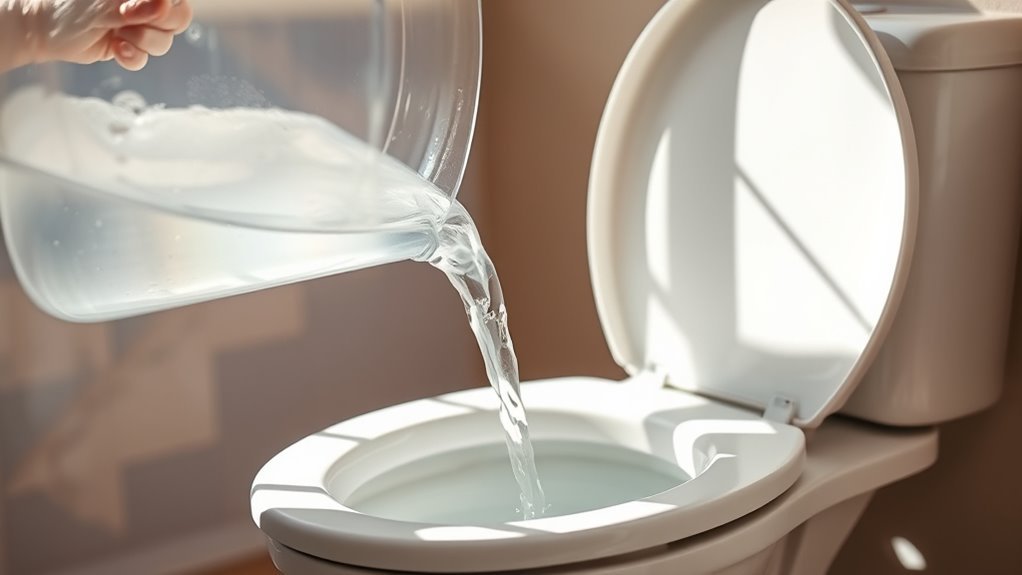
To flush manually, pour 1-2 gallons of water quickly into the toilet bowl, mimicking the flow of a normal flush. You can use stored water from buckets, bathtubs, or other clean water sources.
Gravity-fed toilets usually still work without power, but electric toilets won’t. It’s a good idea to keep extra water handy and learn how to manage it smartly.
This helps avoid backups and sanitation issues during outages.
Key Takeaways
- Pour 1-2 gallons of water quickly into the toilet bowl to manually flush without electricity.
- Use stored water from buckets, bathtubs, or bottled sources for emergency flushing.
- Avoid relying on electric pumps or toilets, which won’t work during power outages.
- Keep water storage accessible and refill regularly for preparedness during extended outages.
- Remove the toilet tank lid carefully to ensure proper manual flushing technique.
Understanding Water Supply Systems and Their Impact on Flushing
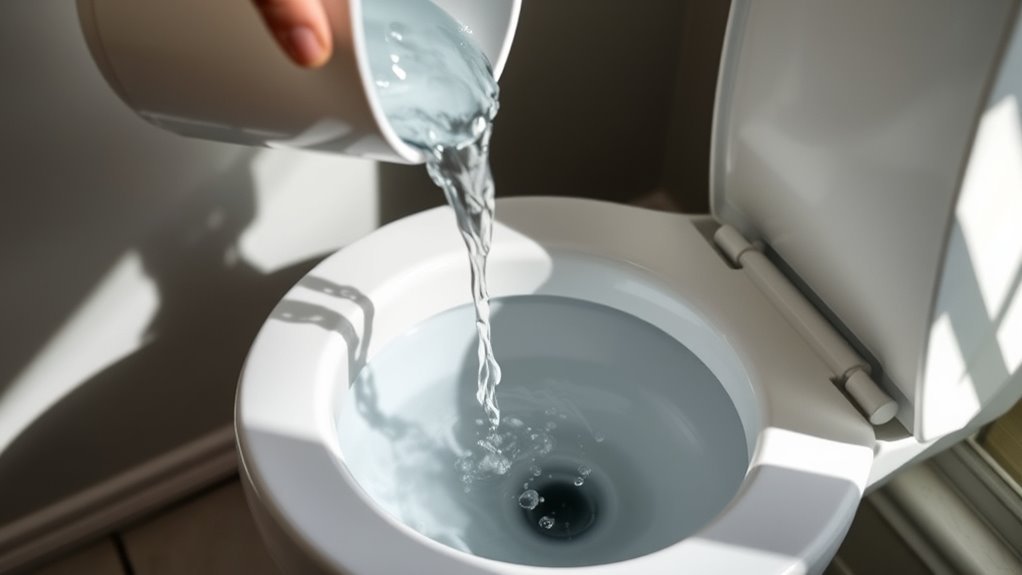
Although power outages can disrupt many household functions, your ability to flush the toilet largely depends on the type of water supply system you have. If you’re connected to municipal water systems, chances are good you’ll still get water during a power outage because these systems use gravity-fed water towers that don’t rely on electricity.
This means waste removal continues smoothly. However, if your home uses well water, a power outage can halt your electric pump, preventing the well from refilling the tank and limiting flushing.
Gravity septic systems usually function fine as long as water is available, but those with electric pumps may face backups. In cases without water pressure, you might need manual flushing to dispose of waste effectively until power returns.
Effects of Power Outages on Toilet Functionality
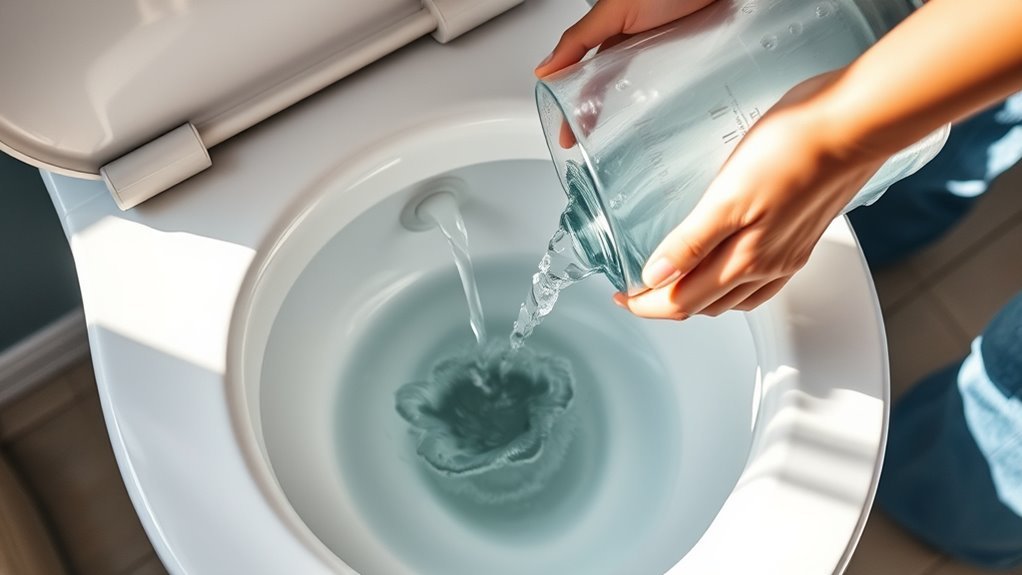
When the power goes out, your toilet’s ability to flush depends on its design and water source.
If you have an electric toilet or a pump system, you won’t be able to flush without power. Knowing manual flushing methods can help you manage sanitation until electricity returns.
Power Dependency Impact
Because many toilets rely on electricity to operate pumps, ejectors, or electronic flush mechanisms, power outages can substantially disrupt their functionality.
During a power outage, gravity flush toilets connected to municipal water supply usually work fine since they don’t need electricity. However, if your water comes from a well, the well pump won’t run without power, and the pressure tank won’t refill. That limits your toilet’s flushes to the water stored in the tank.
Toilets with electric ejector systems or smart electronic flushes won’t operate at all during outages. In these cases, you can’t rely on the usual mechanisms and must consider alternatives like a manual flush.
Understanding your toilet’s power dependency helps you prepare for flushing challenges during a power outage. It’s good to know what to expect so you’re not caught off guard.
Manual Flushing Options
If your toilet depends on electric pumps or ejector systems, a power outage can leave you without a working flush. In such cases, manual flushing is your best option.
You can pour a bucket of water—about 1 to 2 gallons—quickly into the toilet bowl to mimic the force of a regular flush. This sudden influx of water pushes the waste through the trap and into the sewer line.
Gravity-based toilets usually keep working if the water supply is intact, but electric systems won’t flush unless you manually add water. To prepare, store water in buckets or containers so you can fill the bowl or tank during outages.
This simple manual flushing method guarantees you manage waste effectively until power returns. It’s a handy trick to keep in mind when the lights go out!
Manual Flushing Techniques During Power Loss
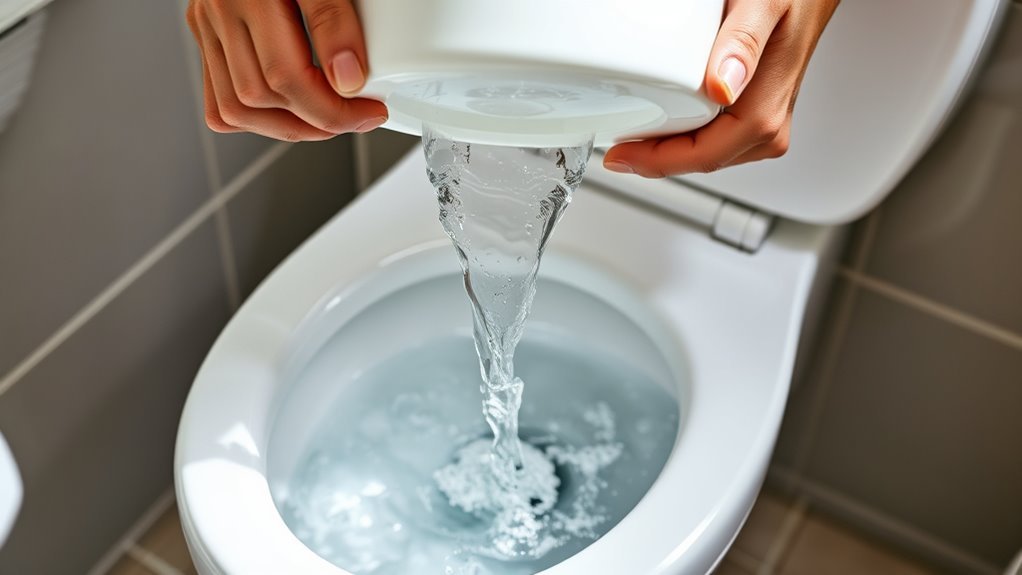
When the power goes out, you can manually flush your toilet by pouring water from a clean bucket directly into the bowl or tank.
Be mindful to use water wisely, conserving any stored supplies for essential needs. Using just the right amount of water guarantees effective flushing without wasting your reserves.
Using Bucket Water
Although power outages can disrupt your usual toilet flushing, you can still maintain sanitation by manually flushing with bucket water.
This simple manual flush technique relies on gravity to move waste without electricity. Here’s how to do it effectively:
- Fill a clean bucket with 1 to 2 gallons of safe water from a bathtub or bottled source.
- Carefully remove the toilet tank lid to avoid spills or damage.
- Pour the water quickly and steadily into the toilet bowl’s center to mimic a flush.
- Ensure drainage pipes are clear for proper flow.
Using bucket water during a power outage helps you flush without electricity. Plus, it keeps your toilet functioning until normal service resumes.
Conserving Stored Water
Using bucket water to flush your toilet during a power outage works well, but you’ll want to manage your stored water carefully to make it last. Prioritize water conservation by using only the amount needed—usually 1 to 2 gallons per manual flush.
Always fill your buckets from a safe source like bottled water or your bathtub in advance as part of your outage preparedness. Store extra water in large containers to ensure you have enough for multiple flushes.
When pouring, do so steadily and quickly to mimic a normal flush and maintain sanitation. Avoid hot or contaminated water to prevent damage to your toilet and keep the system clean.
Efficient water usage guarantees your stored water supports sanitation throughout the outage without waste. So, take it easy and use just what you need!
Managing Water Resources for Emergency Flushing
Since power outages can disrupt your toilet’s flushing system, you should store enough water—around 1.6 to 2 gallons per flush—in bathtubs or large containers. This way, you can manually flush when needed.
Managing water resources effectively lets you flush without power using gravity for manual flush. Here’s how to prepare:
- Store clean water in accessible containers as emergency resources.
- Use alternative water sources like rainwater, melted snow, or bottled water if your supply runs low.
- Avoid hot water to prevent damage and ensure water is clean to prevent contamination.
- Regularly check and refill your water storage to stay ready for extended outages.
Risks of Wastewater Backup and Sanitation Concerns
When the power goes out and your toilet can’t flush normally, waste starts to build up in the bowl. This increases the risk of sewage backing up if you don’t manage it manually.
Wastewater backup is especially risky in homes with electric pumps. In those cases, sewage overflow can flood basements or living spaces.
Unflushed waste not only causes foul odors but also threatens sanitation by encouraging bacterial growth. So, try to avoid excessive flushing during outages to prevent sewage backup in pipes.
Proper manual flushing helps maintain sanitation and reduces health hazards. It’s a simple step that can save you a lot of trouble.
| Risk Factor | Impact |
|---|---|
| Wastewater backup | Sewage overflow, property damage |
| Unflushed waste | Foul odors, bacterial growth |
| Sewage backup | Costly cleanup, health risks |
Preparing Your Home for Toilet Use During Power Failures
Although power outages can disrupt your normal toilet use, you can keep things running smoothly by preparing your home in advance. To guarantee effective manual flush during outages, follow these steps:
First, store 1-2 gallons of backup water in your bathtub or containers for gravity flush use. It’s a good idea to have this water ready before the power goes out.
Also, keep bottled water or melted snow handy as an alternative water supply. This can come in handy if your backup water runs low.
Next, learn how to operate your toilet’s manual flush or add water directly to the bowl. Knowing this ahead of time saves you from scrambling during an outage.
Finally, maintain a clear plumbing system to prevent clogs and support overflow prevention. Keeping things flowing smoothly means fewer problems when the power’s out.
Frequently Asked Questions
Can I Flush My Toilet While the Power Is Out?
Yes, you can flush your toilet without power if it’s gravity-fed. That’s because gravity does all the work to move the waste down the drain. So no electricity needed there.
But if your toilet relies on electric pumps, it’s a different story. You’ll have to pour water manually into the bowl to make it flush. Or, better yet, have a backup power source ready just in case.
How to Force a Toilet to Flush?
To force your toilet to flush, quickly pour about a gallon of water from waist height into the bowl. This creates enough force to trigger siphoning, pushing waste through the drain effectively without needing to lift the handle.
It’s a handy trick when the handle isn’t working or you want to flush quickly. Just make sure to pour steadily and from a good height to get the best effect.
How Many Times Can You Flush Without Power?
You can flush once or twice, like a dripping faucet slowly emptying a sink.
Without power, your manual water supply limits flushes, so use them wisely.
You don’t want to risk overflow or damage to your toilet system.
Can You Flush a Toilet With No Power on Well Water?
You can flush a toilet with no power on well water only if the tank has stored water.
Otherwise, the pump won’t refill it, so you’ll need to manually add water or wait for power restoration.
Conclusion
When the power goes out, don’t panic—you can still flush your toilet by understanding how your water system works and using manual techniques like pouring water directly into the bowl.
Think of it like sending a telegram in a digital age; it’s old-fashioned but effective.
By managing water carefully and preparing ahead, you’ll avoid sanitation issues and keep your home comfortable, even when modern conveniences vanish without warning.
Staying ready and calm is key. Knowing how to flush your toilet when the power is out ensures you maintain hygiene and comfort during outages.
So, keep some water handy and remember these simple steps to flush your toilet manually—it’s an easy way to handle any power failure without stress.


