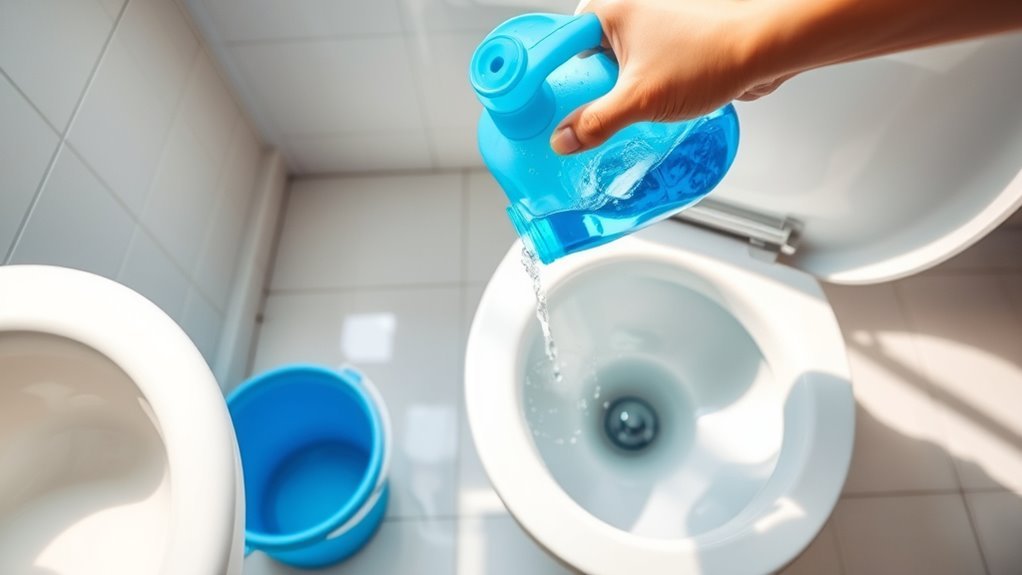
How You Can Flush Your Toilet When Power Is Out
If your toilet relies on an electric pump or grinder, power outages can stop it from flushing. This can be pretty inconvenient, especially during unexpected blackouts. But don’t worry—you can still flush manually by pouring 1-2 gallons of water quickly into the bowl to create a siphon. It’s a simple trick that works like a charm.
Using stored water from bathtubs or collected rain can help conserve your water resources during these times.
Gravity-fed toilets usually work without power, which is a relief. However, it’s smart to prepare backup water and know how your system operates before the power goes out.
Keep reading to discover easy and practical ways to manage toilet flushing when the power is out. You’ll feel prepared and confident no matter what happens!
Key Takeaways
- Manually flush toilets by pouring 1-2 gallons of water swiftly into the bowl to create siphoning action. This quick pour helps mimic the usual flush.
- Use stored water, rainwater, or melted snow as alternative water sources for manual flushing. It’s handy to have some water saved up just in case.
- Identify if your toilet relies on electric pumps or municipal gravity feed to know flushing options during outages. Knowing this can save you a lot of hassle.
- Conserve water by limiting flushes and storing extra water in containers or bathtubs before power loss. Every bit of saved water counts when the power’s out.
- Consider backup generators for electric septic or grinder pump systems to maintain flushing and waste removal. It’s a solid investment for peace of mind during outages.
Understanding Water Supply Systems During Power Outages
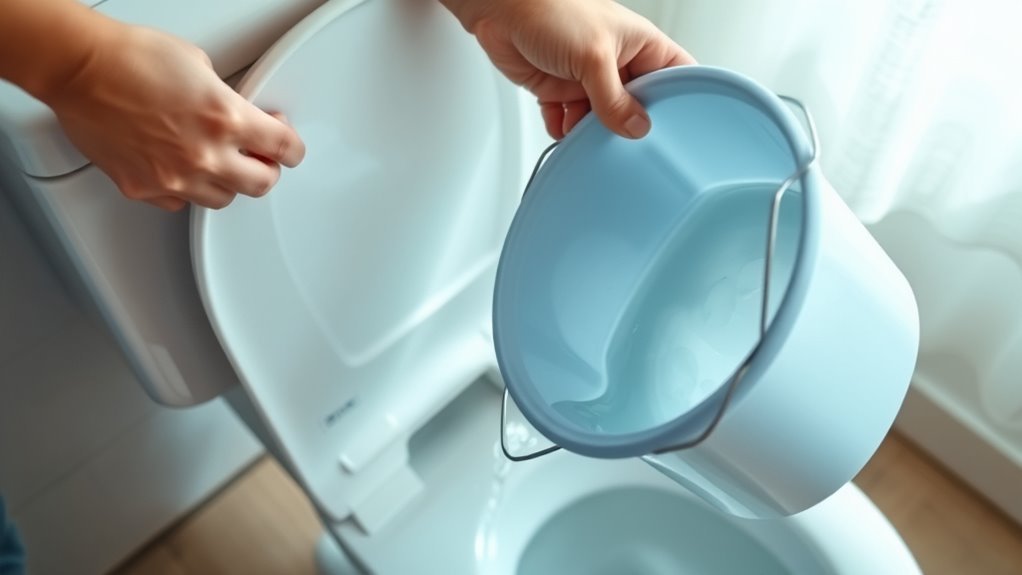
Although municipal water systems usually keep running during power outages thanks to gravity and water towers, your home’s water supply might not be as dependable if you rely on a well with an electric pump.
Municipal water systems benefit from gravity, allowing water to flow even without electricity. However, if you have a private well, your well pump depends entirely on power to push water into your home.
When the electricity goes out, that pump stops working, cutting off your water supply. This means your toilet tanks won’t refill after flushing.
Understanding this difference is vital for managing water use during outages. Knowing whether your system depends on gravity or a well pump helps you prepare and find ways to flush your toilet when power isn’t available.
Identifying Toilets That Depend on Electricity to Flush
Knowing how your water supply works helps you figure out if your toilet needs electricity to flush. Toilets relying on gravity and municipal water usually work fine during a power outage.
However, those with electric pumps, grinders, or electronic flush mechanisms depend on power to operate. Below is a quick guide to help you identify if your toilet requires electricity to flush:
| Toilet Type | Power Dependency |
|---|---|
| Gravity-fed (municipal) | No |
| Electric pump/grinder | Yes |
| Below sewer line with powered waste transfer | Yes |
| Well water system | Sometimes (depends on pump) |
If your toilet uses an electric flush or a powered waste system, it won’t flush properly without power. Knowing this helps you prepare for flushing during outages.
Manual Flushing Techniques for Power Failures
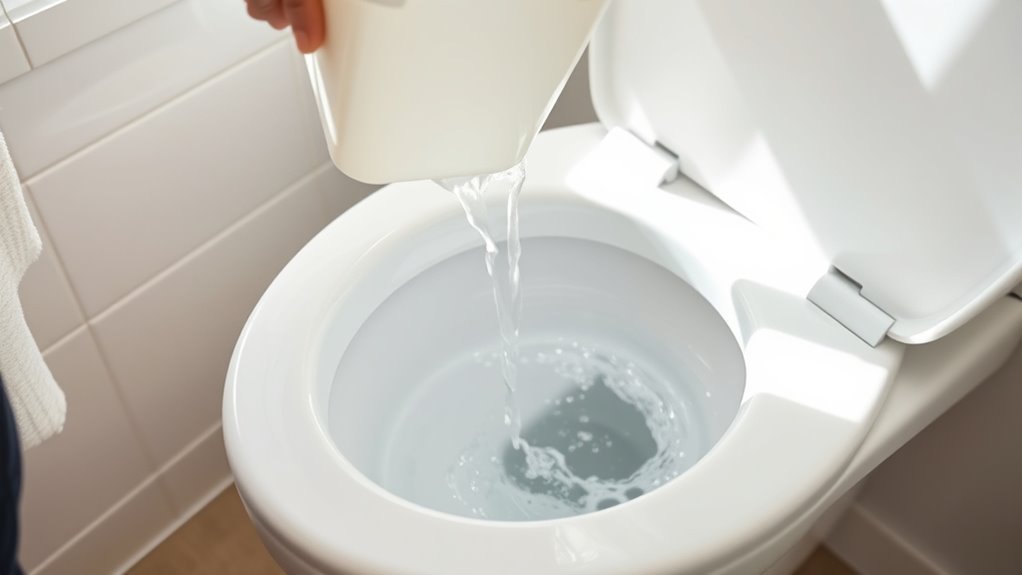
When the power goes out, you can flush your toilet manually by quickly pouring a bucket of water into the bowl to trigger the siphon. Make sure to fill your bucket with 1-2 gallons of water.
Consider using non-drinking sources like rainwater or melted snow to save your tap water. Repeat this process carefully to avoid overflow while keeping water use efficient.
Bucket Flushing Method
If the power goes out, you can still flush your toilet by manually pouring water into the bowl using a bucket. This method depends on gravity to create enough force to flush waste effectively.
Here’s how to do it:
- Fill a clean bucket with 1 to 2 gallons of water from stored sources like rain barrels or melted snow to save drinking water.
- Lift the toilet lid and quickly pour the water directly into the bowl.
- Pour swiftly to generate the siphoning effect necessary for flushing.
- Repeat as needed but keep an eye on your water supply during extended outages.
Using this bucket flushing method ensures your toilet functions even without power. It helps maintain hygiene and comfort when it matters most.
Water Conservation Tips
Pouring water manually to flush your toilet during a power outage works well, but managing your water use carefully can stretch your supplies further. To practice water conservation, use a clean bucket filled with 1-2 gallons of water and pour it quickly into the bowl to create a siphon effect that mimics a regular flush.
Limit flushes to one per tank refill to avoid depleting your water supply too fast. Collect water from alternative sources like rain barrels, pools, or melted snow to save drinking water for essential needs.
Before an outage, store emergency water in large containers or bathtubs so you have enough for manual flushes. By following these steps, you’ll conserve water effectively while keeping your toilet functional during power failures.
Managing Water Resources Effectively When Power Is Out
Though power outages can disrupt water supply, you can manage your water resources effectively to keep your toilet functioning. If you rely on a private well, your electric pump won’t work, so you must use water already in the pressure tank.
Municipal systems use gravity to move waste, so toilets usually flush without power. To optimize waste removal and maintain water pressure, follow these steps:
- Fill your pressure tank fully before outages to ensure water for flushing.
- Limit toilet flushes to conserve your stored water.
- Use alternative water sources like rainwater or melted snow for manual flushing.
- Collect water in large containers or bathtubs to supplement your supply during extended outages.
Preventing Waste Backup in Electric Septic Systems
Your electric septic system depends on power to move waste, so outages can quickly cause backups. To prevent this, you should consider backup power solutions like a generator to keep the pump running.
Taking these steps helps avoid costly overflows and keeps your system functioning smoothly during power failures. It’s a smart move to stay ahead of any potential problems.
Electric Pump Dependency
Because electric septic systems depend on power to operate their grinder pumps, a power outage can quickly cause waste to back up and overflow into your home. You can’t flush without electricity because the pump moves waste against gravity to the septic tank.
To prevent backups, consider these steps:
- Understand your system’s reliance on power for waste movement.
- Avoid flushing during outages to reduce strain on the system.
- Use gravity-based alternatives if available, as they don’t require power.
- Regularly inspect electrical components to ensure they function when needed.
Backup Power Solutions
When power goes out, having a backup power solution can keep your electric septic system running smoothly and prevent costly waste backups. Installing a whole-house generator ensures continuous power to your septic pumps and valves, maintaining waste flow during outages.
You can also use portable generators or solar backup power solutions to keep essential components like grinder pumps operational. An uninterruptible power supply (UPS) provides short-term power, bridging the gap until your main backup activates.
Make sure to properly size your generator to handle the septic system’s load to avoid failures. Regularly testing and maintaining your backup system guarantees it’ll work when you need it most, preventing sewage backups and keeping your home functional even during extended power outages.
Using Backup Power Solutions to Maintain Toilet Functionality
Although power outages can disrupt many household functions, you can keep your toilet flushing smoothly by using reliable backup power solutions. When the power goes, having the right setup lets you flush a toilet without electricity interruptions.
Here are four effective options:
- Install a whole-home generator to power pumps and plumbing systems automatically.
- Use portable backup power stations with enough wattage (like 24kW) to run essential pumps.
- Upgrade to hybrid or smart toilets with manual flush features for use during outages.
- Employ battery-based energy storage systems to provide emergency power for waste removal.
Remember to maintain and test your backup power regularly to guarantee it works when you need it most. It’s always better to be prepared than caught off guard!
Frequently Asked Questions
What Happens if You Flush the Toilet While the Power Is Out?
If you flush your toilet during a power outage, it might not work properly. You could cause backups or overflow if it relies on electric pumps.
Gravity toilets usually flush fine, but powered ones won’t. So, it’s good to know what type you have before the power goes out.
Does Hot Water Work When Power Is Out?
About 90% of electric water heaters stop working when power’s out. You won’t have hot water unless your system uses gas with a pilot light, solar power, or a generator backup.
How Many Times Can You Flush Without Power?
You can flush your toilet about 2-3 times without power, depending on your tank’s water level. Once that water’s used up, you’ll need to add water manually or wait for the power to come back on.
Can You Flush a Toilet With No Power on Well Water?
You can flush a toilet with no power on well water, but only once using the tank’s stored water—like relying on a horse-drawn carriage today.
After that, you’ll need to manually refill the tank to flush again. It’s a bit old-school, but it works in a pinch!
Conclusion
When the power goes out, don’t let a simple toilet flush become a headache. Did you know that over 40% of homes rely on electric pumps for their water supply? Knowing manual flushing methods and managing water carefully can keep things running smoothly.
With a little preparation, you can avoid backup issues and stay comfortable until the power’s back. Remember, a bit of knowledge goes a long way in keeping your bathroom functional during outages.
So, when you face a power outage, try flushing your toilet manually by pouring a bucket of water directly into the bowl. This trick helps mimic the flushing action without electricity. Also, conserve water by limiting usage so your supply doesn’t run dry. Being prepared with these manual flushing techniques ensures you can maintain a clean and functional bathroom even when the power is out.