
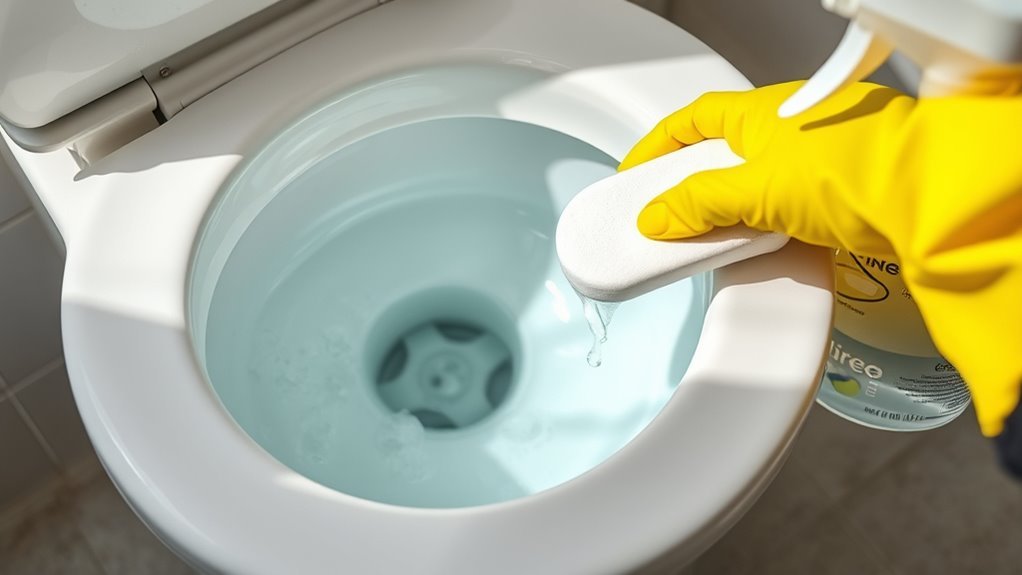
How to Do Remove Limescale From Toilet Bowl in 7 Easy Steps
To remove limescale from your toilet bowl, start by gathering gloves, a toilet brush, and a limescale cleaner like vinegar or a commercial product. These items will make the job easier and safer for you.
Next, drain some water from the bowl to expose the limescale spots better.
Then, apply the cleaner directly onto those stubborn areas and let it sit for at least 30 minutes. This waiting time helps break down the buildup effectively.
After that, scrub thoroughly with the toilet brush to lift off the limescale.
Once done, flush to rinse everything away.
If some spots remain, don’t worry—just repeat the process until the bowl is clean.
Remember, keeping up with regular cleaning helps prevent limescale from building up again.
If you want tips for tackling tough stains or advice on long-term care, keep exploring for more helpful advice.
Key Takeaways
- Drain the toilet bowl water and protect hands with gloves before starting the cleaning process.
- Apply a limescale remover or natural vinegar directly on deposits and let it sit for at least 30 minutes.
- Scrub affected areas thoroughly with a stiff-bristled toilet brush to break down limescale residues.
- Flush to rinse away loosened deposits and repeat treatment if limescale persists.
- Maintain regular cleaning with preventive products and weekly scrubbing to avoid future buildup.
Gather Necessary Tools and Protective Gear
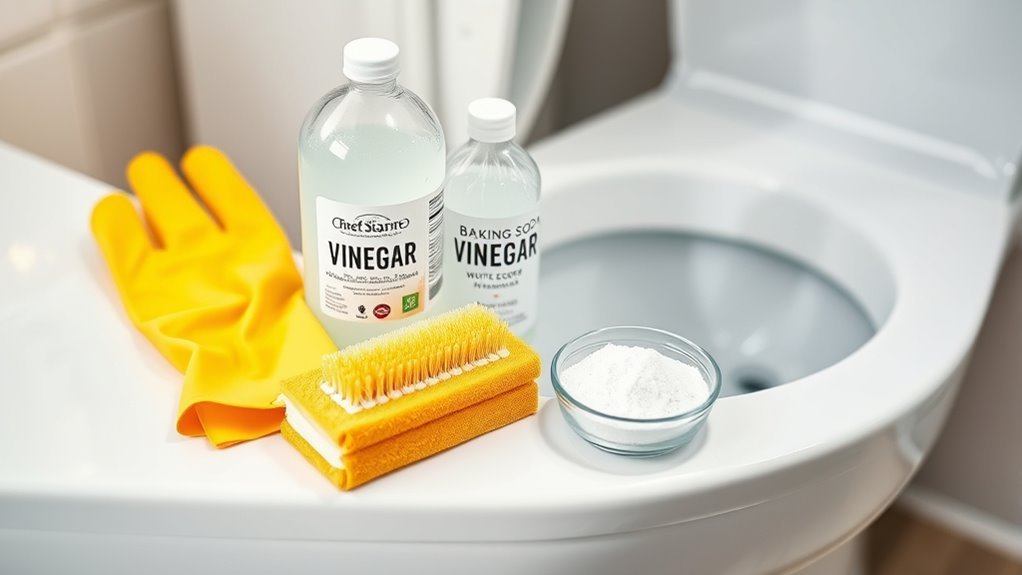
Before you begin removing limescale from your toilet bowl, make sure you gather all the necessary tools and protective gear to work safely and efficiently. Start by wearing rubber gloves and safety goggles to shield your skin and eyes from harsh cleaning chemicals.
Next, collect essential tools like a toilet brush, a sponge or rag, and a bottle of commercial limescale remover or natural cleaning solutions such as vinegar. Keep a bucket nearby to hold these cleaning solutions and to rinse your tools as needed.
For tougher deposits, prepare additional tools like pumice stones or sharp blades, but use them with caution. Finally, guarantee good ventilation by opening windows or turning on the exhaust fan to keep the air fresh while you clean.
Drain Excess Water From the Toilet Bowl
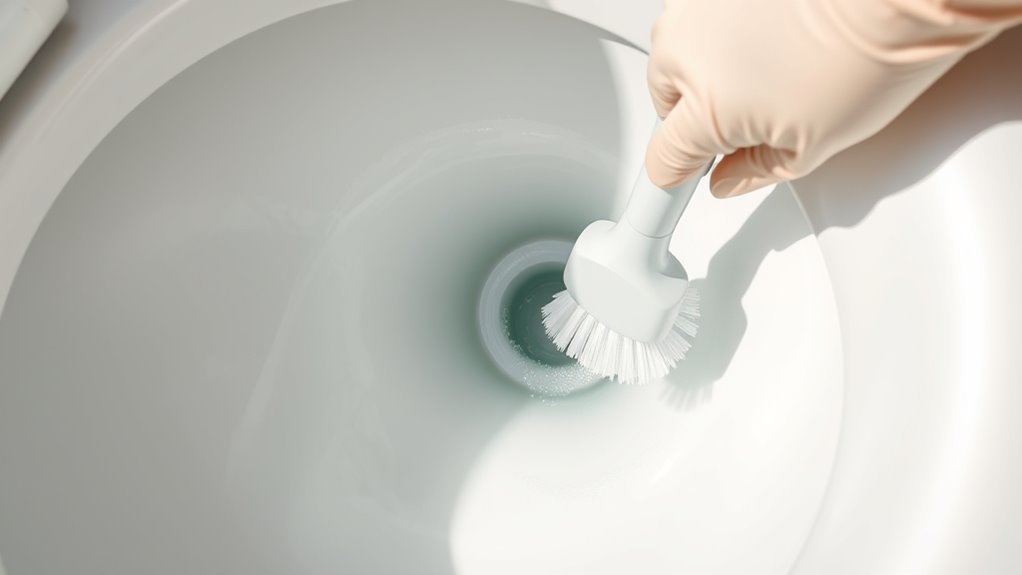
Although it might seem counterintuitive, you should first pour about half a gallon of water into the toilet bowl to raise the water level before flushing. This helps create enough pressure to drain excess water effectively.
Next, push the handle to flush, which will empty the water from the bowl completely. If the water level remains high or the bowl is partially filled, use a plunger to assist in pushing out any leftover water.
For stubborn residual moisture, insert a sponge or an absorbent cloth to soak up what’s left. Ensuring you empty the water entirely is vital because lower water levels improve the effectiveness of your limescale removal process.
Draining excess water prepares the surface for the best possible cleaning results.
Apply Limescale Remover to Affected Areas
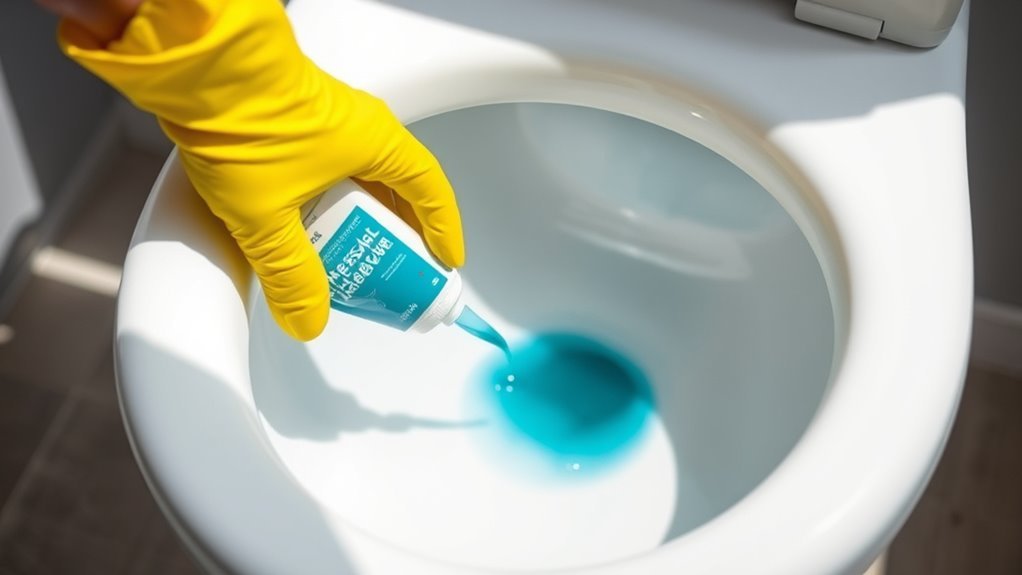
Choose a strong limescale remover designed for toilets, like Domestos Zero Limescale or Harpic Bleach. Apply it directly to all affected areas, making sure to reach under the rim and along the waterline.
Let it sit for at least 30 minutes to break down the buildup effectively before scrubbing. This gives the remover enough time to work its magic and makes scrubbing much easier.
Choosing Effective Products
When tackling limescale in your toilet bowl, applying the right remover directly to the affected areas makes all the difference. You can choose from chemical cleaners like Domestos Zero Limescale or Harpic Bleach, which are designed to dissolve tough deposits effectively.
Alternatively, natural options such as white vinegar work well by softening buildup when poured over the limescale. Use a Toilet Bowl Cleaner with a spray or applicator to ensure even coverage, especially around the waterline and stubborn spots.
Always follow the product instructions for contact time, usually between 10 to 30 minutes. If limescale persists, don’t hesitate to reapply the product up to two or three times weekly for thorough removal.
Selecting the right product guarantees you tackle limescale efficiently without damage. So, pick what suits you best and say goodbye to those stubborn spots!
Application Techniques
Applying the limescale remover properly guarantees it tackles the deposits effectively. To get the best results, you need to apply the remover directly to all affected areas, guaranteeing full coverage.
Then, let it sit so it can break down the buildup thoroughly. Here’s how to apply the remover efficiently:
- Pour or spray the remover on stubborn stains, especially under the rim and along the waterline.
- Use a brush or cloth to spread the remover evenly across deposits.
- Allow the remover to sit for 15-30 minutes for concentrated treatment.
- Reapply if limescale remains after the first round, giving it time to work again.
Following these steps helps ensure the remover penetrates and dissolves limescale effectively. It’s simple but makes a big difference!
Let the Cleaner Sit to Break Down Deposits
Although it might be tempting to scrub right away, you’ll get better results by letting the cleaning solution sit in the toilet bowl for at least 30 minutes. This pause allows the cleaner to break down deposits, especially in stubborn areas under the rim and along the waterline.
For tough buildup, let it sit overnight. Cover the bowl with a lid or cloth to prevent evaporation and boost effectiveness.
Resist the urge to scrub immediately; this waiting step makes it easier to clean the toilet thoroughly afterward.
| Step | Duration | Notes |
|---|---|---|
| Apply cleaner | 5 minutes | Target under rim and waterline |
| Let it sit | 30 minutes | Normal buildup |
| Let it sit | Overnight | Stubborn areas |
| Cover bowl | Entire sitting | Prevent evaporation |
| Avoid scrubbing | Until after sit | Maximize cleaner’s power |
Scrub Thoroughly With a Toilet Brush
Choose a stiff-bristled toilet brush with a wide head to reach every corner, especially under the rim where limescale hides.
Before scrubbing, make sure you’ve applied your cleaning solution to loosen deposits. Then, use firm, circular motions to tackle stubborn buildup and restore your bowl’s shine.
Choose Proper Brush
When tackling limescale in your toilet bowl, picking a stiff-bristled, angled brush makes a big difference. Your choice of cleaning tools directly affects how effectively you remove stubborn mineral deposits.
Focus on these key points when selecting your toilet brush: opt for firm, non-deformed bristles that can scrub limescale without damaging the porcelain surface. Choose an angled brush head designed to reach under the rim and along the waterline.
Make sure the brush is in good condition, avoiding worn or misshapen bristles that reduce cleaning power. After each use, rinse the brush thoroughly and store it in a dry, ventilated holder to prevent bacteria buildup.
Using the right toilet brush guarantees efficient, thorough cleaning and protects your toilet’s finish. So, don’t underestimate the power of a good brush!
Scrub Under Rim
To effectively remove limescale, you’ll want to scrub thoroughly under the toilet rim using a stiff-bristled brush. First, apply vinegar or a limescale remover under the rim.
Then, use the brush in circular motions to dislodge buildup, focusing on visible deposits. Angle the brush to reach tight spots and apply firm pressure without damaging the porcelain.
Finally, flush to rinse away loosened limescale and repeat if needed. It might take a couple of tries to get it all gone, but keep at it!
| Step | Action | Tip |
|---|---|---|
| 1 | Apply cleaning agent | Use vinegar or lime juice |
| 2 | Scrub under rim with brush | Circular motions |
| 3 | Target stubborn spots | Angle brush, firm pressure |
| 4 | Rinse with flush | Flush to remove residue |
| 5 | Repeat if necessary | Ensure all limescale is gone |
Flush and Rinse the Toilet Bowl
Although it may seem simple, flushing the toilet before cleaning helps remove loose debris and freshen the bowl. After your initial flush, pour about half a gallon of water into the toilet bowl to ensure it’s adequately filled for effective cleaning.
Flushing before cleaning clears debris and topping up water ensures the bowl is ready for a thorough scrub.
Then, use your toilet brush to scrub the entire bowl, paying special attention to the waterline and any stained areas. Once you’ve scrubbed thoroughly, flush again to rinse away loosened limescale and cleaning residues.
You might need to repeat the rinse process to remove all stubborn deposits.
- Start with a full flush to clear debris
- Add extra water to fill the bowl
- Scrub thoroughly using a toilet brush
- Flush again to rinse and remove residue
This method ensures a cleaner, fresher toilet bowl.
Repeat Treatment and Maintain Regular Cleaning
Since limescale can be stubborn, you’ll need to reapply your chosen treatment every few days to break down buildup effectively. After each application, scrub the bowl thoroughly with a toilet brush to remove loosened deposits.
Consistency is key, so make regular cleaning a habit—aim to clean your toilet at least once a week to stop new limescale from forming. Alongside this, consider incorporating preventive measures like Harpic toilet blocks in the water tank to control limescale continuously.
Sticking to this routine helps keep your toilet hygienic and prevents reaccumulation. By combining repeated treatment with regular cleaning and preventive steps, you’ll maintain a sparkling toilet bowl and avoid tough limescale issues in the future.
Frequently Asked Questions
How to Remove Very Hard Limescale From a Toilet Bowl?
You should pour equal parts white vinegar and baking soda into the bowl. Let it sit overnight so the mixture can work its magic.
Then, gently scrub with a pumice stone. It’s pretty effective for breaking down that hard limescale.
For stubborn buildup, you might need to step it up a notch. Carefully apply brick acid, but make sure to lower the water level first so the acid has better contact with the stains.
What Is the Most Powerful Toilet Bowl Limescale Remover?
You know what they say: “Strike while the iron is hot.” The most powerful remover is a strong acid like hydrochloric or phosphoric acid-based cleaners.
Just wear gloves and ventilate well to tackle tough limescale safely and effectively. It’s all about being careful and prepared!
How Do You Remove Heavy Calcium Deposits From a Toilet Bowl?
You soak the deposits overnight with vinegar or citric acid, then gently scrub with a pumice stone.
For stubborn buildup, use a commercial limescale remover and repeat soaking and scrubbing until the calcium dissolves completely.
Does Coca-Cola Remove Limescale From the Toilet?
Yes, Coca-Cola can remove limescale thanks to its phosphoric acid. Pour it into the bowl, let it sit for an hour, then scrub.
It works, but stronger cleaners might be more effective for tough buildup. So, if the limescale is really stubborn, you might want to try something a bit stronger.
Conclusion
Now that you know how simple it is to remove limescale from your toilet bowl, why put up with stubborn stains any longer? By following these easy steps, you’ll restore your toilet’s cleanliness and sparkle in no time.
Just remember to stay consistent with regular cleaning to keep limescale at bay. With a little effort, your bathroom will feel fresher and more inviting every day.
Ready to get started? Tackling limescale buildup doesn’t have to be a chore. Keep up with these tips, and your toilet bowl will stay clean and shiny for longer.


