How Do You Remove Rust Stains From a Toilet Bowl Easily?
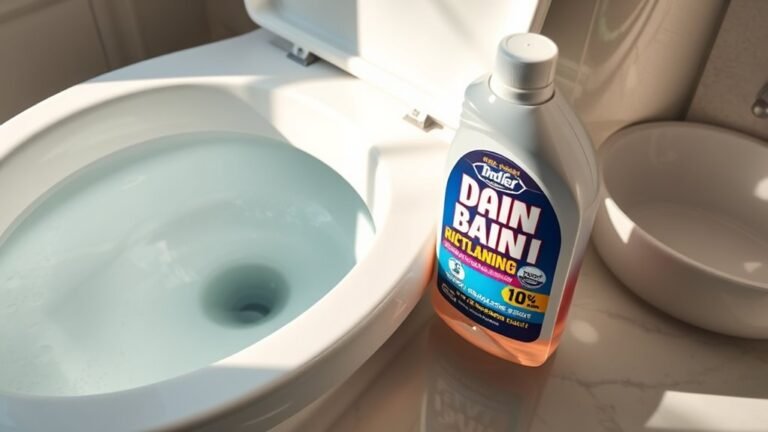
You can easily remove rust stains from your toilet bowl by applying a rust remover like Lysol Lime & Rust Gel or Iron Out tablets. These products are designed to tackle tough rust stains effectively, making your toilet look clean and fresh again.
First, turn off the water to prevent more from entering the bowl while you work. Then, apply the rust remover directly to the stain and let it sit for about 5-10 minutes. This allows the product to break down the rust without harsh scrubbing.
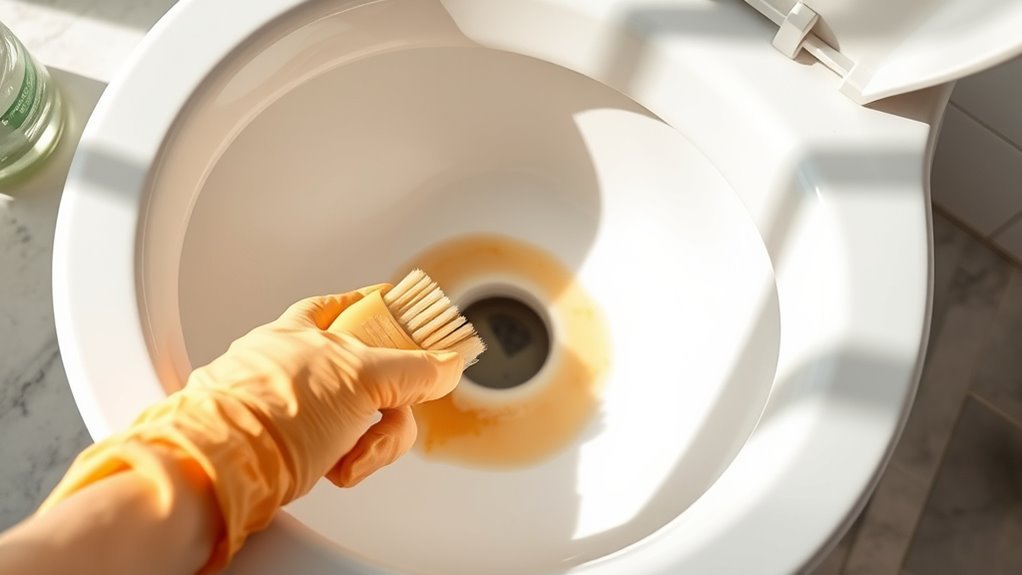
Next, gently scrub the stained areas with a toilet brush or a pumice stone. Be careful to avoid damaging the porcelain surface as you lift the rust away.
When you’re done, flush the toilet to rinse everything clean.
If the stains are stubborn, don’t worry—just repeat the process until the rust is gone. Keep reading to discover more tips for tackling tougher rust stains and preventing them from coming back in the future.
Key Takeaways
- Use rust removers like Lysol Lime & Rust Clinging Gel or Iron Out tablets for effective stain breakdown and removal. These products really help tackle those stubborn rust marks.
- First, turn off the toilet water supply and flush to empty the bowl. Then, apply the rust remover directly onto the stains.
- Let the product sit for about 5-10 minutes so it can really penetrate the rust. After that, scrub gently with a toilet brush or a pumice stone.
- Make sure to rinse thoroughly by flushing multiple times. If the rust stains are stubborn, just repeat the treatment and scrubbing.
- To keep rust from coming back, clean your toilet regularly. Using water softeners and fixing any plumbing leaks quickly also helps prevent rust buildup.
Common Causes of Rust Stains in Toilet Bowls
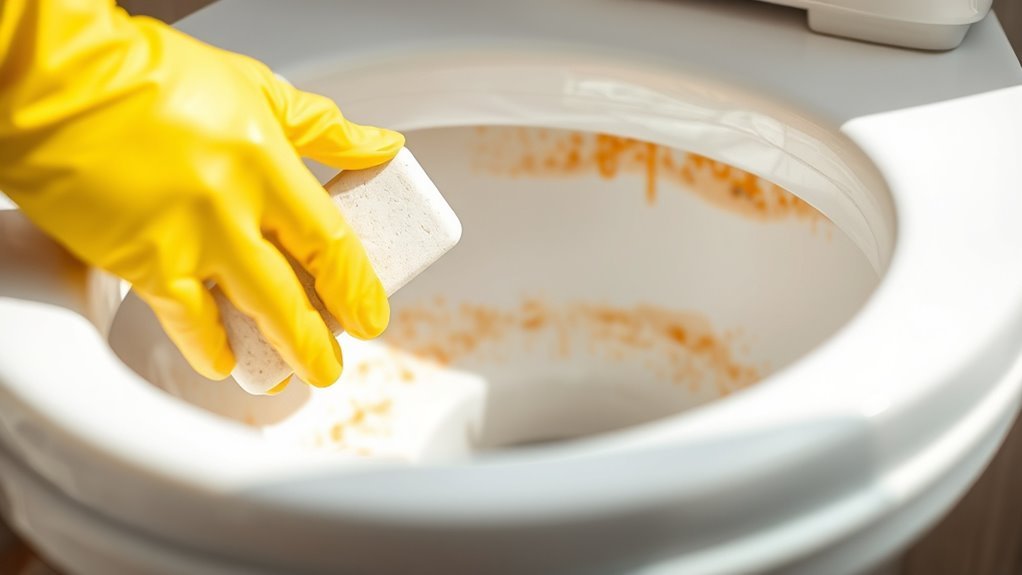
Although you might not notice it right away, rust stains in your toilet bowl often stem from high iron levels in well water. When iron-rich water hits oxygen, it forms reddish-orange rust deposits that cling stubbornly to your bowl.
Rust stains in toilets often come from high iron in well water reacting with oxygen.
If your water feels hard or leaves a new account of mineral buildup, that’s a sign iron and other metals are at work. Iron bacteria can also contribute, creating discoloration that regular cleaning won’t fix.
To tackle these stains, you might let it sit longer after applying any cleaning solution. Understanding these causes helps you address the problem at its root, preventing future stains and saving you time scrubbing.
Recognizing the role of your water quality is key to effective rust stain removal. So, knowing what’s going on with your water can make all the difference!
Choosing the Right Cleaning Products for Rust Removal
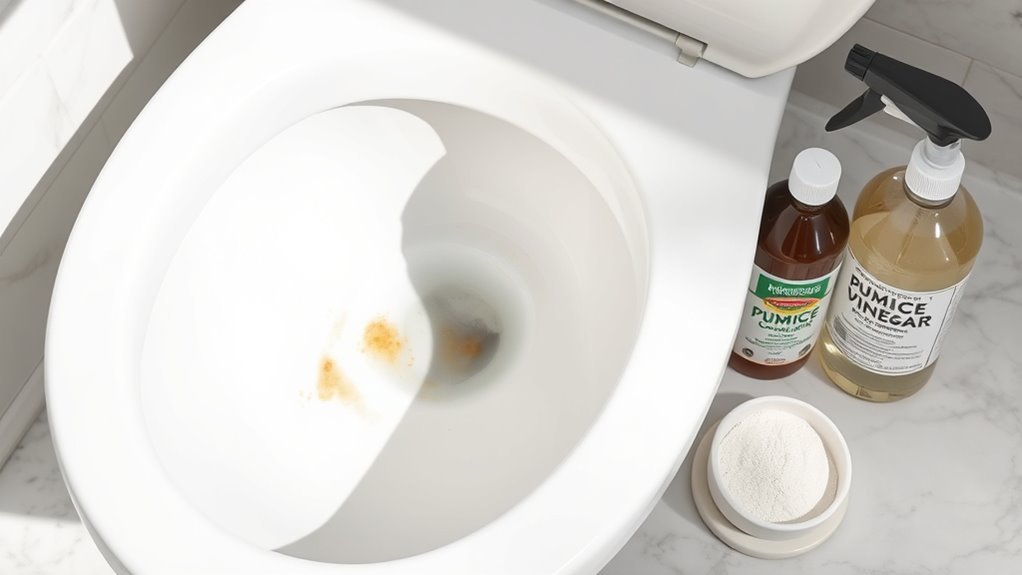
When tackling rust stains in your toilet bowl, choosing the right cleaning product makes all the difference. Lysol Lime & Rust Clinging Gel is a top pick because it effectively breaks down rust without harsh scrubbing.
You might also consider Iron Out tablets, which dissolve stubborn rust and mineral deposits with ease. Be cautious with bleach-based cleaners; they can handle light stains but often fall short on deep rust spots.
Liquid Iron Out available at Walmart has mixed reviews, so it might not deliver the results you want. For best results, apply your chosen product directly onto the rust stains and let it sit for several minutes.
This allows the cleaner to penetrate and dissolve the rust, making removal much easier when you scrub afterward. Give it some time, and you’ll see the difference!
Step-by-Step Process to Remove Rust Stains Effectively
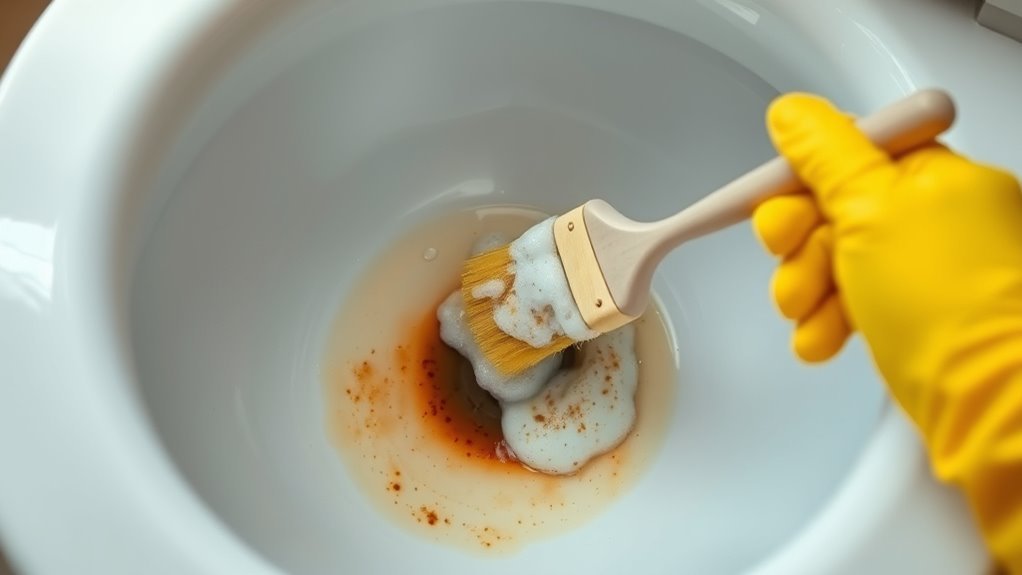
First, you’ll want to prepare your toilet by turning off the water supply and flushing to clear excess water.
Next, apply your chosen rust remover generously and let it work on the stains.
Finally, scrub gently and rinse thoroughly to guarantee all residue and stains are gone.
Preparing Toilet for Cleaning
Before you start scrubbing, turn off the toilet’s water supply valve and flush to empty most of the bowl’s water. This prevents splashing and leaks while cleaning.
With the water level low, use a toilet brush or sponge to scrub away loose debris and mineral deposits from the rust-stained areas. Removing these particles first helps the rust remover work more effectively later.
Make sure the bowl is as clean as possible before moving on, as excess grime can interfere with stain removal. Taking these preparation steps not only makes the cleaning process smoother but also increases the chances of completely eliminating rust stains.
Once you’ve prepared the toilet properly, you’ll be ready to apply your chosen rust removal product confidently.
Applying Rust Removal Products
Since you’ve already prepared the toilet by lowering the water level, you can confidently apply a rust removal product like Lysol Lime & Rust Clinging Gel directly onto the stained areas.
First, turn off the toilet’s water supply and flush to remove excess water. Next, apply a generous amount of the gel, making sure it fully covers all rust stains.
Let the gel sit for 5 to 10 minutes to break down rust and mineral deposits effectively. After the waiting period, use a toilet brush or a pumice stone to scrub the stained areas gently but thoroughly.
This scrubbing helps lift the loosened rust. Just a heads up, avoid rinsing or flushing immediately here, since those steps come later in the cleaning process.
Post-Cleaning Rinse Steps
Once you’ve scrubbed the rust stains thoroughly, you’ll want to flush the toilet several times with cold water to rinse away any leftover cleaning product and loosened debris. This step guarantees the bowl is free from residue that could cause further staining or damage.
If you still notice rust spots, repeat the application of your rust remover and scrub again, letting the product sit for 5-10 minutes before rinsing. Flush multiple times after each treatment to clear away all cleaning agents and loosened rust.
Keep at it until the stains disappear completely. Finishing with several flushes not only removes any remaining cleaner but also restores the bowl’s cleanliness and freshness, leaving your toilet stain-free and hygienic.
Alternative Methods for Stubborn Rust Stains
If stubborn rust stains resist your usual cleaning efforts, you can try alternative methods like Lysol Lime & Rust Clinging Gel or Iron Out tablets designed to dissolve mineral deposits. Start by turning off the toilet’s water supply, then apply the product directly onto the stains or drop tablets into the bowl.
Let the solution sit for several minutes to break down the rust effectively. You might need to repeat this process a few times for persistent stains. After treatment, use a gentle scrub brush to avoid damaging the porcelain while enhancing stain removal.
These specialized cleaners work best when combined with scrubbing, giving you a thorough clean without replacing your toilet. This approach tackles tough rust stains efficiently and restores your toilet bowl’s appearance.
Preventing Rust Stains Through Regular Maintenance
After tackling stubborn rust stains with specialized products, keeping your toilet bowl clean regularly can stop new stains from forming. You should clean the bowl often using rust-removing products to prevent buildup.
Consider installing a water softener or filtration system if your well water contains high mineral levels; this reduces rust-causing minerals. Applying a protective sealant inside the bowl creates a barrier that keeps mineral deposits from sticking.
Also, address any leaks or plumbing problems promptly since excess moisture encourages rust development. Performing routine inspections and cleaning ensures your toilet stays stain-free over time.
When to Seek Professional Help for Persistent Stains
When rust stains resist your best efforts with products like Lysol Clinging Gel or Iron Out tablets, it’s a clear sign you should call a professional plumber. Persistent stains often point to underlying plumbing issues that need expert diagnosis.
You should seek professional help if stains remain after multiple cleaning attempts or if rust reappears quickly after cleaning. Also, watch out for visible corrosion or damage to the toilet bowl. And if the stains are extensive or deeply ingrained, that’s another red flag.
A plumber can assess whether specialized treatment or even toilet replacement is necessary. Getting professional help prevents further damage and ensures thorough removal of stubborn rust stains that DIY methods just can’t handle.
Don’t let persistent rust compromise your toilet’s function or appearance—call an expert when needed. It’s better to be safe and get the job done right!
Frequently Asked Questions
Will WD-40 Remove Rust From a Toilet Bowl?
No, WD-40 won’t effectively remove rust from your toilet bowl. It might loosen some rust but leaves a greasy residue behind.
Instead, try using products like Lysol Lime & Rust Gel or Iron Out tablets. These are designed to tackle rust more efficiently and make cleaning easier. Give them a shot for better results!
Will Coca-Cola Remove Rust Stains in the Toilet?
Don’t count your chickens before they hatch; Coca-Cola can help remove rust stains by breaking them down with its acid.
But you’ll need to let it sit and scrub well for decent results, especially on tough spots.
What Causes an Orange Stain in the Toilet Bowl?
You get orange stains in your toilet bowl mainly from iron bacteria or high iron content in your water. These bacteria oxidize iron, leaving rusty orange marks that can be tough to clean without proper treatment.
It’s kind of annoying, right? But once you know what’s causing it, you can tackle the problem more easily. Just remember, regular cleaning might not be enough if the iron levels are high.
Can Rust Stains Be Removed From Porcelain?
Yes, you can remove rust stains from porcelain by applying a rust remover gel. Just let it sit for a bit, then scrub gently.
Sometimes, the stains can be stubborn, so you might need to repeat the process a few times. After that, make sure to rinse thoroughly to restore the surface.
Conclusion
Removing rust stains from your toilet bowl is like wiping away the footprints of time, revealing the fresh surface beneath. With the right products and a little elbow grease, you can restore your toilet’s shine and keep it glowing.
Remember, regular care is your shield against stubborn stains. If rust refuses to budge, don’t hesitate to call in the pros—they’re the locksmiths who can open even the toughest battle scars.
To sum it up, removing rust stains from a toilet bowl easily is all about using effective cleaners and staying consistent with maintenance. Whether you choose natural remedies or commercial products, a bit of patience and effort goes a long way. Regular cleaning not only keeps rust at bay but also ensures your toilet stays hygienic and looking its best. And if the rust stains persist despite your best efforts, professional help is just a call away to get your toilet sparkling again.