How Do You Fix a Slow Flushing Toilet Step by Step
To fix a slow flushing toilet, start by checking the water level in the tank. It should be about an inch below the overflow tube. Also, make sure the flapper seals properly to prevent water from leaking.
Next, clean any mineral deposits that might be blocking the rim jets. These tiny holes help water flow smoothly during a flush. Then, check that your fill valve is working correctly and refilling the tank as it should.
If your toilet still flushes slowly, try using a plunger or a drain cleaner to clear any clogs. Don’t forget to inspect the vent pipe for blockages, as these can affect flushing performance.
Lastly, replace any worn parts you find to restore a strong flush.
Want to get your toilet flushing perfectly every time? There are even more tips and tricks to explore!
Key Takeaways
- Check and adjust the water level in the tank to about an inch below the overflow tube for proper flush pressure.
- Inspect and replace a worn or misaligned flapper to ensure a tight seal and efficient water release.
- Clean rim jets and remove mineral deposits using a brush and hot water to restore water flow during flushing.
- Use a plunger or plumbing snake to clear any drain or vent clogs that restrict water drainage or airflow.
- Test multiple flushes to confirm strong water flow, proper refill, and absence of leaks, adjusting float levels as needed.
Identify Common Causes of Slow Flushing Toilets
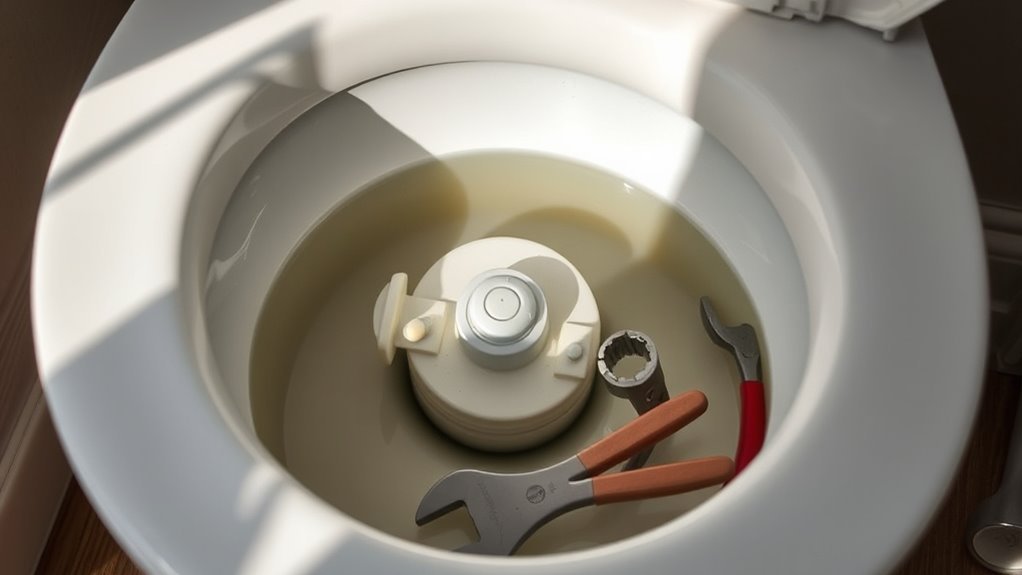
When your toilet flushes slowly, it’s usually because something is obstructing the water flow or reducing flush power. One common cause is low water levels in the tank, which don’t generate enough pressure for a strong flush.
Mineral build-up around the rim jet holes can also block water flow, making the flush sluggish. Sometimes, a clogged sewer line vent disrupts air flow, causing slow flushing or gurgling sounds.
Additionally, problems with the flush valve, like a worn or misaligned flapper, can prevent the tank from filling properly, weakening the flush. Finally, a drain blockage or partial clog in the sewer system restricts water movement and slows drainage.
Identifying these issues early helps you fix the problem before it worsens. It’s always better to tackle these problems sooner rather than later!
Inspect and Adjust the Toilet Tank Components

After pinpointing potential causes of a slow flush, the next step is to inspect and adjust the toilet tank components. Start by removing the tank lid carefully to avoid damage.
Begin by carefully removing the tank lid to inspect and adjust the toilet’s internal components.
Then, inspect these key parts: Check the water level; it should be about an inch below the overflow tube’s top. Inspect the flapper for cracks, warping, or misalignment and replace it if it doesn’t seal properly.
Observe the fill valve to ensure it refills the tank correctly after flushing. Adjust the float mechanism, whether a ball float or float cup, to set the proper water level.
Finally, confirm all components move freely without obstruction. Proper inspection and adjustment of these parts will help restore a strong, efficient flush.
Clean the Rim Jets and Remove Mineral Deposits
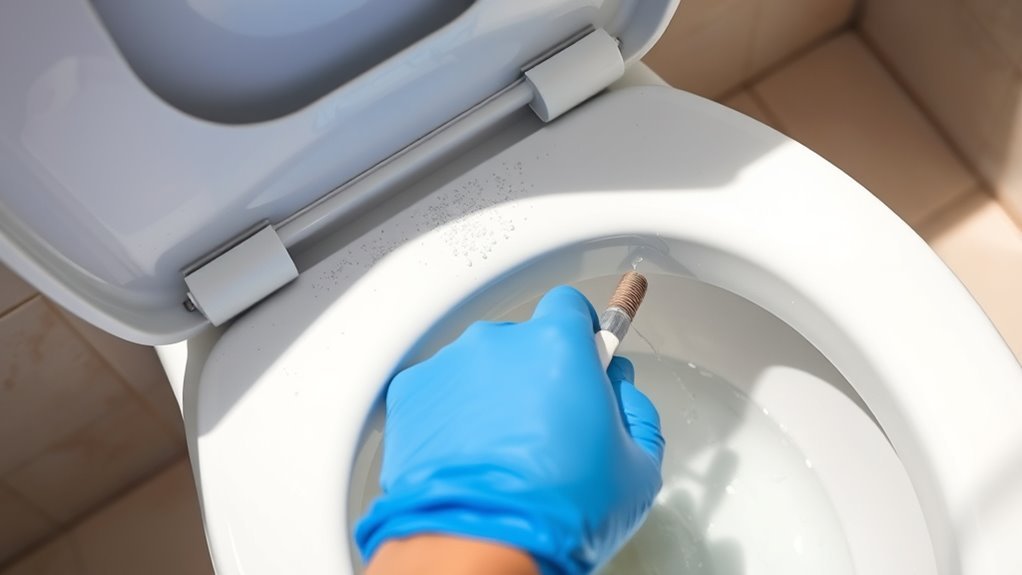
Although rim jets are small, they play an essential role in flushing by directing water around the bowl’s rim. If your toilet flush is slow, mineral deposits may be clogging these jets.
Use a mirror to locate buildup around the rim jets. Apply a mixture of dish soap and hot water, letting it sit for several minutes to loosen deposits.
Then, scrub the jets gently with a small brush or wire to dislodge stubborn mineral deposits. For tough clogs, carefully insert a screwdriver or pin into each jet hole to clear blockages.
Rinse with clean water and perform a flush to check if water flow from the rim jets has improved. Regularly cleaning these jets ensures efficient flushing and prevents slow water flow.
Clear Drain Blockages Using Plungers and Chemicals
To clear drain blockages, start by using a flange plunger with steady, controlled plunges to break up clogs. This method is usually pretty effective for most blockages.
Choose chemical cleaners carefully. You can combine drain cleaner, dish soap, and hot water for tough buildup, but always wear gloves and protective eyewear to keep safe.
Remember to turn off the water and drain the toilet before applying any chemicals or plunging. Taking these steps helps you stay safe and makes the process more effective.
Effective Plunging Techniques
When you face a slow flushing toilet, using the right plunging techniques can quickly clear blockages and restore proper flow. Start with a flange or cup plunger to create a tight seal over the toilet bowl drain, ensuring maximum pressure on the clog.
Follow these steps for best results:
- Add enough water to cover the plunger cup fully for increased suction.
- Apply steady, controlled plunging—push down and pull up for 15-20 cycles.
If the clog persists, try improving the seal by wrapping the plunger flange with a damp cloth or using petroleum jelly. Just remember, avoid excessive force to prevent damage to the toilet bowl.
Once it’s cleared, flush to confirm the drain flows freely and the flush works well. Mastering these techniques helps you tackle slow flushes efficiently.
Choosing Chemical Cleaners
If your plunging efforts don’t fully clear the clog, choosing the right chemical cleaner can help dissolve buildup and restore proper flow.
Chemical drain products come in enzyme-based or caustic solutions, each targeting different types of clogs.
Enzyme-based cleaners break down organic buildup gently, while caustic solutions aggressively dissolve mineral deposits.
Combining plunging with chemical treatments enhances effectiveness. Always follow instructions to avoid pipe damage or health hazards.
| Cleaner Type | Best For |
|---|---|
| Enzyme-based | Organic buildup |
| Caustic solutions | Mineral deposits |
| Combination Use | Stubborn clogs |
| Regular Use | Prevent slow flushing |
| Caution | Avoid septic system harm |
Safety Precautions During Cleaning
Although clearing a slow-flushing toilet requires effective methods, you should always prioritize safety by wearing rubber gloves and protective eyewear before handling chemical cleaners or plungers. Proper precautions protect you from harmful chemicals and water damage.
Keep these safety tips in mind:
- Wear gloves and protective eyewear to prevent skin and eye irritation.
- Ensure good ventilation by opening windows or turning on exhaust fans when using chemical drain cleaners.
Follow manufacturer instructions exactly to avoid pipe damage or harmful reactions. Never mix different chemical drain cleaners; toxic fumes can result.
And one more thing—turn off the toilet’s water supply before plunging or applying chemicals to prevent overflow. It really helps keep things under control!
Address Venting Issues Affecting Toilet Performance
Because venting plays an essential role in maintaining proper air pressure within your drainage system, any blockage in the sewer vent pipe can lead to slow flushing toilets. A clogged vent restricts airflow, causing a pressure imbalance that prevents water from flowing smoothly.
You might notice gurgling sounds after flushing, a sign that air is trapped due to vent pipe issues. To fix this, check the roof vent for obstructions like leaves or bird nests. Use a plumbing snake or auger to clear blockages carefully, restoring proper airflow.
If the clog is severe, consider calling a professional for inspection. Addressing venting problems ensures balanced pressure, enabling your toilet to flush fully and efficiently every time.
Replace Damaged Parts to Restore Proper Flushing
Start by inspecting the toilet’s internal parts to spot any damage or wear. Then, turn off the water, remove the faulty components, and install new ones following the instructions carefully.
Finally, test your toilet’s flush to make sure everything works smoothly again. It’s pretty straightforward once you get the hang of it!
Identify Faulty Components
When your toilet flushes slowly, you’ll want to inspect key components like the flapper, fill valve, and float mechanism to identify any damage or misalignment. Start by checking the flapper for cracks or warping since a poor seal diminishes flush power.
Next, examine the fill valve for sediment or wear that might prevent proper tank filling. Don’t forget to assess the float mechanism to ensure it maintains the correct water level.
Also, watch out for mineral buildup around rim jets and bowl holes, which can obstruct water flow. Here’s what you should look for:
- Cracked or misaligned flapper
- Sediment-clogged or damaged fill valve
- Float mechanism out of adjustment
- Mineral buildup blocking water pathways
- Reduced flush power indicating faulty parts
Identifying these issues helps you know which parts need replacing. So, take your time checking each component carefully!
Remove and Replace Parts
After identifying which parts are damaged or worn, you’ll need to turn off the water supply and flush the toilet to empty the tank before removing these components.
Remove the tank lid and disconnect the fill valve and flapper assembly to inspect for cracks or wear. If you find the fill valve faulty, replace parts by installing a new one, making sure it fits securely and the float is adjusted properly.
For a warped or cracked flapper, install a new flapper that seals tightly over the flush valve seat. Once all damaged parts are replaced, reconnect everything carefully.
This step ensures your slow flushing toilet will have the proper components needed to restore effective flushing.
Test Flushing Performance
Although you’ve replaced damaged parts, you’ll need to test the flushing performance to guarantee everything works properly. To effectively test flushing, focus on these key steps:
First, check the water level; it should sit about 1 inch below the overflow tube for ideal flush power. Also, inspect the flapper to ensure it creates a tight seal and releases water efficiently.
Next, verify the fill valve refills the tank correctly after each flush. Don’t forget to clean wash jet holes and rim jets to clear any mineral buildup that might restrict water flow.
Finally, perform multiple test flushes to confirm strong water flow and complete bowl drainage. This will help make sure everything is working just right.
Frequently Asked Questions
How to Get a Stronger Flush in the Toilet?
You can get a stronger flush by adjusting the water level in the tank. Cleaning clogged rim jets also helps a lot.
Replacing a worn flapper can make a big difference too. Plus, make sure the fill valve and float work properly to maintain ideal water pressure.
These simple tweaks usually do the trick!
How Do I Know if My Toilet Is Clogged?
If your toilet’s flushing feels like it’s swimming upstream, you’re likely facing a clog. Watch for slow drainage, water not emptying, gurgling sounds, or visible debris.
These signs tell you it’s time to act. Don’t ignore them—addressing a clog early can save you a bigger mess later on.
What Could Be Causing My Toilet Water Level to Be Low?
Your toilet’s water level could be low because the float or fill valve is misadjusted or faulty.
Cracks, leaks, clogged fill tubes, or sediment buildup can also cause water to escape or restrict flow, lowering the level.
Sometimes, it’s just a simple fix once you know where to look!
Why Is My Toilet Not Flushing All the Way?
Your toilet isn’t flushing all the way because of low water level, clogged jets, a faulty flapper, blocked vent pipes, or a partially clogged drain.
Check each part carefully to identify and fix the issue promptly. It’s usually one of these that’s causing the problem. If you go through them one by one, you’ll likely find the culprit.
Conclusion
Fixing a slow flushing toilet is like tuning a stubborn old piano—each key and string matters. By inspecting tank parts, clearing blockages, and cleaning hidden jets, you bring harmony back to your bathroom’s melody.
Just as a musician replaces worn strings, swapping damaged parts restores the perfect flush rhythm. With patience and care, you’ll turn that sluggish flush into a confident, flowing song that keeps your home in sync and running smoothly.
So, if your toilet is slow to flush, start by checking the flapper and flush valve for wear. Clear any clogs in the trap or drain, and clean the rim jets. Replacing faulty components can make a huge difference.
By following these steps, you’ll fix a slow flushing toilet effectively and enjoy a strong, smooth flush every time. It’s all about small adjustments that bring your bathroom back to life.