How Composting Toilets Work – Step by Step Guide
You use a composting toilet by adding waste into a sealed chamber mixed with organic materials like sawdust. This helps balance moisture and supplies carbon, which is essential for the composting process.
Air flows through ventilation pipes to keep aerobic bacteria active. These bacteria break down the waste into safe compost over time while controlling odors.
Liquids drain separately to prevent excess moisture, which keeps the system working efficiently. Regular maintenance and emptying guarantee the process stays effective and hygienic.
Keep exploring to understand how to manage and safely dispose of the resulting compost. It’s a simple, eco-friendly way to handle waste without water or chemicals.
Key Takeaways
– Waste drops into a sealed chamber mixed with organic material like sawdust to balance moisture and support decomposition.
It’s a neat way to keep things balanced right from the start.
– Aerobic bacteria decompose waste using oxygen supplied through ventilation pipes, producing heat and minimizing odors.
This natural process keeps the smells down and the breakdown going strong.
– Liquids drain separately via filters or pipes to prevent excess moisture and anaerobic conditions.
Keeping things dry helps avoid any unwanted smells or issues.
– Microbial heat kills pathogens, transforming waste over months into safe, nutrient-rich compost.
By the time it’s done, what you have is safe and great for your garden.
– Regular maintenance includes adding cover materials, monitoring moisture and airflow, and safely emptying the compost chamber.
A little upkeep goes a long way in keeping your composting toilet running smoothly.
The Basic Principles of Composting Toilets
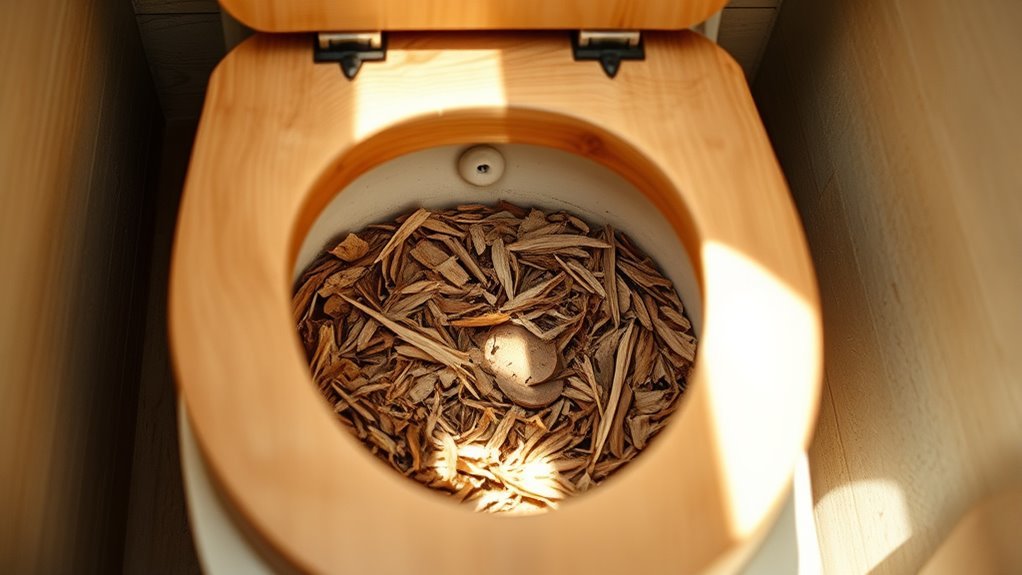
Although it might seem unusual, composting toilets work without any water by using aerobic bacteria to break down human waste naturally. When you use one, waste drops into a sealed chamber where it’s mixed with organic material like sawdust or coconut coir.
This material helps balance moisture levels, preventing the compost from becoming too wet or too dry. Proper ventilation supplies oxygen that aerobic bacteria need to thrive, speeding up the composting process while minimizing odors.
Liquids drain away through a filter or pipe system, keeping excess moisture from disrupting decomposition. Over time, this natural breakdown transforms waste into nutrient-rich, pathogen-free compost you can use to enrich soil.
Components and Design Features
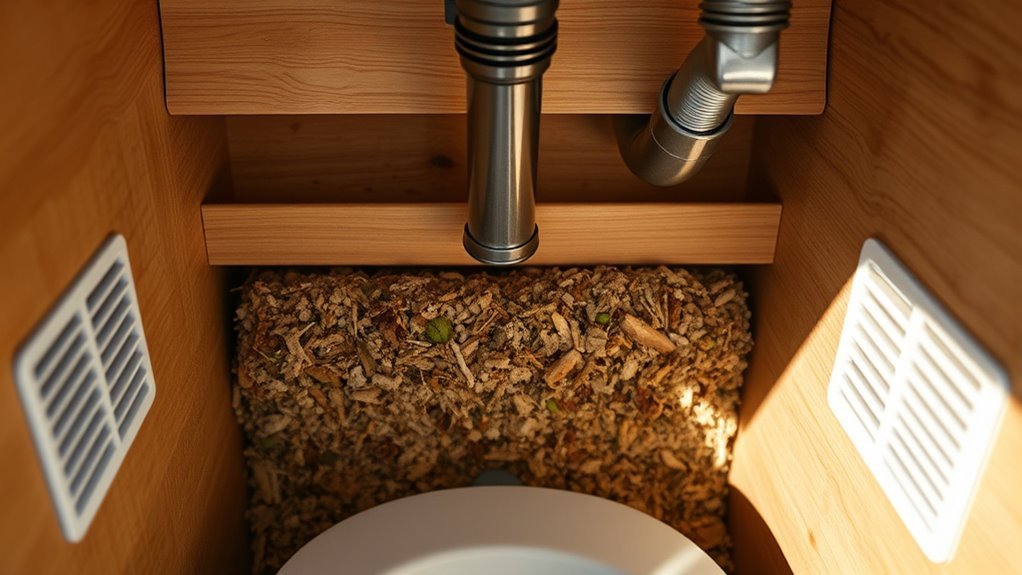
To make composting toilets work effectively, their components and design play a vital role. You’ll find a composting chamber beneath or beside the toilet seat, where waste collects and breaks down safely.
A good ventilation system, like a vent pipe or fan, keeps airflow steady and controls odors, making the experience more pleasant.
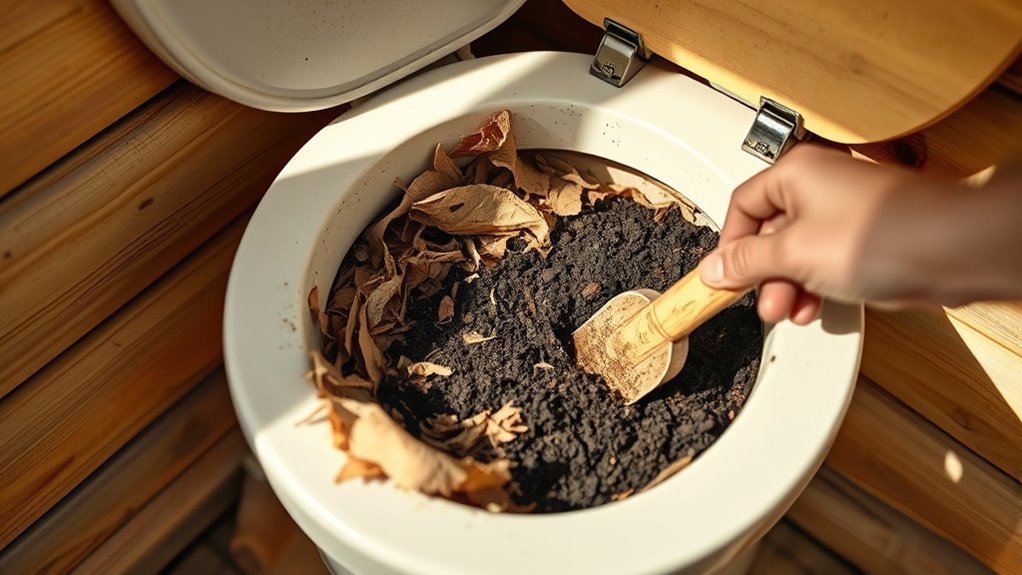
After each use, you’ll add organic cover materials such as sawdust, coconut coir, or leaf litter. These materials help absorb moisture, speed up decomposition, and reduce smells.
Many designs also separate liquid waste through a drainage system to avoid excess moisture in the composting chamber. This ensures proper aeration and safe waste containment.
All these features work together to create an efficient, odorless composting process. It’s a smart setup that makes composting toilets practical and user-friendly.
The Composting Process Explained
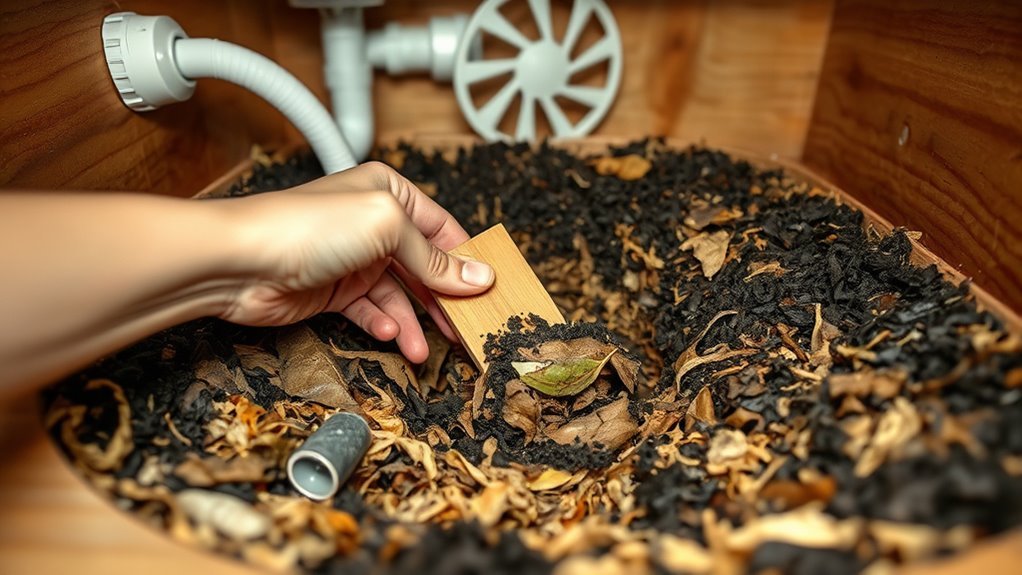
When you use a composting toilet, waste goes into a sealed chamber where aerobic bacteria get to work breaking it down. You’ll add organic materials like sawdust to keep moisture and odor in check.
Ventilation guarantees oxygen keeps the bacteria active. Maintaining the right balance of moisture and oxygen is key to turning waste into safe, nutrient-rich compost. It’s all about creating the perfect environment for those bacteria to do their job efficiently.
Waste Breakdown Mechanisms
Because aerobic bacteria need oxygen to thrive, maintaining proper ventilation in composting toilets is essential for breaking down human waste efficiently. Oxygen enters through ventilation pipes, fueling the composting process by supporting bacterial activity.
These bacteria consume the waste’s organic matter, generating heat, carbon dioxide, and water as byproducts. Adding organic cover materials like sawdust or coconut coir helps absorb excess moisture and supplies carbon, balancing the decomposition environment.
As microbes break down the waste, the heat produced kills pathogens, ensuring the resulting compost is safe. Over several months, this process transforms the waste into stable, nutrient-rich humus, which can be safely used or disposed of.
Proper oxygen flow and material balance are key to fast, effective waste breakdown in composting toilets. It’s all about creating the right conditions so nature can do its job efficiently.
Role of Aerobic Bacteria
Although you might not see them, aerobic bacteria play a vital role in composting toilets by breaking down human waste efficiently. These bacteria rely on oxygen to decompose organic waste, converting it into carbon dioxide, water, and heat through aerobic decomposition.
To support their activity, composting toilets use ventilation systems that provide a steady oxygen supply. You also need to add carbon-rich materials, like sawdust, which serve as food for these bacteria and help balance the compost.
Moisture control is essential because aerobic bacteria thrive only within specific moisture levels; too dry or too wet conditions can slow down their work. By managing these factors, you guarantee aerobic bacteria can effectively transform waste into safe, nutrient-rich compost.
Moisture and Oxygen Balance
To keep your composting toilet working efficiently, you must balance moisture and oxygen carefully. Moisture levels should stay between 40-60% to promote microbial activity without causing odors or compaction.
Too much moisture creates anaerobic conditions, slowing decomposition and producing unpleasant smells. That’s why drainage systems and organic cover materials play a key role in regulating moisture.
At the same time, oxygen must flow freely through ventilation pipes and air vents to support aerobic bacteria that break down waste effectively. Without enough oxygen, anaerobic bacteria take over, leading to foul odors and incomplete composting.
Managing Moisture, Airflow, and Temperature
When you manage moisture, airflow, and temperature effectively in a composting toilet, you create the ideal environment for aerobic bacteria to thrive and break down waste efficiently. Proper airflow through ventilation pipes supplies oxygen and prevents odors.
Controlling moisture by draining excess liquids keeps the compost chamber balanced, while adding sawdust absorbs extra moisture and improves compost quality. Temperature naturally shifts with aerobic activity—warmer conditions speed decomposition, cooler ones slow it down.
Keep these tips in mind:
- Ensure vents remain clear to maintain steady airflow
- Monitor moisture levels regularly and drain as needed
Add organic materials like sawdust after each use. Also, observe temperature trends to gauge composting progress.
Mastering these factors helps you avoid odors and speeds up composting. It’s all about keeping things balanced and giving those helpful bacteria what they need!
Maintenance and Emptying Procedures
You’ll want to empty the compost chamber regularly before it fills up to keep odors in check and composting efficient.
Make sure to drain the urine container frequently, often daily, to maintain hygiene and prevent spills.
Following proper cleaning steps and safe disposal methods will help keep your composting toilet working smoothly and safely.
Routine Cleaning Steps
Although composting toilets require less maintenance than traditional ones, you’ll need to empty the compost chamber regularly—usually every 1 to 2 months or whenever odors become noticeable. Keeping your toilet odor-free and efficient means sticking to a routine cleaning schedule.
Here’s how you can maintain odor control and proper function:
- Wear gloves and a mask to protect yourself during emptying
- Remove compost from the chamber carefully to avoid spills
- Clean and disinfect the chamber and surrounding areas thoroughly
- Add a fresh layer of organic cover material like sawdust or coconut coir
Also, don’t forget to regularly check the ventilation system. Making sure airflow supports the composting process is key.
This routine keeps your compost chamber fresh and the maintenance hassle-free. Easy, right? Just a little effort goes a long way!
Emptying Frequency Guidelines
Keeping your composting toilet odor-free and efficient means knowing how often to empty the compost chamber. Emptying frequency depends on your system’s capacity, usage, and design, usually ranging from once a month to every six months.
You’ll want to empty more often if you notice unpleasant odors, a full chamber, or overly moist, saturated compost. Regularly check moisture levels and the maturity of the compost to help pinpoint the right time to empty.
In mobile setups like RVs or vans, limited capacity means you’ll empty waste more frequently—sometimes every few weeks. Staying on top of emptying maintains performance and prevents issues, ensuring your composting toilet works smoothly without compromising hygiene or comfort.
Safe Waste Disposal
When emptying your composting toilet, always wear gloves and protective gear to keep the process hygienic and safe. Proper waste disposal is key to maintaining odor control and preventing contamination.
Make sure the compost has fully broken down and reached the right temperature before handling or disposing of it according to local regulations. Pour any liquids into designated dump stations or toilets—never on the ground.
After emptying, clean and disinfect the chamber to stop odors and germs from building up.
Keep these in mind for safe waste disposal:
- Empty the compost chamber regularly before odors appear
- Use gloves and protective gear every time
- Confirm compost maturity prior to disposal or reuse
- Clean and disinfect thoroughly after each emptying
Following these steps safeguards your health and the environment.
Safe Use and Disposal of Compost Output
How can you guarantee that the compost from your toilet is safe to use or dispose of? With composting toilets, human waste must fully decompose for 12 to 24 months, meeting local guidelines before you use it as fertilizer. Always test the compost for pathogen reduction to ensure it’s free of harmful bacteria and parasites.
For safe disposal, empty the compost into designated composting areas or approved waste facilities—never dump it in water sources or public spaces. Drain any liquid waste into proper toilet systems or designated drainage points to prevent contamination.
When handling compost, wear gloves and wash your hands thoroughly afterward. Following these steps ensures safe disposal and use, protecting both your health and the environment.
Frequently Asked Questions
How Often Should You Empty a Composting Toilet?
You should empty your composting toilet every 1 to 6 months, depending on usage and bin size.
Check compost levels and odors regularly; don’t wait too long, or you’ll risk odors and reduced efficiency.
It’s a good idea to keep an eye on things so your system runs smoothly and stays fresh.
How Does a Compostable Toilet Work?
You deposit waste into a sealed chamber where bacteria break it down aerobically. You add carbon-rich material after each use, and ventilation keeps odors away while liquids drain.
This setup ensures waste composts efficiently without water. It’s a smart way to handle waste while being eco-friendly.
How Does a Dry Flush Toilet Work?
You use a dry flush toilet by adding proprietary powder that seals waste in a chamber after each use. It controls odors with ventilation.
You periodically empty the sealed waste container, no water needed. It’s pretty simple and clean!
How Does a Composting Toilet Handle Diarrhea?
You handle diarrhea in a composting toilet by adding extra organic cover like sawdust. This helps absorb the moisture and keeps things balanced.
Make sure there’s good ventilation, too. It’s important to keep air flowing to prevent odors.
Also, regularly mixing the compost is key. This promotes aerobic breakdown and helps safely decompose the high-moisture waste.
Conclusion
By choosing a composting toilet, you’re not just saving water—you’re making a real environmental impact. Did you know these systems can reduce household water use by up to 50%? That’s a huge step toward sustainability.
With proper maintenance and attention to moisture and airflow, you’ll create nutrient-rich compost while minimizing waste. It’s a smart, eco-friendly choice that benefits both you and the planet in the long run.
Composting toilets offer a simple way to cut down on water consumption and reduce your ecological footprint. By turning waste into valuable compost, these systems promote a healthier environment. So, if you want an effective, sustainable solution for waste management, a composting toilet is definitely worth considering.