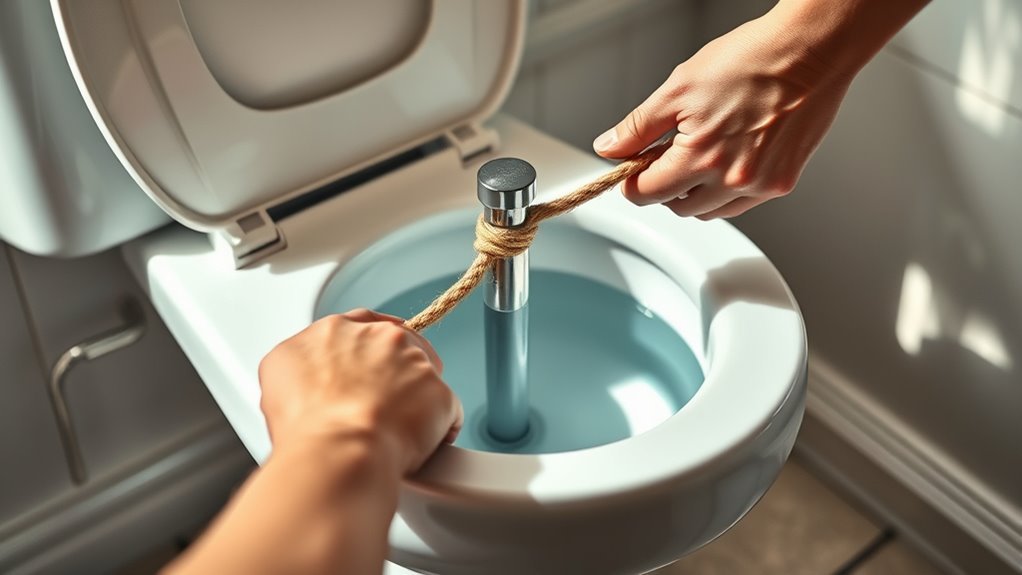
How Do You Flush Toilets When Power Is Out?
When the power’s out, flushing your toilet can seem tricky, but it’s actually pretty simple. You can manually flush your toilet by adding water directly. This method works even when your usual water supply or electric pump isn’t functioning.
Just lift the tank lid and pour about 1.6 gallons of clean water into the tank. Then press the flush lever to mimic a regular flush using gravity. This tricks your toilet into thinking it’s a normal flush.
Another way is to pour water straight into the bowl from waist height. The force of the water will push waste through the drain. Just be sure to use safe water sources and keep your drains clear to avoid any clogs.
These easy tips help you keep your toilet flushing smoothly during a power outage. Keep reading for more handy tricks to manage your bathroom when utilities fail.
Key Takeaways
- Manually pour 1–2 gallons of water directly into the toilet bowl from waist height to create flushing momentum.
- You can also use a bucket to fill the toilet tank with about 1.6 gallons of clean water, then press the flush lever.
- Gravity toilets usually flush without electricity, as long as the plumbing system is clear and unobstructed.
- It’s a good idea to collect safe water sources like rainwater or stored water for flushing during power outages.
- Just be careful to avoid using contaminated water, and handle everything properly to prevent damage and health risks.
Why Toilets Still Flush Without Running Water

How can toilets still flush when water isn’t running? The answer lies in your plumbing system and how gravity toilets function. Many toilets rely on gravity to move waste down the drain, so even without a running water supply, you can perform manual flushing.
By manually adding water—either to the bowl or tank—you mimic the normal flush cycle. This manual flushing forces waste through the trap and into the drain, assuming your plumbing system is clear and functional.
Older gravity toilets don’t need electricity or continuous water flow to work, making them reliable during power outages or water supply interruptions. As long as you have access to some water and the drains are unobstructed, your toilet can still flush effectively.
Manual Tank Filling Method for Flushing

You’ll need a clean bucket and about 1.6 gallons of water from a safe source to start. Carefully remove the toilet tank lid and pour the water steadily to avoid overfilling.
Once the tank’s filled, just press the flush lever to clear the bowl like usual. It’s pretty straightforward!
Required Materials
Although flushing a toilet manually during a power outage might seem tricky, gathering the right materials makes the process straightforward.
You’ll need a clean bucket holding about 2–3 gallons of water. Fill it from running water sources like a bathtub, bottled water, or rainwater.
Before pouring, carefully remove the tank lid to avoid damage. Pour roughly 1.6 gallons—the typical flush volume—into the tank, then press the flush lever.
This simple setup, generated by AI insights, helps you manage without electricity. It’s just like setting up a new account: straightforward once you know the essentials.
| Material | Purpose | Notes |
|---|---|---|
| Clean bucket | Holds water for flushing | 2–3 gallons capacity |
| Water source | Filling the bucket | Bathtub, bottled water, rainwater |
| Toilet tank lid | Access to tank | Remove carefully to prevent damage |
Filling Process Steps
After gathering the materials, start by carefully removing the toilet tank lid to access its interior. Next, fill a clean bucket with about 1.6 gallons (6 liters) of water, matching the toilet’s typical flush volume.
Slowly and steadily pour the water into the tank’s fill opening, just as it would normally refill. Be cautious not to overfill, as excess water can spill or overflow from the tank.
Once the tank is filled, press the flush lever to manually trigger the flush mechanism. This ensures the drainage system clears properly, mimicking a standard flush.
Following these steps lets you flush the toilet manually without power, maintaining sanitation until electricity is restored. Easy, right? Just take it one step at a time, and you’ll be good to go.
Flushing Technique Tips
When manually filling your toilet tank to flush during a power outage, handle the process with care to avoid spills and guarantee effective flushing. First, carefully remove the toilet tank lid to access the internal compartment.
Using a bucket or container, pour about 1.6 gallons (6 liters) of clean water into the tank, mimicking a normal flush volume. Make sure the water comes from a reliable source like a bathtub, bottled water, or rainwater.
After filling, press the flush lever to release the water and flush the toilet as usual. Be cautious not to overfill the tank, as this can cause overflow and reduce flushing efficiency.
Keeping the drain system clear helps ensure each manual flush works effectively. So, just take your time and follow these steps to keep things running smoothly.
Direct Bowl Dump Technique for Quick Flushing

If you lose power, you can still flush your toilet quickly by pouring 1 to 2 gallons of water directly into the bowl from waist height. Grab a bucket filled with clean or graywater, then pour it steadily and quickly into the center of the toilet bowl.
The height and force create momentum, pushing waste through the trap and down the drain—mimicking a regular flush without electricity. Make sure you use water that’s safe to avoid health risks.
This direct bowl dump technique relies solely on gravity and the water’s impact, making it an efficient and reliable way to flush when the power is out. Keep your bucket ready, and you’ll manage bathroom needs easily during outages.
Recommended Water Sources During Outages
Using the direct bowl dump technique works well, but you’ll still need a reliable water source to keep flushing during a power outage.
Collect rainwater in barrels or buckets, or use pre-filled bathtubs and bottled water for convenience. If you live where it snows, melt and boil snow to ensure cleanliness before storing it for flushing.
Avoid contaminated water like mop buckets or pond water unless absolutely necessary.
| Water Source | Preparation Needed | Notes |
|---|---|---|
| Rainwater barrels | Collect and store | Safe and renewable |
| Bathtubs | Pre-fill before outage | Easy access, ready to use |
| Melted snow | Boil before storing | Use clean containers |
| Bottled water | Store in advance | Reliable, portable option |
Choose wisely to maintain sanitation during outages.
Key Tips and Precautions for Manual Flushing
Although manual flushing may seem straightforward, taking key precautions guarantees you avoid damage and maintain hygiene. First, always check that the drain system is clear before flushing to prevent backups.
Use a clean bucket to pour 1–2 gallons of water steadily into the toilet bowl from waist height; this creates enough force to clear waste effectively without splashing. Avoid using hot liquids or contaminated water, as these can damage the toilet and pose health risks.
Also, verify your toilet components can handle alternative water sources to prevent malfunctions. By following these tips, you’ll flush efficiently and keep your toilet functioning well during power outages without compromising cleanliness or safety.
Common Questions About Flushing Without Running Water
Knowing how to manually flush your toilet sets a solid foundation, but you might still have questions about handling situations without running water.
Here are some common concerns and clear answers to help you manage:
- Can I flush by pouring water directly into the bowl? Yes, use about one to two gallons of clean water for an effective flush.
- How much water should I add to the tank? Pour roughly 1.6 gallons to mimic a normal flush.
- Where can I get water in an outage? Collect rainwater, use bottled water, or melt snow.
- What if the toilet doesn’t flush manually? Check if the drainage system is clear, as blockages prevent flushing.
With these tips, you’ll handle no-water scenarios confidently.
Frequently Asked Questions
Can You Flush the Toilet if the Power Goes Off?
Yes, you can flush the toilet if power goes off, especially gravity-fed ones. Just pour water into the bowl or tank manually.
Electric or pressure-assisted toilets might not work without power unless they have backups. So, if your toilet relies on electricity, it’s good to have a plan just in case.
How to Add Water to a Toilet to Flush?
Think of your toilet tank as a thirsty sponge—remove the lid first.
Then, pour about 1.6 gallons of clean water steadily into it.
After that, just press the flush lever. This’ll refill and flush just like normal.
How Do I Know if the Toilet Is Clogged?
You know your toilet’s clogged if water drains slowly, rises after flushing, or backs up into the bowl.
If repeated plunging fails or you hear gurgling sounds, those are clear signs of a blockage in the system.
Is It Okay to Shower When the Power Is Out?
Of course, you can shower during a power outage—if you enjoy the thrill of cold water!
Just make sure you have a gravity-fed system or stored water, or you’ll be embracing the ultimate icy adventure.
Conclusion
When the power’s out, flushing your toilet doesn’t have to feel like rocket science. You can manually fill the tank or dump water directly into the bowl to keep things flowing smoothly without running water. Just make sure to use clean water sources.
Be careful to avoid any messes by following some simple precautions. With a little know-how, you’ll handle the blackout bathroom challenge like a pro—no superhero cape needed!
By using these easy tricks to flush toilets when the power is out, you can maintain your hygiene and comfort even during outages. Remember, having a plan for flushing your toilet without electricity ensures you stay prepared and stress-free when the unexpected happens. So next time the power goes out, you’ll know exactly how to keep your bathroom routine running smoothly!