What Type of Heaters Do Jacuzzi Tubs Have?
Jacuzzi tubs typically use built-in electric resistance heaters with nichrome wires, designed to keep your water warm and comfortable. These heaters are a key part of what makes soaking in a Jacuzzi so relaxing and enjoyable.
You can usually count on them to maintain temperatures between 100°F and 104°F, which is perfect for a cozy bath.
These heaters come with thermostats and digital controls, letting you set and maintain precise temperatures without any hassle.
Plus, they’re made from corrosion-resistant materials like titanium, so they last a long time and stay safe.
Many models even have automatic shut-off features to protect you and your tub.
If you’re curious about other types of heaters, different materials, or alternative control options, there’s a lot more to explore.
Jacuzzi tubs offer plenty of versatility depending on your preferences and needs.
Key Takeaways
- Jacuzzi tubs commonly use built-in electric resistance heaters made of nichrome wire for consistent water heating. These heaters are designed to keep your water warm and comfortable throughout your soak.
- They often include thermostats and digital control panels, making it easy to regulate the temperature precisely. So, you can adjust the heat just the way you like it without any hassle.
- Materials like titanium and nichrome are chosen because they resist corrosion and offer long-term durability in wet environments. This means your heater lasts longer and performs reliably over time.
- Safety is a big deal, too. Features like automatic shut-off, high-limit switches, and temperature maintenance help prevent overheating and keep your bath safe.
- While some tubs might use external or inline heaters, most Jacuzzi models stick with built-in electric heaters as the standard. It’s a proven setup that balances efficiency and convenience.
Types of Heaters Commonly Found in Jacuzzi Tubs

While Jacuzzi tubs mostly rely on electrical resistance heaters made of nichrome wire, you’ll often find built-in thermistor-controlled electric heaters that keep the water temperature steady. This electric heater uses a heating element submerged in water or a water-filled chamber to guarantee efficient heat transfer.
The thermistor continuously monitors the water temperature, allowing the system to adjust heating automatically. Many hot tub heaters also feature Digital Control panels, giving you precise control over temperature settings and real-time status updates.
Although gas-powered heaters exist, Jacuzzi tubs rarely use them; electric heaters remain the standard due to their reliability and ease of use. So, when you operate your Jacuzzi, the combination of the thermistor, heating element, and control panel works seamlessly to maintain your perfect soak temperature.
Design Features of Jacuzzi Tub Heaters

Electric resistance heaters in Jacuzzi tubs come with thoughtfully engineered design features to guarantee efficient and safe water heating. You’ll find heating elements either submerged inside the tub or housed externally within a heat exchanger, where water circulates to warm up efficiently.
Thermostats and control panels let you set and maintain your preferred temperature precisely. Safety features are a top priority; automatic shut-off mechanisms activate if overheating occurs, while high-limit switches provide an extra layer of protection.
These components work together seamlessly to ensure your Jacuzzi heats water reliably without risk. Whether the heater is internal or external, these design elements make sure you enjoy consistent warmth and peace of mind every time you use your tub.
Materials Used in Jacuzzi Heater Elements
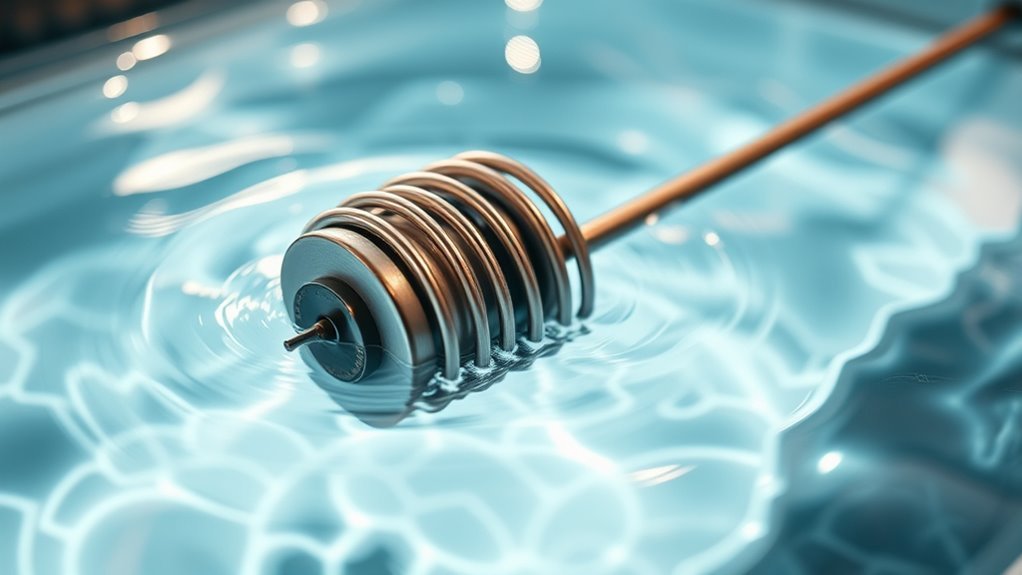
Because your Jacuzzi heater must withstand constant exposure to water and heat, the materials used in its elements play a crucial role in performance and durability. Heater elements are commonly made from titanium or nichrome, chosen for their excellent corrosion resistance and heat tolerance.
Titanium stands out for its ability to resist chlorinated and saltwater environments, making it ideal if your water chemistry includes high chlorine levels or salt. Nichrome, an alloy of nickel and chromium, offers high electrical resistance and stable heating, often used in electric heaters.
Some elements even feature coatings to boost corrosion resistance and thermal efficiency. Selecting the right material ensures your Jacuzzi heater lasts longer and operates efficiently, tailored specifically to your tub’s water chemistry conditions.
Temperature Control Mechanisms in Jacuzzi Tubs
You’ll find that thermostats play a key role in keeping your Jacuzzi tub’s water at the perfect temperature by switching the heater on and off as needed.
Many models come with digital control panels that let you set and monitor the temperature with ease.
Understanding how these controls work helps you enjoy a safe and comfortable soak every time.
Thermostat Functionality Overview
When the water temperature in your Jacuzzi tub falls below the desired level, the thermostat kicks in to activate the heating element and warms the water back up. This electronic thermostat continuously monitors the temperature, ensuring precise control over heating.
You can easily adjust the temperature settings through digital controls, often between 100°F and 104°F, allowing you to customize your soak. The thermostat automatically shuts off the heater once the set temperature is reached, maintaining consistent warmth.
For your safety, it includes high-limit switches that prevent overheating, protecting both you and the tub. By constantly sensing water temperature and regulating heating, the thermostat delivers a comfortable, controlled bathing experience every time you use your Jacuzzi tub.
Control Panel Features
How do you control the perfect temperature in your Jacuzzi tub? You rely on advanced digital control panels designed for precise adjustments. These panels feature a built-in thermostat that automatically maintains the water at your chosen temperature without constant monitoring.
You’ll find easy-to-use push buttons or touch-sensitive controls that make setting the temperature and jets a breeze. Plus, many models include programmable timers, so you can schedule heating cycles to save energy.
With these features, you can monitor real-time temperature and make quick adjustments. You can also use diagnostics to troubleshoot any heater issues.
And don’t forget, setting timers lets you personalize your heating schedules. This combination of smart technology ensures your Jacuzzi tub stays comfortable and efficient every time you relax.
Advantages of Built-in Versus External Heaters
You’ll find built-in heaters save space and simplify installation by fitting neatly inside the tub’s shell.
On the other hand, external heaters offer easier maintenance and faster heating, especially for larger tubs.
Let’s explore how each type can benefit your Jacuzzi setup.
Built-in Heater Benefits
Although external heaters can work, built-in heaters offer you more consistent and faster heating by integrating directly with your Jacuzzi tub’s internal system. A built-in heater uses electrical resistance elements paired with precise temperature control, ensuring your hot tub heating is efficient and accurate.
You’ll notice a fast response to temperature adjustments, keeping your water just right. Maintenance is simplified since the heater is accessible within the tub’s cabinet, reducing downtime and repair hassle.
Plus, the internal system design cuts out external connections, preventing heat loss and installation headaches. Benefits include:
- Precise, reliable temperature control with quick adjustments
- Easier maintenance and straightforward repairs inside the tub
- Reduced heat loss and simpler installation without external hoses
Choosing a built-in heater means smoother, more efficient hot tub heating overall.
External Heater Advantages
While built-in heaters offer seamless integration, external heaters bring distinct advantages that might better suit your needs. External heaters, located outside the hot tub, connect via heat-resistant hoses, allowing for easier installation and improved serviceability—you can repair or replace them without draining the tub.
Their double-walled design with water-filled spaces enhances safety and boosts heat transfer efficiency by promoting natural water circulation driven by heat rising. This design often results in more efficient heating compared to built-in models that rely on submerged water flow.
Additionally, external heaters reduce potential leak points inside the tub since plumbing is outside. If you prioritize straightforward maintenance, efficient heated water circulation, and enhanced safety, external heaters could be the smarter choice for your Jacuzzi tub setup.
Alternative Heating Options for Jacuzzi Tubs
How can you heat your Jacuzzi tub beyond the standard electric resistance heater? Exploring alternative heating options lets you customize your setup for efficiency or eco-friendliness.
You might consider gas heaters or an external stove to boost heating speed without relying solely on electricity. Or maybe solar systems or heat pumps that use renewable energy, which can reduce operating costs and environmental impact.
If you’re into a rustic, off-grid vibe, wood-burning stoves are a cozy alternative. Especially great if you enjoy that warm ambiance while soaking.
Each option involves integrating a compatible heater assembly into your Jacuzzi tub’s plumbing. While these are less common than built-in electric units, they can improve performance or fit unique situations.
Just make sure your choice matches your tub’s design and control systems. This way, you get precise temperature regulation and safe operation every time.
Frequently Asked Questions
Is There a Difference Between a Jacuzzi and a Hot Tub?
Yes, there is a difference. You’ll find Jacuzzi is a specific brand, while hot tub is a general term for any heated spa.
Both use heaters, but Jacuzzi tubs often have brand-specific features and designs. So, when people say “Jacuzzi,” they’re usually talking about that particular brand’s style and quality.
Should You Run Jets While Heating a Hot Tub?
You shouldn’t run jets while initially heating your hot tub.
Wait until it reaches the desired temperature, then turn jets on to circulate water efficiently.
This way, you avoid causing heat loss or increasing energy consumption unnecessarily.
Does Whirlpool Have Hot Tubs?
Yes, Whirlpool offers hot tubs, including models under their Jacuzzi brand. You’ll find various options with features like built-in heaters, digital controls, and energy-efficient systems.
These are designed to keep your water warm and comfortable, making your hot tub experience relaxing and enjoyable. So, whether you want to unwind after a long day or entertain guests, Whirlpool has you covered.
What Are the Standard Sizes of Jacuzzi Hot Tubs?
You’ll find Jacuzzi hot tubs usually range from 2 to 8 seats, with popular sizes between 6 to 8 feet.
Smaller tubs fit 2-3 people, medium fit 4-5, and larger tubs accommodate 6 or more comfortably.
Conclusion
When it comes to heating your Jacuzzi tub, you can’t settle for anything less than perfection. Built-in heaters, whether electric or gas-powered, deliver warmth so precise it feels like a personal sunbeam wrapped around you.
With advanced temperature controls and durable elements, these heaters turn your tub into a liquid oasis. Choosing the right heater isn’t just smart—it’s the essential step to opening the door to the ultimate spa experience you absolutely deserve every single time.
Jacuzzi tubs typically come equipped with electric heaters, known for their efficiency and ease of use. These heaters maintain consistent water temperature, ensuring your soak stays comfortably warm from start to finish. Some models may also use gas-powered heaters, offering rapid heating for those who want their tub ready quickly.
Ultimately, selecting the right heater for your Jacuzzi tub is key to enjoying a relaxing, warm bath whenever you desire. The perfect heater enhances your spa experience by providing reliable, adjustable warmth, making every soak a soothing escape.