How You Can Flush Toilets During a Power Outage
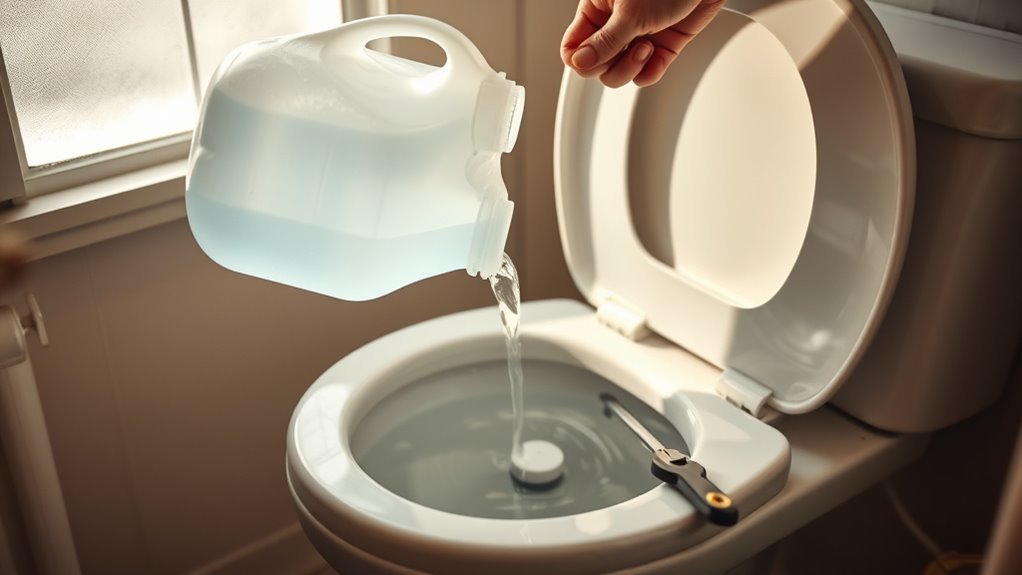
You can flush your toilet during a power outage by manually pouring 1-3 gallons of water directly into the bowl to trigger a flush without relying on electricity. This simple trick helps keep your bathroom functional even when the power’s out.
Most toilets use gravity to operate, so they don’t actually need electricity to flush.
If the tank is empty, you can fill it from a stored water source or an outside supply. Just make sure you have some water handy because city water pressure might be affected during an outage.
Keeping water available means your plumbing will keep working smoothly.
Don’t worry, managing sanitation during a power outage doesn’t have to be complicated. With a little preparation, you can handle flushing and other bathroom needs easily until power is restored.
Key Takeaways
- Most toilets flush using gravity and stored water, so they work without electricity if the tank is full.
- During power outages, water pressure may drop, making it harder to refill the tank after flushing.
- To manually flush, pour 1-3 gallons of clean water directly into the toilet bowl to trigger flushing.
- If the tank is empty, refill it using stored water or an outdoor source before flushing.
- For pump-based septic systems, be mindful that power loss may cause backups. This means you might need to consider alternate waste management options.
How Toilets Operate Without Electricity
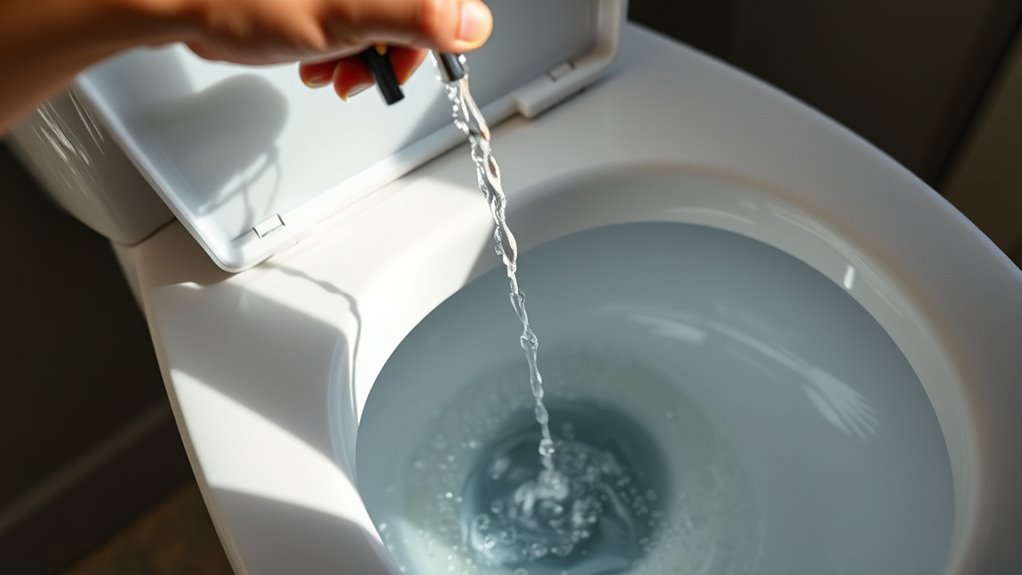
Although many household appliances rely on electricity, most toilets don’t need power to flush because they use gravity and stored water. When you pull the handle, gravity pulls water from the toilet tank into the bowl, clearing waste without any electrical help.
This relies on a steady water supply filling the tank after each flush. During a power outage, as long as your toilet tank has water, you can flush normally. If the tank is empty, you can perform manual flushing by pouring water directly into the bowl or tank, using gravity to push waste through the pipes.
While some electric-powered toilets need power to operate, standard gravity-flush models are designed to work independently, making them reliable even when the lights go out. So, no worries if the power goes out — your toilet’s got it covered!
The Impact of City Water Systems During Outages
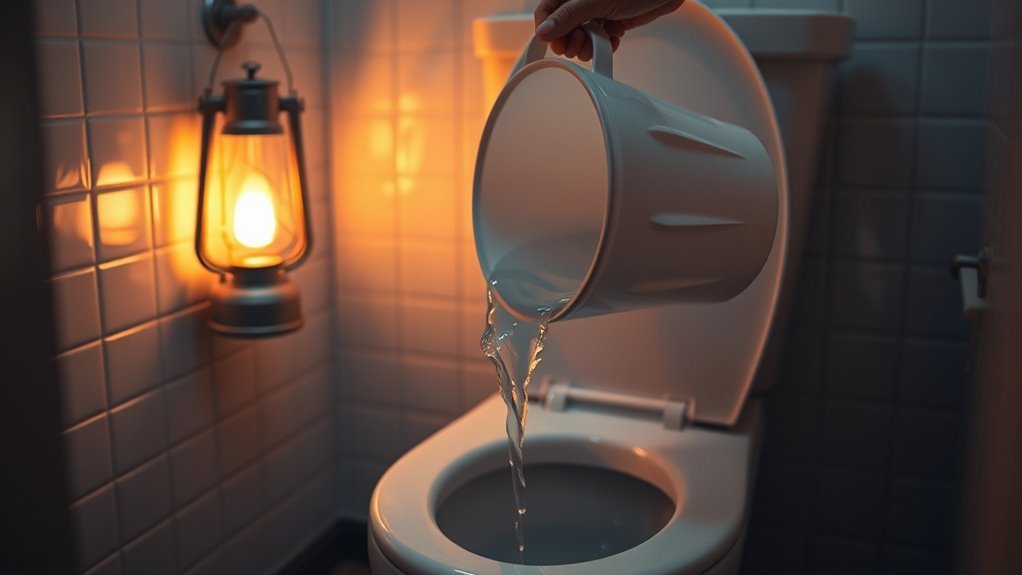
You’ll notice that city water systems often rely on water towers or pumps to keep pressure steady during outages. When power goes out for a long time, pressure can drop, making it harder to flush your toilet properly.
That’s why having emergency water stored helps you conserve and maintain sanitation until service returns. It’s a simple step that can make a big difference when the water isn’t flowing like usual.
Water Tower Dependency
When power goes out, city water systems that depend on elevated water towers can still provide some pressure to your home. These water towers store water at height, using gravity to maintain water pressure even during power outages.
However, the pressure from water towers alone might not be enough for all your needs, especially flushing. Since city water pumps often stop without power, water flow decreases, and pressure drops over time.
Some municipalities use backup generators to keep pumps running, but not all do. If the stored water depletes during an extended outage, pressure will fall further.
You should monitor your water pressure closely and consider having alternative water sources ready to flush toilets when water towers can’t supply sufficient pressure during power outages.
Pressure Loss Effects
Since city water systems rely heavily on electrical pumps to maintain pressure, power outages can cause a significant drop in water flow. This pressure loss means your plumbing system might not get enough water pressure to flush the toilet properly.
During a power outage, municipal water lines often lose pressure quickly, especially in systems dependent on pumps rather than gravity. Without sufficient water pressure, you might find it hard or even impossible to flush the toilet normally.
Extended outages worsen this problem, cutting off the pressurized water supply entirely. If you live in an area with a pressurized system, understanding these effects helps you prepare alternative ways to flush the toilet when water pressure drops due to a power outage.
Emergency Water Conservation
Power outages don’t just reduce water pressure—they can disrupt your access to reliable water flow altogether. City water systems often rely on gravity-fed septic tanks or high-pressure pumps that may fail during extended outages, impacting your plumbing systems and water heaters.
To manage this, emergency water conservation becomes critical. You should maintain a supply of stored water to ensure you can flush toilets even when municipal water delivery is inconsistent.
Understanding how your city’s water system operates helps you prepare for these interruptions and avoid plumbing issues caused by sudden pressure loss. By conserving water and using stored reserves wisely, you can maintain basic hygiene and sanitation until normal water service resumes.
Understanding Your Septic System’s Power Needs

Although most gravity septic systems operate without electricity and can function normally during outages, you need to know if your system relies on electrical pumps.
Some septic systems, like mound systems, use pumps to move wastewater, meaning a power outage can disrupt plumbing function.
Mound septic systems rely on pumps, so power outages can interrupt wastewater flow and plumbing operation.
Without power, pump-dependent systems can back up or fail, so understanding your setup is vital.
Here’s what to consider:
- Identify if your septic system uses a pump or gravity flow.
- Check if the pump requires electricity to operate.
- Understand risks of pump failure during a power outage.
- Learn if manual flushing or pump bypass is possible.
- Prepare to prevent plumbing backups and costly damage.
Knowing your septic system’s power needs helps you act quickly and maintain safe operation during outages.
It’s better to be prepared than caught off guard!
Manual Methods to Flush Your Toilet Without Power
When the electricity goes out and your toilet won’t flush normally, you can still manage by manually pouring water into the bowl to clear waste. This manual flushing method requires 1-3 gallons of clean water poured quickly from a bucket of water directly into the bowl.
If your toilet tank is empty, refill it from an outside water supply or use a bucket to restore its capacity for flushing. For homes with septic tanks and a drain field, this is essential to prevent backups.
Keep a small, manageable bucket filled with water outside your house for easy access during outages. By preparing a reliable water supply and using manual flushing, you maintain proper waste flow even without electricity, protecting your septic system and ensuring hygiene.
Water Storage Strategies for Emergency Toilet Use
Since regular water supply may be unavailable during an outage, you should store clean, potable water in outside tanks or barrels. This ensures you have enough for emergency toilet flushing.
Effective water storage is key to maintaining a backup water supply for flushing during outages. Consider these strategies for emergency toilet use:
- Fill small buckets (around 2 gallons) for easy hauling and pouring.
- Use roof-fed rainwater collection systems to supplement your water tanks.
- Refill storage tanks regularly to ensure a steady supply.
- Pre-fill buckets with water from a safe outside source before outages.
- Store water in durable, covered containers to keep it clean.
Practical Tips to Maintain Sanitation During Power Failures
Storing water is just the first step to keeping your toilet functional during a power outage. To maintain sanitation, use manual flushing by pouring 1-3 gallons of water into the bowl or tank.
Keep a clean water supply nearby for easy access. Limit toilet use to conserve water and reduce strain on waste removal systems. Know your plumbing or septic setup to adapt flushing methods as needed.
| Tip | Action | Benefit |
|---|---|---|
| Store water | Keep buckets of clean water | Ready for manual flushing |
| Manual flushing | Pour water into toilet | Effective waste removal |
| Understand system type | Check septic/plumbing system | Prevent system overload |
| Conserve water | Limit toilet use | Preserve water supply |
| Maintain sanitation | Flush promptly after use | Prevent odors, bacteria |
These tips ensure sanitation during a power outage. Just follow them and you’ll keep things clean and comfortable until the power comes back on.
Frequently Asked Questions
How Do I Know if the Toilet Is Clogged?
You’ll know your toilet’s clogged if water stays in the bowl, drains slowly, or overflows when flushed.
Listen for gurgling sounds, and watch for water backing up or leaking onto the floor—these signs mean a blockage.
If you notice any of these, it’s time to take action before things get worse.
What Are Waterless Toilets?
Waterless toilets don’t use water, so you won’t flush like usual. Instead, they compost, chemically treat, or contain waste.
You’ll save water, reduce sewage, and need to maintain them well to avoid odors. It’s a great option if you want to be eco-friendly!
Can I Still Use the Bathroom With No Power?
Yes, you can still use the bathroom without power. Just flush as usual if your toilet uses gravity.
If not, add water manually to the bowl or tank. It’s a good idea to keep backup water handy for emergencies.
Does Plumbing Still Work When Power Is Out?
Think of your plumbing as a river—usually, it flows without needing power. You’ll find most parts still work, but if pumps or electric systems are involved, they’ll pause.
Knowing your setup helps you stay prepared. It’s good to check what parts of your plumbing need electricity and which don’t. That way, you won’t be caught off guard during a power outage.
Conclusion
When the lights go out and water stops flowing, don’t let your toilet become a forgotten challenge. Like a captain steering through a storm, you can navigate manual flushing and smart water storage to keep things running smoothly.
Remember, even without power, you hold the key to maintaining sanitation and comfort. With a little preparation, you’ll flush away worries just like a river carries away the past—steady, sure, and unstoppable.
By learning how to flush toilets during a power outage, you ensure hygiene and convenience remain intact. Storing water wisely and mastering manual flushing methods can make a big difference. So, stay ready and confident—because even when the electricity fades, you’ve got the power to keep your home clean and comfortable.