How You Can Safely Flush Cat Litter Down the Toilet
You can safely flush certain biodegradable cat litters, like those made from corn or walnut shells. Just be sure to first confirm they’re labeled flushable and approved by your local waste guidelines. This is super important to avoid any plumbing problems.
Avoid flushing clay-based or silica litters since they clog pipes and harm the environment. Always scoop waste carefully and never flush large amounts at once.
This helps protect both your plumbing and aquatic life.
If you want to keep your home and nature safe, there’s more to know about the best disposal methods and alternatives. Taking a little extra time really makes a difference!
Key Takeaways
– Only flush cat litter labeled as flushable and biodegradable, like certain natural plant-based litters approved by manufacturers.
It’s important to stick with these types to avoid any plumbing issues.
– Avoid flushing clay-based or silica litters, as they can clog pipes and damage septic systems.
These materials just don’t break down well in water.
– Scoop and flush small amounts of safe litter at a time.
This helps prevent blockages and keeps your plumbing system running smoothly.
– Always check your local wastewater regulations and guidelines before flushing any cat litter.
You want to make sure you’re following the rules in your area.
– For litter that isn’t flushable, consider using sealed biodegradable disposal bags.
This way, you minimize environmental impact while keeping things tidy.
Understanding the Risks of Flushing Cat Litter
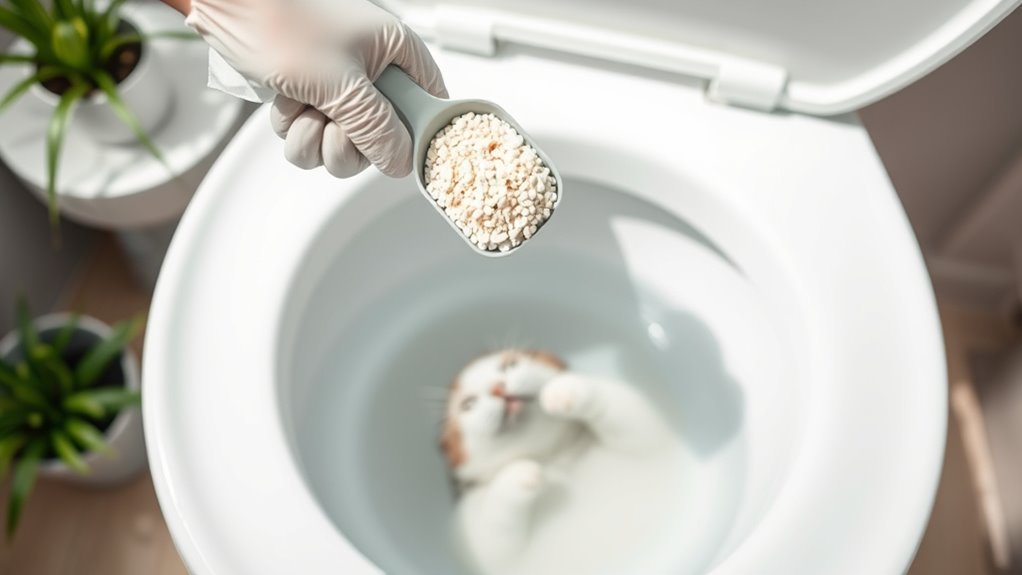
Although flushing cat litter might seem convenient, it introduces serious risks to water systems and wildlife. When you flush cat litter, you risk releasing toxoplasma gondii, a harmful parasite that water treatment plants often can’t fully remove.
Flushing cat litter can release harmful parasites like toxoplasma gondii, threatening water systems and wildlife.
This leads to water pollution, contaminating oceans, lakes, and rivers, where marine life like fish and sea otters can get infected. Additionally, many cat litters, especially clay-based ones, can harden and cause clogged pipes, damaging your plumbing.
Even flushable cat litter isn’t always safe to dispose of this way because of these risks. To protect the environment and avoid costly repairs, it’s essential to understand that safe disposal methods go beyond just flushing.
Being cautious helps keep both your home and natural habitats safe.
Types of Cat Litter and Their Flushability

What types of cat litter can you safely flush without risking plumbing damage or environmental harm? Clumping clay litters, made from bentonite, aren’t safe to flush since they harden and cause clogs.
Natural litters like walnut shells, corn, and wheat are often septic-safe and more environmentally friendly. Be cautious with litters labeled “flushable”—many still contain bentonite or silica, which can harm plumbing over time.
Always check the manufacturer’s instructions and local guidelines before flushing.
| Litter Type | Flushability |
|---|---|
| Clumping Clay | Not flushable |
| Natural Litters | Often septic-safe |
| Flushable Brands | Varies; check label |
| Silica-based | Not recommended |
| Corn/Wheat | Often septic-safe |
Health and Environmental Impacts of Flushing Cat Waste

When you flush cat waste, you risk releasing parasites like Toxoplasma gondii into water systems. These parasites can survive water treatment processes and pose risks to both humans and wildlife.
They often contaminate oceans and lakes, which is bad news for marine creatures such as sea otters and fish. It’s important to understand how this contamination impacts ecosystems and your health.
Knowing this can help you make safer disposal choices for your cat’s waste. So, think twice before flushing—it’s better for the environment and everyone’s well-being.
Parasite Risks to Humans
Why does flushing cat litter pose serious health risks? When you flush cat litter, you risk releasing Toxoplasma gondii, a dangerous parasite, into water systems. These parasite risks don’t disappear during wastewater treatment and can lead to water contamination.
Once in the environment, Toxoplasma gondii oocysts can stick to sediments, increasing infection chances for both humans and wildlife. For you, especially if you’re pregnant, exposure can cause severe congenital infections.
Flushing cat litter doesn’t just threaten your health—it contributes to broader ecosystem impact by spreading parasites that affect aquatic life. By understanding these risks, you can make safer choices to protect yourself and the environment from harmful contamination linked to improper disposal of cat waste.
Impact on Marine Life
The dangers of flushing cat litter extend beyond human health, reaching deep into marine ecosystems. When you flush cat waste, Toxoplasma gondii oocysts can survive wastewater treatment and enter aquatic environments.
These parasites settle on sediments and kelp, infecting marine life like invertebrates and fish that ingest them. Marine mammals, such as sea otters, then consume contaminated prey, causing infections that harm their health and threaten populations.
This parasite-contaminated runoff disrupts the ecosystem impact by creating imbalances and endangering biodiversity. By understanding how flushing cat litter affects marine mammals and other marine life, you can appreciate why proper disposal methods are vital.
Protecting our waterways means protecting the delicate balance of marine ecosystems from harmful contaminants. So, it’s really important to think twice before flushing cat litter down the toilet.
Water System Contamination
Although flushing cat waste might seem harmless, it can introduce harmful parasites like Toxoplasma gondii into water systems. Standard wastewater treatments often can’t eliminate these parasites.
You should know that Toxoplasma gondii oocysts resist sewage treatment. They survive in treated water and contaminate sediments and marine life.
This parasite survival creates serious water system contamination. It threatens environmental health by affecting aquatic and terrestrial wildlife.
| Concern | Impact |
|---|---|
| Parasite | Toxoplasma gondii |
| Resistance | Survives sewage treatment |
| Contamination Path | Water, sediment, marine life |
| Wildlife Affected | Sea otters, aquatic and terrestrial life |
| Environmental Risk | Ongoing contamination, health hazards |
Avoid flushing cat litter to protect water quality and environmental health. It’s a simple step that makes a big difference.
Plumbing Challenges Caused by Flushed Cat Litter
If you flush cat litter down the toilet, you risk clogging your pipes because most litters don’t dissolve and can harden into cement-like masses. Bentonite clay, common in many litters, expands when wet, making blockages even worse.
Over time, flushed litter sticks to pipe walls, causing waste buildup that narrows passageways and leads to clogs. This can damage your plumbing and strain your septic system, which isn’t designed to break down such materials.
Here are key plumbing challenges caused by flushed cat litter:
- Clog pipes with hardened litter and debris
- Damage septic system tanks through non-decomposing waste
- Cause slow drains from settled, non-clumping litter buildup
Flushing litter repeatedly increases the risk of costly plumbing damage and septic failure. So, it’s really best to avoid flushing cat litter altogether.
Safe Practices for Disposing of Cat Litter in Your Home
Since flushing cat litter can cause serious plumbing issues, you’ll want to adopt safe disposal methods to protect your pipes and septic system. First, never flush clay-based or non-biodegradable cat litter, as these can clog and damage your plumbing.
If your system allows, small amounts of non-clumping, biodegradable litter might be okay, but always check the manufacturer’s guidelines and local regulations.
For waste disposal, scoop the litter regularly and place it in a sealed bag before tossing it in the trash to prevent clogs. Avoid flushing large amounts of litter or feces at once, as this risks plumbing backups and environmental harm.
Eco-Friendly Alternatives to Flushing Cat Litter
How can you reduce your environmental footprint when managing cat litter? Choosing eco-friendly disposal methods is key.
Consider these options to handle cat waste responsibly:
- Use biodegradable litter made from natural materials like wood or corn, which break down more easily than clay.
- Opt for flushable cat litter designed to be septic-safe, but always check local regulations before flushing for safe waste disposal.
- Composting cat litter is an alternative, but do it cautiously away from vegetable gardens to avoid parasite risks.
Additionally, using plant-based disposal bags further supports eco-friendly disposal. By combining these practices, you ensure your cat’s waste is managed sustainably without harming the environment.
Frequently Asked Questions
Is It Okay to Flush a Little Bit of Cat Litter Down the Toilet?
No, you shouldn’t flush even a little cat litter. It can clog your pipes and harm the environment.
Instead, bag the litter and trash it safely to avoid costly plumbing issues and protect public health. It’s just a safer and smarter way to handle it!
What Is the Best Way to Dispose of Old Cat Litter?
The best way to dispose of old cat litter is to scoop it into a sealed bag and throw it in the trash.
Avoid flushing to prevent plumbing issues and always follow your local waste guidelines for disposal.
It’s pretty straightforward, but taking these steps helps keep everything clean and clog-free!
Can You Flush Cat Litter Down the Drain?
You might think flushing cat litter is like sending it on a tiny water slide, but don’t do it! It clogs pipes, harms ecosystems, and creates plumbing nightmares.
Stick to trash disposal for a safer, cleaner home. Trust me, your plumbing will thank you!
Is Flushable Cat Litter Really Safe to Flush?
No, flushable cat litter isn’t truly safe to flush. It can clog your pipes and harm the environment.
Even if it’s labeled flushable, you should avoid flushing it. This helps protect both your plumbing and local water systems.
Conclusion
So, you think flushing cat litter down the toilet is a magical way to make your problems disappear? Spoiler alert: your plumbing isn’t a black hole, and your toilet isn’t a litter genie.
If you want to avoid a surprise indoor swimming pool or an angry plumber’s bill, it’s smarter to toss that clump in the trash or try eco-friendly options. Your pipes—and your sanity—will thank you.
Flush wisely, not wildly! When it comes to flushing cat litter, always consider the type of litter you use. Some biodegradable litters are safer for plumbing and the environment, but many clumping or clay-based litters can cause severe blockages.
For a hassle-free and eco-conscious approach, explore environmentally friendly litters that break down safely. Remember, knowing how you can safely flush cat litter down the toilet protects your plumbing and helps keep the environment clean. So, next time, think twice before flushing—your pipes, wallet, and peace of mind will thank you!