How to Choose the Right Size Shower Heads: Are All Shower Heads the Same Size?
You’ll find that shower heads come in various sizes, from small handhelds around 3 inches to large rain shower heads over 10 inches. This difference in size affects water coverage and spray patterns, which can really change your shower experience.
However, most shower heads use the same standard ½-inch threaded connection. This means they usually fit your existing shower arm without any hassle.
To pick the right size, think about your bathroom space and the kind of water flow you want. If you’re curious about thread types, different styles, or installation tips, keep reading for more details.
Key Takeaways
- Shower heads come in various face sizes, ranging from about 3 to 12 inches. This size affects both the spray coverage and the overall style.
- Most shower heads use a standard ½-inch NPT threaded connection, which means they generally fit most shower arms. But it’s always good to double-check.
- Larger shower heads provide wider water coverage, giving you a more immersive shower experience. On the other hand, smaller ones offer a more focused spray pattern.
- Before buying, verify your shower arm’s diameter and thread type. This step ensures the shower head will fit properly without any issues.
- Besides functionality, your style preferences and the look of your bathroom also play a role in choosing the right size. So, think about both water flow and aesthetics when making your decision.
Understanding Standard Shower Head Sizes
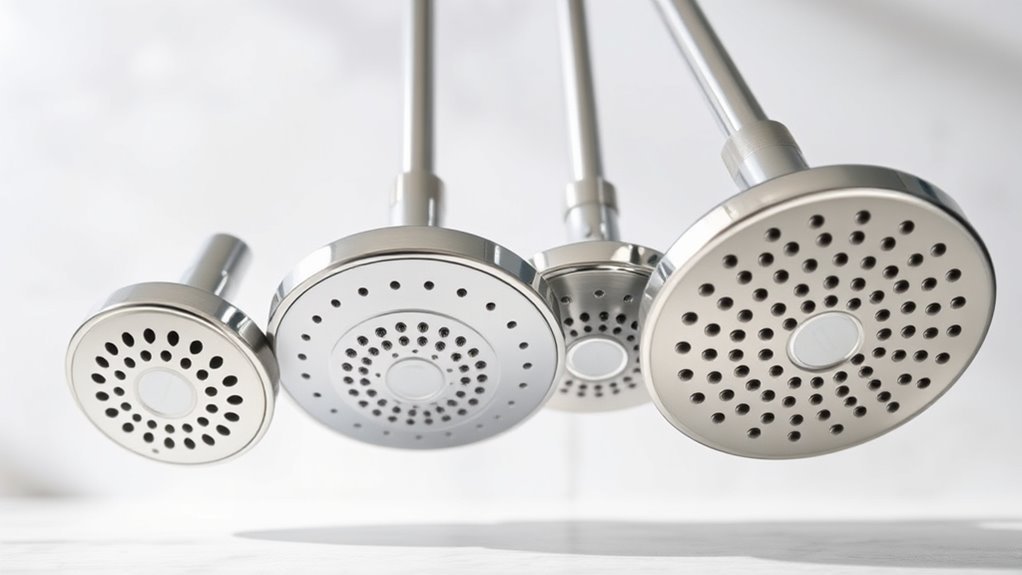
Although showerhead face sizes vary widely—from about 3 inches to over 8 inches for rainfall models—you’ll find that most standard fixed and handheld showerheads in the U.S. use the same ½-inch NPT threaded connection. This means the thread size remains consistent across different models, ensuring compatibility when swapping or upgrading your showerhead.
The variation in standard sizes mainly affects the showerhead face diameter, which influences spray coverage and style rather than the connection itself. Whether you prefer a small, focused spray or a wide rainfall effect, the ½-inch thread size simplifies installation.
Measuring Your Existing Shower Head Connection

Start by removing your current shower head and measuring the diameter of the shower arm with a ruler or caliper. Check the threading to identify if it matches the standard ½ inch NPT size.
If you’re unsure, take the old shower head or a clear photo to a hardware store for help matching the thread type. It’s always easier when you have something to show!
Measuring Shower Arm Diameter
How do you guarantee your new shower head fits perfectly? Start by measuring the shower arm diameter, which is the threaded pipe extending from your wall. Use a ruler or caliper to check its width accurately.
In the U.S., the standard shower head connection uses a 1/2 inch NPT thread size, compatible with most fixed and handheld shower heads. If your shower arm diameter differs, say 3/4 inch or another non-standard size, you’ll need adapters to make certain of a secure fit.
Verifying the thread size before purchasing helps you avoid leaks and installation issues. Taking this simple step ensures your new shower head matches your existing connection, making replacement quick and hassle-free.
Identifying Thread Type
Once you’ve measured the shower arm diameter, the next step is identifying the thread type of your existing shower head connection. Most U.S. shower heads use a ½ inch NPT thread size, which is compatible with standard plumbing fittings.
To confirm, take a caliper or ruler and measure the diameter of the threaded pipe or fitting. This measurement helps guarantee you select a shower head with the correct thread type for seamless compatibility.
If your shower head is removable, check for any markings indicating thread size or type. When unsure, bring your shower head or fitting to a hardware store or consult a plumber.
Accurate thread size identification guarantees a proper fit, preventing leaks and ensuring your new shower head works perfectly with your existing plumbing.
Common Thread Types and Compatibility

Most shower heads use a standard ½-inch NPT thread, making them compatible with most plumbing fittings. You’ll want to check your existing connector to verify the thread type matches before buying a new shower head.
When in doubt, refer to the product details or ask a professional to avoid any fitting issues. It’s always better to be safe than sorry!
Standard Shower Head Threads
Because shower heads must fit securely to prevent leaks, understanding standard shower head threads is essential when choosing or replacing one. Most U.S. shower heads use a ½-inch NPT (National Pipe Thread) connection, ensuring thread compatibility across plumbing fittings.
Typically, the shower arm has male threads, and the shower head has female threads. Matching these threads with the correct shower head size is key to avoiding leaks or fit issues.
Universal shower heads usually fit standard ½-inch NPT threads, making replacements straightforward.
| Component | Thread Size | Thread Type |
|---|---|---|
| Shower Arm | ½-inch NPT | Male |
| Shower Head | ½-inch NPT | Female |
| Common Fittings | ½-inch NPT | Male/Female |
| Universal Heads | ½-inch NPT | Female |
| Compatibility | Standardized | High |
Ensuring Proper Fitting Compatibility
Although shower head thread sizes are generally uniform, you’ll want to confirm whether your shower arm has male or female threads to make certain proper compatibility. Most standard U.S. shower heads use a ½-inch National Pipe Thread (NPT), matching common plumbing fittings for straightforward installation.
However, some older or specialty models might feature different thread sizes or types. In those cases, you may need an adapter to verify a secure fit.
Proper fitting compatibility means matching the thread size and type precisely to avoid leaks and ensure a stable attachment. Before installation, double-check your shower arm’s threads and, if necessary, select the right adapter to guarantee a smooth, leak-free setup with your new shower head.
Differences Between Shower Head Styles and Sizes
When you choose a shower head, understanding the differences in styles and sizes can help you find the perfect fit for your bathroom. Shower head sizes vary widely—from compact handhelds (3-4 inches) to expansive rain shower heads (8-12 inches).
These sizes affect water flow rate and spray pattern, influencing your shower experience. Types of shower heads like fixed, handheld, and rain each offer unique installation needs and aesthetics.
Most use a standard ½-inch NPT threaded connection for easy installation.
| Style | Size Range (inches) | Emotion Evoked |
|---|---|---|
| Fixed | 3 – 6 | Reliability |
| Handheld | 3 – 4 | Flexibility |
| Rain | 8 – 12 | Luxury & Relaxation |
Factors Affecting Shower Head Size Selection
Selecting the right shower head size depends on several factors that affect both performance and comfort. You’ll want to take into account water coverage since larger shower heads, like rain models measuring 8 to 12 inches, offer a fuller spray for a relaxing shower experience.
Smaller heads, such as handhelds around 3 to 4 inches, provide targeted water flow and are easier to maneuver. Installation compatibility is another key factor; most shower heads use a standard 1/2 inch NPT connection, but you should still verify your setup.
The shower head size directly impacts water flow and spray pattern, influencing efficiency and how enjoyable your shower feels. Balancing these factors ensures you choose a size that fits your bathroom and meets your personal preferences.
Tips for Ensuring a Proper Fit and Installation
To make certain your shower head fits properly, start by measuring the diameter and checking the thread type of your shower arm. Most standard shower heads use a 1/2-inch NPT connection, but some shower arms may be 3/4 inch or have different thread types. So, confirming these details guarantees a proper fit.
If you’re replacing an older shower head, look for any adapters needed to match varying sizes or thread types. When installing, follow these installation tips: hand-tighten the shower head to prevent damaging threads or causing leaks.
Frequently Asked Questions
Should I Connect 3/4 Line to 1/2in Shower Valve?
You shouldn’t connect a 3/4-inch line directly to a 1/2-inch shower valve without proper adapters. It can cause pressure problems and leaks.
Always check compatibility or consult a plumber for safe, efficient installation. Better safe than sorry, right?
Does a Shower Head Have Different Sizes?
Wondering if all shower heads come in the same size? They don’t.
While the connection is usually standard, the spray face can vary from tiny to large. So, you’ll want to pick a size that fits your space and style.
Which Shower Head Is Better, a 2.5 Gallon or a 1.8 Gallon Shower Head?
You’ll find a 2.5 GPM shower head better if you want strong water pressure. It gives you a more powerful and invigorating shower experience.
On the other hand, a 1.8 GPM shower head saves water and energy. So, if you’re looking to be more eco-friendly and reduce your bills, this might be the way to go.
In the end, it really comes down to what you prefer—intensity or efficiency. Pick the one that suits your shower style and needs best.
Can I Just Replace My Shower Head?
Why wait any longer? Yes, you can easily substitute your shower head yourself.
Just make sure the new one fits your existing connection, usually 1/2-inch NPT, to avoid leaks and guarantee a snug fit.
Conclusion
So, are all shower heads the same size? Obviously not—unless you enjoy turning your bathroom into a plumbing puzzle. Before you buy, measure, check threads, and consider styles.
You don’t want a “surprise” water show every morning. Picking the right size isn’t rocket science—it’s just a bit of common sense mixed with a dash of patience.
Follow these tips, and you’ll avoid awkward fittings and unexpected leaks. Choosing the right size shower heads ensures a perfect fit and smooth installation.
Your future self (and your bathroom) will thank you for taking the time to select the proper size shower head. Remember, not all shower heads are created equal, so sizing matters!