How Do You Make Your Toilet Flush Better in 5 Simple Steps?
To make your toilet flush better, start by setting the water level about an inch below the overflow tube. This simple adjustment helps ensure there’s enough water to create a strong flush without wasting any.
Next, clean or replace the flapper to guarantee a tight seal. A worn-out flapper can cause leaks and weak flushes, so making sure it’s in good shape is key.
Then, clear any mineral buildup from the rim holes and siphon jet for better water flow. Over time, these tiny holes can get clogged, reducing the flushing power.
Adjust the chain and handle for smooth flapper lifting. If the chain is too tight or too loose, it can stop the flapper from opening fully.
Finally, remove blockages using a plunger or auger to restore proper drainage. Blockages can seriously weaken your flush, so tackling them is essential.
Keep going to uncover more handy tips for a stronger flush. You’ll be surprised how simple changes can make a big difference!
Key Takeaways
- Adjust the water level in the tank to about 1 inch below the overflow tube for optimal flush power. This helps make sure you have enough water pressure for a strong flush.
- Clean or replace the flapper to ensure a tight seal and smooth flush operation. A worn-out flapper can cause leaks and weak flushing.
- Clear mineral buildup from rim holes and siphon jet to maintain strong water flow around the bowl. It might take a little scrubbing, but it’s worth it for better flushing.
- Inspect and adjust the chain and handle to ensure the flapper lifts fully during flushing. If the chain is too loose or tight, the flush won’t be effective.
- Remove blockages from the trap and drain using a plunger or toilet auger to restore proper flow. Sometimes, stubborn clogs are the real reason your toilet isn’t flushing well.
Check and Adjust the Water Level in the Tank
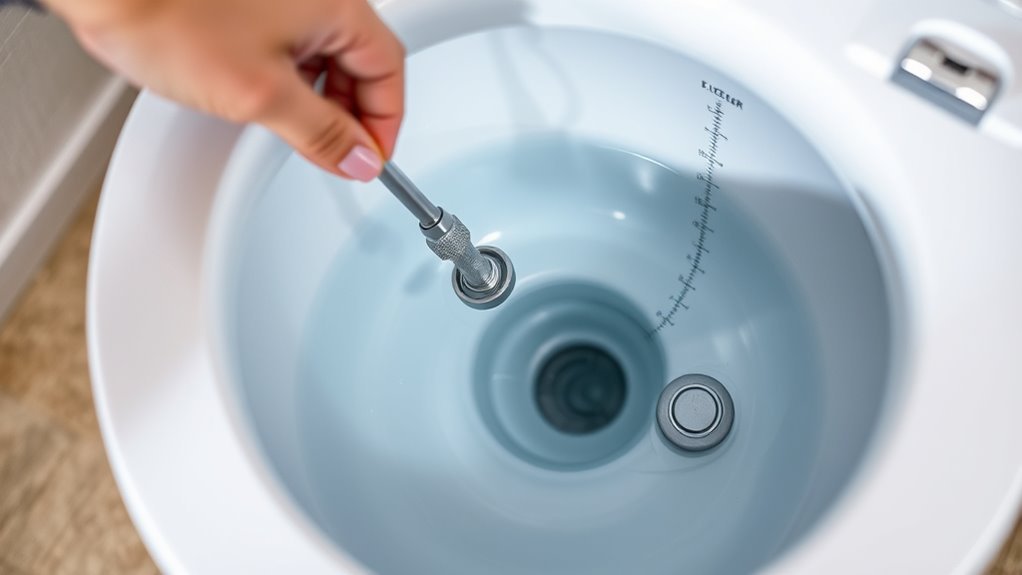
Before you start adjusting, check that the water level in your toilet tank sits about one inch below the overflow tube. This level ensures an ideal flush without wasting water.
To adjust it, locate the float ball or float cup inside the tank. If your toilet has a float ball, gently bend the arm downward to lower the water level or upward to raise it.
For toilets with a fill valve featuring a screw, turn it clockwise to decrease the water or counterclockwise to increase it. Make sure the fill valve shuts off automatically when the water reaches the set level to avoid overflow.
After making adjustments, flush the toilet a few times and observe the water level to confirm it delivers a strong, effective flush every time. Easy enough, right? Just a little tweak and you’re good to go!
Clean the Flapper and Internal Components

Since a worn or dirty flapper can cause weak flushes or leaks, you’ll want to remove the tank lid and inspect it carefully. Look for signs of wear, warping, or buildup.
Use a brush and a mild vinegar solution to clean the flapper and the surrounding area, removing mineral deposits or debris. Make sure the flapper creates a tight seal when closed.
Clean the flapper and surrounding area with a brush and vinegar to ensure a tight, effective seal.
If it’s cracked or damaged, go ahead and replace it. Also, check the chain connecting the flapper to the flush handle—adjust its length if it’s too loose or tight to ensure smooth operation.
Finally, clean other internal components like the lift chain and flush valve seat. This helps the flapper seal properly and improves your toilet’s flushing power.
Clear Rim Holes and the Siphon Jet

When water doesn’t flow freely through the rim holes and siphon jet, your toilet’s flush weakens noticeably. To fix this, you need to clear these vital passages to restore strong flushing power.
Start by using a small brush or pin to remove mineral buildup or debris blocking the rim holes. This helps water flow evenly around the bowl’s edge.
Next, check the siphon jet for clogs. It directs water into the trapway to create the siphoning action necessary for a powerful flush.
Make it a habit to clean both the rim holes and siphon jet regularly. Doing so maintains maximum water flow and helps you avoid weak flushing or incomplete waste removal.
Keeping these areas clear ensures your toilet flushes efficiently every time. Trust me, it makes a noticeable difference!
Inspect and Adjust the Chain and Handle
Clearing the rim holes and siphon jet sets the stage for a strong flush, but the handle and chain play a key role in triggering that power. First, check the chain for slack, damage, or misalignment that might stop the flapper from lifting fully.
Adjust the chain length so it releases the flapper completely when you press the handle. Replace any frayed or worn links to keep a solid connection.
If the handle feels loose or sticks, tighten or reposition it for smoother operation. After making these adjustments, test the flush to ensure the handle and chain work together seamlessly.
This will help create a stronger, more reliable flush, improving your toilet’s overall performance without needing complicated repairs.
Remove Blockages From the Trap and Drain
If your toilet isn’t flushing properly, removing blockages from the trap and drain can make a big difference. Start by checking for visible obstructions: remove the tank lid and inspect the trap area for debris you can clear manually.
Check for visible blockages in the trap by removing the tank lid and clearing any debris manually.
Next, use a plunger to create a seal over the drain opening. Apply firm, consistent pressure to dislodge any blockage.
If that doesn’t work, insert a toilet auger or snake into the drain to break up or pull out stubborn clogs deeper inside. You can also pour a mixture of hot water and dish soap or a commercial drain cleaner to help loosen minor clogs.
These steps will help restore proper flow and improve your toilet’s flush. Give them a try, and you might save yourself a trip to the plumber!
Frequently Asked Questions
How Do I Make My Toilet Flush Better?
You can make your toilet flush better by adjusting the water level in the tank. Cleaning the flapper and fill valve also helps a lot.
Using a plunger to clear clogs is a good idea too. Sometimes, adding a bowl enhancer or extra water can give it that extra boost if needed.
What Is Ghost Flushing?
You might call ghost flushing your toilet’s little secret—it’s when your toilet refills without you pressing the handle.
It usually happens because of a leaky flapper or fill valve that needs some attention.
These sneaky leaks can waste water and hike up your bill without you noticing.
How Do I Turn off the Water to My Toilet?
You find the shut-off valve behind your toilet near the base or on the wall. Turn it clockwise until it stops to shut off the water.
Flush to empty the tank, and check for leaks afterward. It’s pretty straightforward once you know where to look!
Should I Flush After Every Pee?
Yes, you should flush after every pee to keep your toilet clean and odor-free.
If you have a dual-flush toilet, use the lower volume flush to save water while maintaining hygiene effectively. It’s a simple way to be eco-friendly without any extra effort.
Conclusion
So, if your toilet’s auditioning for a role as a stubborn relic, don’t just sit there admiring the mess. Check the water level like a detective. Clean those mysterious flappers and clear those secret rim holes—as if you’re defusing a bomb.
Adjust chains like you’re tuning a guitar. Banish blockages like a bathroom warrior.
Remember, a better flush isn’t just plumbing; it’s your throne’s standing ovation. Who knew bathroom heroics were this glamorous? Improving your toilet flush can save water and keep your bathroom fresh. With these simple steps, you’re not only fixing a problem—you’re upgrading your bathroom experience. So go ahead, flush away those worries and enjoy the smooth, efficient flush you deserve!