How Big Is a Standard Bathtub Size Guide
A standard bathtub typically measures about 60 inches long, 30 inches wide, and 14 to 16 inches deep. This size offers a good balance for most bathrooms, making it a popular choice for many homeowners.
You’ll also find smaller tubs around 54 to 60 inches, which are perfect for tight spaces.
On the other hand, larger tubs can exceed 72 inches, ideal for those who enjoy deep soaking.
When choosing a bathtub, consider your bathroom size and how you plan to use the tub. Keep exploring to discover options that perfectly match your space and comfort needs.
Key Takeaways
- Standard bathtubs typically measure about 60 inches long, 30 inches wide, and 14 to 16 inches deep.
- Common bathtub capacity is around 80 gallons, suitable for most residential bathrooms.
- Small tubs range from 54 to 60 inches, while larger tubs exceed 72 inches in length.
- Large or deep soaking tubs can be 20 inches deep, offering full-body immersion and hydrotherapy features.
- Always measure bathroom space and plumbing locations before selecting a bathtub size to ensure proper fit and function.
Typical Dimensions of Standard Bathtubs

Although bathtub sizes can vary, the most common standard tub measures about 60 inches long, 30 inches wide, and 14 to 16 inches deep. This typical bathtub size fits well in most residential bathrooms, offering a comfortable space for soaking without overwhelming the room.
The standard bath height usually ranges from 14 to 17 inches, making it easy to sit or stand up. You’ll find many standard tubs hold around 80 gallons, depending on their internal dimensions.
The width generally falls between 28 and 32 inches, ensuring compatibility with typical bathroom layouts. Knowing this tub size helps you plan your bathroom design effectively, balancing comfort and space efficiency with a practical, widely used standard bath dimension.
Variations in Bathtub Sizes for Different Needs
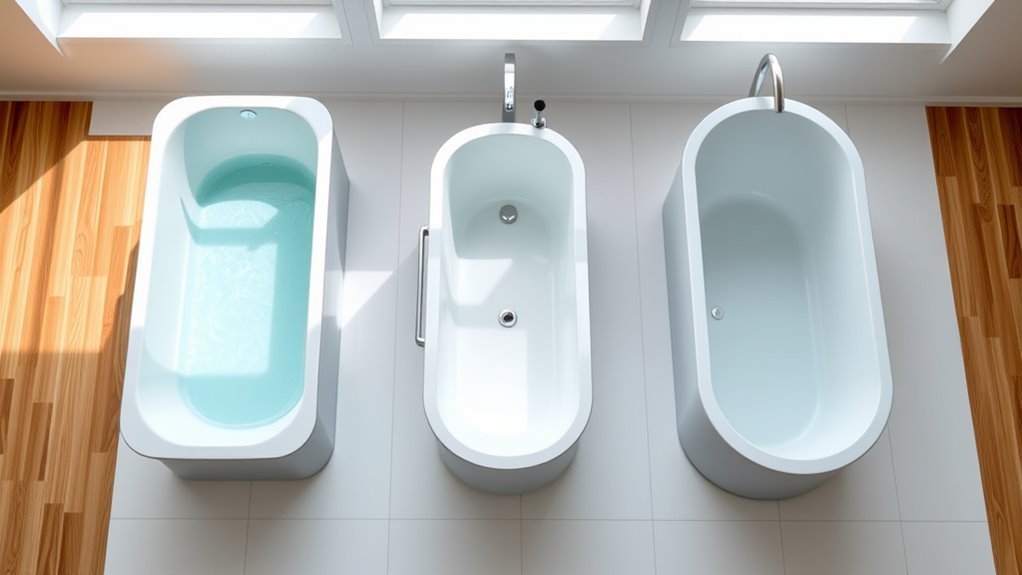
You’ll find small bathtubs usually measure around 54 to 60 inches long, perfect for tight spaces.
Standard tubs range from 60 to 72 inches, fitting most bathrooms comfortably. If you want extra room to relax, large bathtubs often exceed 72 inches in length and offer deeper soaking options.
Small Bathtub Dimensions
When space is limited, small bathtubs offer a practical solution without compromising comfort. These compact tubs are designed to fit snugly in tight bathrooms while still providing a relaxing soak.
Understanding small bathtubs’ dimensions helps you choose the perfect fit for your space. It’s all about making the most of what you have without feeling cramped.
Consider these key dimensions when selecting a small bathtub:
- Length typically ranges from 1400mm (55 inches) to 1600mm (63 inches), ideal for compact areas.
- Width usually spans 700mm (27.5 inches) to 750mm (30 inches), maximizing room efficiency.
- Depth falls between 400mm (16 inches) and 450mm (17.5 inches), ensuring comfort without bulk.
Popular styles like corner tubs and mini oval designs optimize these dimensions to suit your bathroom’s layout perfectly. So, whether you want to save space or just need something cozy, these options have got you covered.
Standard Bathtub Measurements
Since bathtubs come in various sizes to meet different needs, understanding standard measurements helps you pick the right one for your space and lifestyle.
The most common standard bathtub measurements are 60 inches long, 30 inches wide, and 14 to 16 inches deep. These sizes fit well in many bathroom layouts.
However, bathtub size can vary widely—from compact 48-inch tubs for small spaces to corner tubs measuring 48 to 60 inches on each side, optimizing corner bathroom layouts.
These variations ensure you find a tub that suits your room’s dimensions and your comfort requirements.
Knowing these details lets you choose a bathtub that fits perfectly without compromising style or function in your bathroom layout.
Large Bathtub Options
Although standard bathtubs fit most bathrooms, opting for a large bathtub can transform your space into a luxurious retreat. Large bathtubs, typically 70 inches or longer, offer a superior bathing experience with extra room to relax.
Before choosing one, consider your bathroom size to make certain it fits comfortably and supports the tub’s weight. Here are three key variations to keep in mind:
- Length and width: Large tubs range from 70 inches long and 34 to 40 inches wide, providing ample space.
- Depth: Deep tubs, around 20 inches, allow for full-body immersion and greater comfort.
- Features: Premium models often include water jets for hydrotherapy and massage, enhancing relaxation.
Choose wisely to elevate your bathroom’s comfort and style. You’ll be glad you did!
Measuring Your Bathroom for the Right Tub Fit

Before choosing a bathtub, measure your bathroom’s length, width, and height carefully. Don’t forget to note plumbing locations to make certain your new tub fits without complications.
It really helps to sketch a detailed layout with all your measurements. That way, you can easily compare different options and find the perfect fit for your space.
Measure Bathroom Dimensions
When you measure your bathroom dimensions, you’ll make certain the bathtub fits perfectly without crowding other fixtures. Accurate bathroom measurements are key to choosing the right bathtub size and optimizing your bathroom layout.
Start by measuring the overall length, width, and height of your bathroom. Next, record the dimensions of existing fixtures like the toilet and sink to understand space limitations.
Finally, measure the alcove or designated tub area, noting distances from walls and any plumbing locations.
- Measure total bathroom length, width, and height.
- Note dimensions of fixtures affecting tub placement.
- Check the tub space and clearance for doors or cabinets.
Sketch your bathroom layout to visualize how the new bathtub size will fit seamlessly. It really helps to see everything on paper before making a final decision.
Note Plumbing Locations
How do you guarantee your new bathtub fits perfectly without costly adjustments? Start by carefully noting your plumbing locations. Measure the distance from walls to existing drain and water supply lines to ensure your tub placement aligns with hookups.
Also, check electrical outlets, vents, and windows that might affect installation or tub positioning. Use a tape measure to confirm available space in length, width, and height, leaving room for clearance and access.
Document these details to understand how plumbing locations influence your bathroom layout and tub placement. By accurately recording where pipes and fixtures sit, you avoid surprises during installation.
This way, you make sure your new bathtub integrates seamlessly into your space without expensive modifications. This step is vital for a smooth, hassle-free bathroom upgrade.
Sketch Layout Precisely
Although measuring your bathroom might seem straightforward, sketching an accurate layout takes careful attention to detail. You need precise measurement and clear dimensions to ensure your new bathtub fits perfectly.
Follow these steps to create a reliable bathroom layout:
- Measure the length, width, and height of your bathroom, noting all dimensions carefully.
- Sketch a scaled layout including walls, doorways, windows, and fixtures, marking their exact measurements.
- Record distances from walls to plumbing and electrical hookups, plus door swings and window placements to avoid obstructions.
Double-check your measurement and layout to prevent costly mistakes. A precise sketch helps you visualize the space and guarantees your chosen tub fits seamlessly, providing both function and comfort.
Small Bathtub Options for Limited Spaces
If you’re working with a compact bathroom, choosing a small bathtub can maximize your space without sacrificing comfort. Small bathtubs typically measure between 48 to 60 inches in length and 28 to 32 inches in width, making them perfect for limited bathroom space.
Their depth usually ranges from 14 to 16 inches, providing enough water capacity without overwhelming the room. You can also consider corner or alcove tubs, often about 48 inches by 48 inches, which fit snugly into tight spots.
Opting for shallow models under 50 inches long helps conserve bathroom space while still offering a comfortable soak. By carefully selecting the right dimensions, you ensure your small bathroom remains functional and stylish without feeling cramped.
Large and Oversized Bathtubs for Spacious Bathrooms
When you have a spacious bathroom, choosing a large or oversized bathtub can transform your space into a personal retreat. Large bathtubs typically measure 70 inches or more in length and 34-40 inches in width, offering plenty of room to relax.
A spacious bathroom invites a large tub, turning your space into a relaxing personal retreat.
Oversized soaking tubs, often 72 inches or longer, provide a luxurious experience perfect for master suites. Before choosing, consider your bathroom size carefully to guarantee proper fit and floor support.
Large soaking tubs offer deeper immersion, with depths of 20 inches or more for ultimate comfort. Many oversized tubs include hydrotherapy features like multiple water jets, enhancing relaxation.
Just make sure your bathroom size accommodates the tub’s dimensions to avoid overcrowding and structural issues. It’s all about balancing luxury with practicality.
Choosing the Right Bathtub Size Based on Usage
Since the right bathtub size depends heavily on how you plan to use it, you’ll want to match dimensions to your bathing habits. If you prefer quick rinses, a smaller bathtub around 60 inches will suit you just fine, offering sufficient water capacity without excess space.
However, for relaxing long soaks, aim for tubs between 66 to 72 inches. These provide the length and depth needed for full-body immersion.
Your height also matters—taller users benefit from deeper tubs, usually 14 to 17 inches deep, to ensure comfort.
If you share baths with family, consider wider or longer models that comfortably fit multiple users.
Choosing the right bathtub size ensures your bathing experience matches your lifestyle and maximizes both comfort and water efficiency. It’s all about what feels right for you!
Frequently Asked Questions
What Are the Standard Sizes of Bathtubs?
Standard bathtubs are typically 60 inches long and 30 inches wide, with depths ranging from 14 to 17 inches. Heights usually vary between 14 and 20 inches, fitting most bathrooms comfortably.
These sizes work well for most spaces, but there are also smaller and larger options out there. So, if you have a unique bathroom layout, you might find something that fits just right!
How Long Should a Bath Be?
You should choose a bath that’s long enough to relax, long enough to stretch out, and long enough to feel comfortable—typically around 60 inches.
Anything shorter feels cramped; anything longer offers luxury and extra space. So, it’s all about finding that sweet spot that works for you.
How to Choose a Bathtub?
You should measure your bathroom space, consider your bathing habits, and pick a tub style that fits your layout.
Don’t forget to check water capacity and floor support to make sure your choice is practical and comfortable.
What Is a Good Depth for a Bathtub?
A good bathtub depth is usually around 15-16 inches, giving you the sweet spot between comfort and ease.
It’s like finding the perfect hug—deep enough to soak, but not too hard to climb in or out.
Conclusion
When picking a bathtub, knowing that the average standard tub is about 60 inches long and 30 inches wide can really help you visualize your space.
Remember, measuring your bathroom first guarantees a perfect fit, whether you want a cozy small tub or a luxurious oversized one.
By choosing the right size based on your needs and bathroom layout, you’ll create a comfortable, functional spot to relax every day.
Understanding how big a standard bathtub is allows you to plan your bathroom efficiently. With the right measurements, you avoid surprises and make sure your new tub fits beautifully. Whether it’s a standard size or a custom fit, picking the right bathtub size is key for comfort and style. So, take your time measuring and thinking about how you use your space to find the perfect bathtub size that suits your lifestyle and bathroom design.