How Can You Avoid Getting Electrocuted in the Bathtub?
To avoid getting electrocuted in the bathtub, it’s crucial to keep electrical devices like hairdryers and chargers far away from water. Water and electricity don’t mix, so always be mindful of where you place your gadgets.
Make sure your bathroom outlets are equipped with Ground Fault Circuit Interrupters (GFCIs). These devices can instantly cut power if there’s a fault, protecting you from shocks.
Never handle appliances with wet hands or while standing in water.
And remember to unplug devices before you start your bath.
It’s also a good idea to regularly check your bathroom wiring for any damage or exposed wires.
Taking these simple steps seriously can really help you stay safe.
If you want to be absolutely sure your bathroom is safe, understanding these precautions in detail is key to preventing accidents.
Key Takeaways
- Always use Ground Fault Circuit Interrupter (GFCI) outlets near bathtubs. They instantly cut power if there’s an electrical leak.
- Keep all electrical devices and cords at least three feet away from the bathtub. It’s also a good idea to unplug them before you start bathing.
- Never handle electrical appliances with wet hands or while standing in water. That just increases the risk of getting shocked.
- Make sure to regularly inspect and maintain the bathroom wiring and outlets. You want to avoid any exposed wires or electrical faults.
- If there’s an emergency, always turn off the power at the circuit breaker before helping someone who’s experiencing an electrical shock. Safety first!
Common Electrical Hazards in the Bathroom

Although bathrooms seem safe, they hide several electrical hazards you should never ignore. Faulty or improperly installed devices like hairdryers and electric razors pose a real risk of electrocution, especially when used near water.
Bathrooms may appear safe but electrical hazards like faulty hairdryers near water can cause serious risks.
You should avoid extension cords or adapters around sinks and tubs because water’s high conductivity magnifies electrical dangers. Metal fixtures, pipes, or exposed wiring can conduct electricity if something goes wrong, making your bathroom a potential hazard zone.
Bathrooms without GFCIs are particularly vulnerable to electrical faults, increasing the chance of shocks. Understanding these common electrical hazards is essential to staying safe while bathing or grooming.
Being cautious about where and how you use electrical devices helps minimize the risk of injury in such a water-prone area. It’s always better to be safe than sorry!
Importance of Ground Fault Circuit Interrupters (GFCIs)
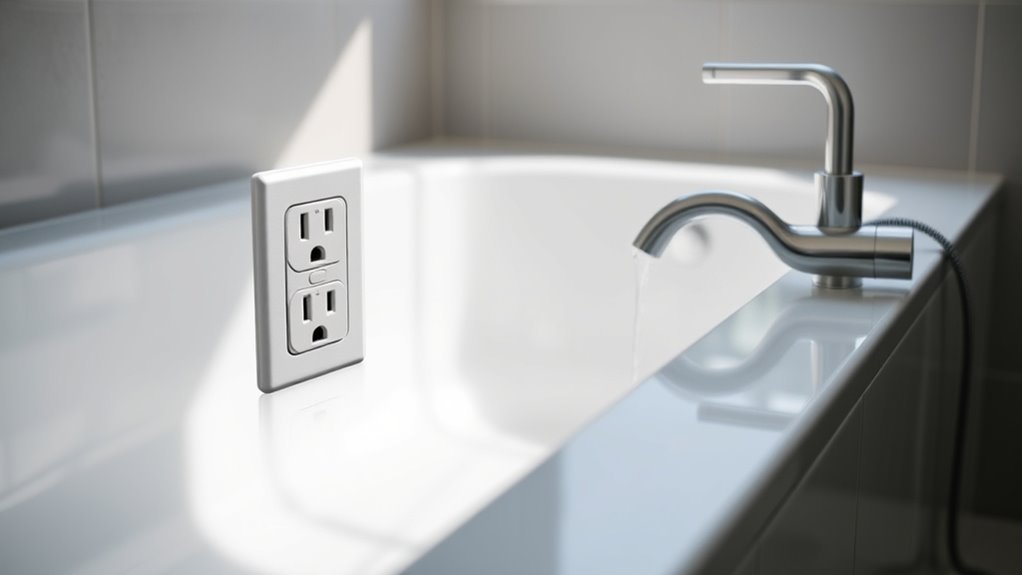
You should know how GFCIs work to protect you from electrical shocks by quickly cutting power when they detect a leak. It’s important to install them in key bathroom locations, especially near the bathtub.
Plus, testing and maintaining your GFCIs regularly guarantees they keep you safe every time you use the bath. It’s a simple step that makes a big difference in preventing accidents.
How GFCIs Work
Because bathrooms expose you to wet conditions, Ground Fault Circuit Interrupters (GFCIs) play a crucial role in preventing electrocution by instantly shutting off power when they detect even a small electrical imbalance.
GFCIs monitor the current flow between the hot and neutral wires, and if they sense a ground fault—a difference as small as 4 to 6 milliamps—they trip within 1/40 of a second. This rapid response helps prevent electric shock by cutting power before it can harm you.
Installing GFCIs on bathroom outlets ensures continuous protection against dangerous electrical leaks. To keep them working properly, you should test your GFCIs monthly using the built-in test button.
It’s a simple step but super important. This way, you make sure they’ll protect you when you need it most.
GFCI Installation Locations
Understanding where to install GFCIs can greatly enhance your bathroom safety. You should install GFCIs on all circuits powering outlets within 6 feet of the bathtub or sink to prevent electrical shock.
The National Electrical Code mandates GFCI protection for every bathroom receptacle, ensuring you’re shielded from potential electrocution. GFCIs detect current imbalances and trip within 1/40 of a second, cutting power fast enough to stop harm.
For added security, consider installing GFCIs at the circuit breaker panel to protect the entire bathroom circuit. Proper GFCI placement is your first line of defense against electrical shock, making your bathroom a safer place.
Prioritizing these installation locations helps you avoid serious injury while enjoying your bathtub safely. It’s a simple step that really pays off when it comes to peace of mind.
Testing and Maintenance Tips
Although installing GFCIs is crucial for bathroom safety, regularly testing and maintaining them is just as important to guarantee they work when you need them most.
You should test your GFCI outlets monthly by pressing the test button. This simulates a fault and ensures the device cuts power as designed.
If the GFCI fails the test or trips frequently, replace it immediately. That’s a clear sign it might fail when you need it most.
Proper maintenance also includes scheduling annual electrical inspections. These check the GFCI operation and identify wiring issues that might compromise safety.
Remember, all bathroom receptacles near bathtubs and sinks must have GFCIs. This prevents electrical faults from causing electrocution.
Staying on top of GFCI testing and maintenance keeps your bathroom safe. It reduces the risk of electric shock, giving you peace of mind.
Safe Use of Electrical Appliances Near Water

You should always keep electrical appliances and cords far from the bathtub to avoid accidental contact with water. Make sure outlets near your bathtub have Ground Fault Circuit Interrupters (GFCIs) installed to cut power quickly if a leak happens.
Taking these precautions protects you from serious electrical shocks while you’re in the bath. It’s really about keeping things safe and simple, so you can relax without any worries.
Keep Electronics Away
Whenever you’re near the bathtub, keep electrical appliances like hairdryers and electric razors far away to prevent accidental shocks. You should always maintain a safe distance—at least three feet—between any electronics and the bathtub.
Water contact with electrical devices poses a serious risk, so never use or plug in electronics near water. Unplugging or plugging in devices while standing in or next to the tub increases the chance of sparks and shocks, so avoid it at all costs.
For electrical safety, regularly inspect cords and outlets in your bathroom for damage and replace any worn equipment promptly. Taking these precautions helps you minimize the risk of electrocution and ensures a safer bathing environment every time.
Use GFCI Outlets
Keeping electronics away from the bathtub reduces immediate risks, but installing Ground Fault Circuit Interrupter (GFCI) outlets adds an important layer of protection. GFCI outlets detect ground faults and shut off power quickly, preventing electrical shocks near water.
You should install GFCI outlets within 25 feet of your bathtub to enhance electrical safety. It’s a smart move to test these outlets monthly using their built-in test and reset buttons to make sure they’re working properly.
Avoid using extension cords or portable appliances that can bypass GFCI protection. Also, replace any damaged or outdated electrical devices with bathroom-certified ones that feature GFCI safety.
Finally, have a licensed electrician inspect your bathroom wiring and GFCI outlets regularly to keep everything safe and up to code. Following these steps will go a long way in reducing electrocution risks in your bathroom.
Regular Inspection and Maintenance of Bathroom Wiring
Although bathroom wiring may seem out of sight, regular inspection and maintenance are vital to prevent electrical hazards. You should routinely check for signs of wear, corrosion, or loose connections to catch issues early.
Ground fault circuit interrupters play an essential role in bathroom safety, so test your GFCI outlets monthly to verify they’re working properly. Don’t rely solely on your own checks—have a qualified electrician perform a thorough electrical wiring inspection annually, including switches, outlets, and lighting fixtures.
Always verify that wiring insulation is intact, replacing any damaged wires immediately to avoid electrical leaks. Ensuring all bathroom electrical components meet current safety standards and are rated for wet environments is key to keeping your bathroom safe from potential electrocution risks.
Emergency Steps to Take in Case of Electrical Shock
If you encounter someone experiencing an electrical shock in the bathtub, your first move should be to cut off the power at the circuit breaker. This emergency response step is vital to prevent further harm.
Next, follow these actions carefully:
- Do not touch the person or any conductive objects in the water until you confirm the electricity is off.
- Call emergency services (911) immediately for professional medical assistance.
- Use a non-conductive object like a wooden stick to carefully remove the victim from the water if it’s safe.
- Once the victim is out, check their airway, breathing, and pulse; provide CPR if needed.
Act quickly and calmly to manage electric shock emergencies effectively and safely. Remember, staying calm can make all the difference in an emergency.
Tips for Creating a Safer Bathroom Environment
Preventing electrical accidents in the bathroom starts with creating a safer environment. First, install GFCIs in all bathroom outlets; these devices cut power immediately if they detect a leak, greatly enhancing electrical safety.
Next, avoid using electrical devices like hairdryers or chargers near the bathtub or sink. And never operate them with wet hands or while standing in water.
Regularly inspect your bathroom wiring to spot any exposed wires or faulty connections, and fix them promptly. Choose bath accessories made of plastic or other non-conductive materials instead of metal fixtures, which can conduct electricity.
Frequently Asked Questions
Can a Jetted Tub Shock You?
Yes, a jetted tub can shock you if its electrical parts are faulty or exposed to water. You should always check for leaks and use GFCI outlets.
Also, avoid using it if you feel tingling or see sparks. Safety first, right?
How Long Can You Sit in a Bathtub?
You can sit in a bathtub as long as you want, but always avoid electrical devices nearby and guarantee your home’s wiring is safe.
Even brief exposure to faulty electricity can cause shock, so stay cautious at all times.
How to Protect Yourself From Getting Electrocuted?
Think of water as a silent conductor; don’t let electricity dance with it. You’ll stay safe by unplugging devices and installing GFCIs.
Also, avoid touching plugs with wet hands. It’s a simple habit that can prevent shocks.
Make sure to regularly check your bathroom’s electrical setup. Keeping an eye on things helps you catch problems early.
How Safe Are Electric Showers?
Electric showers are generally safe if you guarantee proper installation by a qualified electrician and use units with residual-current devices (RCDs).
Regular maintenance and avoiding faulty or low-quality showers help you minimize the risk of electrocution.
It’s really about making sure everything is set up right and kept in good shape. That way, you can enjoy your shower without worrying about safety.
Conclusion
You don’t want your bathtub to turn into an electric chair, right? By keeping electrical devices far from water, using GFCIs, and regularly checking your bathroom wiring, you’re basically superhero-proofing your space.
A little caution can save you from a shocking disaster that would make lightning jealous. So, stay alert, unplug those gadgets, and make your bathroom the safest place on earth—because no one wants a bath that doubles as a lightning storm!
Avoiding electrocution in the bathtub is all about simple safety steps. Keep electrical appliances away from water and always use Ground Fault Circuit Interrupters (GFCIs) to prevent dangerous shocks. Regularly inspect your bathroom wiring for any faults or wear and tear—this can be a lifesaver.
By following these tips, you create a safer environment where you can relax without worry. Remember, a little vigilance goes a long way in preventing accidents. Your bathtub should be a place of comfort, not danger, so stay safe and enjoy your baths worry-free!