How to Snake a Toilet Step-by-Step
To snake a toilet, first put on rubber gloves and safety goggles. This protects you from any splashes or mess. Next, clear the area around the toilet and lay towels down to catch any spills.
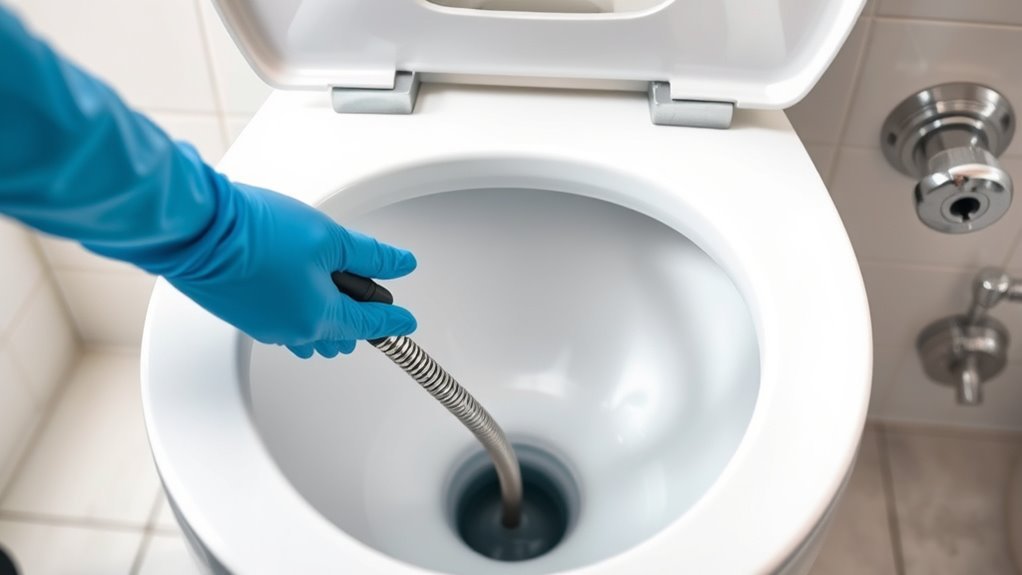
Now, take the toilet auger and insert its curved end into the bowl. Slowly feed it in while rotating it clockwise. This motion helps break up or retrieve the clog stuck inside.
If you feel strong resistance, stop twisting to avoid damaging the toilet. Once you think the clog is cleared, flush the toilet to check if the water flows smoothly.
If the clog is still there, don’t worry. You might need to repeat the process a couple of times. Just keep going until the blockage is completely gone and your toilet is working properly again.
Key Takeaways
- Use a toilet auger with a curved cable and a rubber tip. This helps avoid damaging the porcelain while you reach those deep clogs.
- Make sure to wear rubber gloves and safety goggles. Also, lay down towels around the toilet to catch any spills.
- Insert the auger’s curved end into the toilet bowl. Rotate it clockwise and feed the cable gently until you feel resistance or hit the clog.
- Work the snake back and forth to break up the clog or latch onto it. Then, slowly pull the cable back, removing any debris you catch.
- Finally, flush the toilet to check if the clog is cleared and the water flows normally. If it’s still clogged, you might need to repeat the snaking process.
What Is a Toilet Snake and How Does It Work

Although plungers can handle many toilet clogs, a toilet snake is what you need for tougher blockages.
A toilet snake, also known as a toilet auger, is a flexible plumbing tool designed to clear clogs deep in the drain line that a plunger can’t reach. It features a long, curved metal cable with a rubber-coated tip that safely navigates the toilet’s trap without scratching the porcelain.
When you insert the auger into the toilet bowl and rotate it clockwise, the cable maneuvers through the S-shaped trap to break up or pull out stubborn blockages.
Using a toilet snake is a safer and more effective method than harsh chemicals or makeshift tools. It lets you tackle severe clogs and get your toilet flowing again quickly.
Signs You Should Use a Toilet Auger

If your plunger can’t clear the clog and water rises high in the bowl or drains slowly, it’s time to reach for a toilet auger. These are clear signs that the blockage is deeper than what a plunger can handle.
You might also notice resistance when plunging or repeated clogs despite your efforts. Such signs indicate the clog is located further down the trap or sewer line, requiring a more effective tool like a drain snake.
Unlike a plunger, a toilet auger is designed to reach and break up stubborn blockages that manual plunging can’t dislodge. When your plunger fails repeatedly, using a toilet auger is the best way to clear the clog and restore proper drainage quickly and efficiently.
Essential Tools and Safety Gear

When you decide to use a toilet auger to tackle a stubborn clog, having the right tools and protective gear makes the job safer and more effective. Start with a toilet-specific auger featuring a curved, flexible auger cable, typically 3 to 6 feet long, designed to navigate toilet traps easily.
Equip yourself with essential safety gear: rubber gloves protect your hands from contaminated water and debris, safety goggles shield your eyes from unexpected splashes, and wearing protective clothing prevents soiling your clothes. Before you begin, keep disinfectant, towels, and cleaning supplies nearby for thorough sanitation afterward.
This combination of the right tools and safety gear guarantees you handle the process hygienically and minimize the risk of injury or contamination while snaking your toilet. It really helps to stay prepared—that way, you’re not caught off guard by anything unpleasant.
Step 1: Preparing the Toilet and Work Area
Start by clearing the area around your toilet and laying down towels to catch any water spills. This protects your floor from damage.
Next, follow these steps to prepare:
- Put on protective rubber gloves and safety glasses for hygiene and safety.
- Remove all items from the toilet tank and surrounding area to avoid accidents.
- Check the toilet bowl’s water level—make sure it covers the drain opening but doesn’t overflow.
- Inspect the toilet and water supply to identify the clog location and assess water pressure.
These steps set the stage for using drain snakes effectively. They help prevent mess and make sure you can tackle the clog safely and efficiently.
Getting prepared well makes snaking smoother and keeps your bathroom protected.
Step 2: Inserting and Operating the Toilet Auger
Start by inserting the curved end of the auger into the toilet bowl, making sure the rubber sleeve rests snugly against the porcelain to avoid scratches.
As you rotate the handle clockwise, gently feed the cable into the drain to navigate the trap. Keep steady pressure while turning, and slow down if you feel resistance to prevent damage.
Proper Auger Insertion
Although it may seem straightforward, inserting the toilet auger requires care to avoid damaging your toilet. Start by placing the curved end into the bowl, making sure the rubber sleeve gently contacts the porcelain.
Then, follow these steps:
- Slowly feed the cable into the drain while keeping steady pressure.
- Rotate the handle clockwise to help the cable move smoothly.
- Continue until you feel resistance or reach the clog.
- If you encounter strong resistance, stop to prevent damage.
Maintain a firm grip on the handle throughout. Never force the cable, as this can harm the toilet or the auger.
Proper insertion guarantees the auger navigates the trap effectively, increasing your chances of clearing the clog without causing damage. Just take it slow and steady—you’ll get through it!
Rotating and Advancing
Once the auger is properly positioned with the rubber sleeve against the porcelain, you’ll want to feed the cable into the drain while turning the handle clockwise. Gently rotate the handle to advance the cable through the trap and deeper into the pipe.
As you feed the cable, maintain steady pressure but avoid forcing it. When you feel resistance, keep rotating—the cable is either breaking up the clog or snagging onto it.
Don’t use excessive force, as that could damage the pipe or kink the cable. Once you’ve worked through the clog, slowly retract the cable by reversing the rotation.
Periodically pull back to check for debris and prevent the cable from twisting or binding. This careful rotating and advancing ensures the clog clears effectively without harming your toilet.
Step 3: Cleaning Up and Testing the Toilet
After snaking the toilet, make sure you thoroughly rinse and disinfect your tools to keep things sanitary.
Next, check the toilet by flushing to confirm the clog is gone and water flows smoothly. Don’t forget to manage any leftover water and clean the surrounding area to prevent germs from spreading.
Sanitizing Tools Properly
A crucial final step in snaking your toilet is properly sanitizing your tools and cleaning the surrounding area. This keeps your household safe and helps prevent bacteria buildup.
Here’s how you can disinfect and sanitize effectively:
- Rinse the auger thoroughly with hot water outside the toilet to get rid of debris.
- Use a household disinfectant or a bleach solution to clean all your tools, including the auger and gloves.
- Wipe down the toilet and nearby surfaces with disinfectant wipes or a cloth soaked in disinfectant cleaner.
- Don’t forget to wash your hands thoroughly with soap and water after cleaning to get rid of any germs.
Make sure all the cleaned tools and surfaces air dry completely before you store or use them again.
Following this routine keeps your bathroom hygienic and ready for the next time you need it.
Inspecting Toilet Functionality
Though clearing the clog with the auger is a big step, you still need to test your toilet to make sure it’s functioning properly. After snaking, flush the toilet and carefully inspect toilet performance.
Watch the water level and flow during the toilet flush to confirm smooth drainage and complete clog removal. If the water drains efficiently without rising too high or draining slowly, your plumbing system is back in working order.
This step is essential to catch any lingering issues early. Once satisfied with the drainage, rinse your auger with hot water outside the toilet to remove debris.
Finally, sanitize the toilet bowl and wipe down any tools or surfaces touched during the process to maintain a clean environment and prevent bacterial spread.
Managing Residual Water
How do you handle the leftover water once the auger is out? Managing residual water is key to finishing the job cleanly and safely. Here’s what you should do:
Rinse the auger thoroughly with hot water outside to remove debris and bacteria.
Disinfect the toilet bowl, seat, and surrounding surfaces with a bathroom-safe cleaner.
Flush the toilet to check the water level and ensure steady pressure clears any remaining clog.
Wash your hands with soap and water for at least 20 seconds to maintain hygiene.
Make sure the toilet bowl is clean and the water level returns to normal after flushing. This confirms your snaking was successful and the residual water has been properly managed.
Frequently Asked Questions
Why Won’t My Snake Go Down My Toilet?
Your snake won’t go down because it’s likely too thick, rigid, or not angled properly.
You might be forcing it, causing kinks, or facing clogs blocking the trapway.
Try a smaller, flexible auger with lubrication.
What Are the Steps Involved in Installing a New Toilet?
Don’t bite off more than you can chew—start by turning off the water and removing the old toilet.
Next, prep the flange and place a new wax ring.
Then, set the toilet in place and secure the bolts.
Finally, reconnect the water, test for leaks, and give it a flush to make sure everything’s working right.
I Accidentally Flushed a Washcloth Down the Toilet. What Should I Do?
You should stop flushing right away to avoid any overflow. It’s important to act fast before things get worse.
Next, grab a toilet auger and try to carefully snake the washcloth out. This tool can help you reach and pull it back without causing damage.
If that doesn’t work, you might have to remove the toilet altogether. It’s a bit more work, but sometimes you need to get hands-on to retrieve it manually.
How to Immediately Unclog a Toilet?
You should grab a toilet auger, insert it slowly at an angle, and rotate gently to break up the clog.
If that doesn’t work, try flushing hot water with dish soap to soften the blockage before snaking again.
Conclusion
Now that you’ve tackled snaking your toilet like a pro, you’re basically a plumbing superhero—ready to conquer any clog that dares cross your path! With the right tools and steps, you can save yourself from endless frustration and costly plumber visits.
Just remember to prep carefully, work steadily, and clean up thoroughly. Once you’ve tested your toilet and everything flows smoothly, you’ll feel unstoppable every time a clog tries to strike again!
Snaking a toilet might seem tricky at first, but with practice, it becomes second nature. Keep your plumbing tools handy, and don’t hesitate to snake your toilet whenever you notice slow drainage or minor blockages. This simple step-by-step process can save you time and money, making your bathroom troubles less stressful.
So next time you face a stubborn clog, grab that toilet snake and take charge—you’ve got this!