How to Safely Dispose of Hair Without Flushing It Down the Toilet
You shouldn’t flush hair down the toilet because it clogs pipes and damages plumbing. Hair is tough and doesn’t break down easily, which means it can cause serious blockages.
Instead, collect loose strands with a drain catcher or a towel, then toss them in the trash or compost if possible.
Regularly clean hair traps to keep everything running smoothly. Avoid chemical cleaners that don’t break down keratin, the protein in hair, since they can damage your pipes.
Taking these simple steps keeps your drains flowing and prevents costly repairs.
Keep going to discover more helpful tips on managing hair and caring for your plumbing. It’s easier than you think to keep your bathroom drains clear and your plumbing in great shape!
Key Takeaways
- Collect hair strands immediately after grooming using a disposable towel or hair catcher.
- Place collected hair into a trash bin or compostable bag for proper disposal.
- Avoid flushing hair to prevent plumbing clogs, backups, and water pollution.
- Regularly clean drain traps and use hair catchers to minimize hair entering drains.
- Educate household members on disposing of hair in trash, not toilets, to maintain plumbing health.
Why Hair Should Never Be Flushed
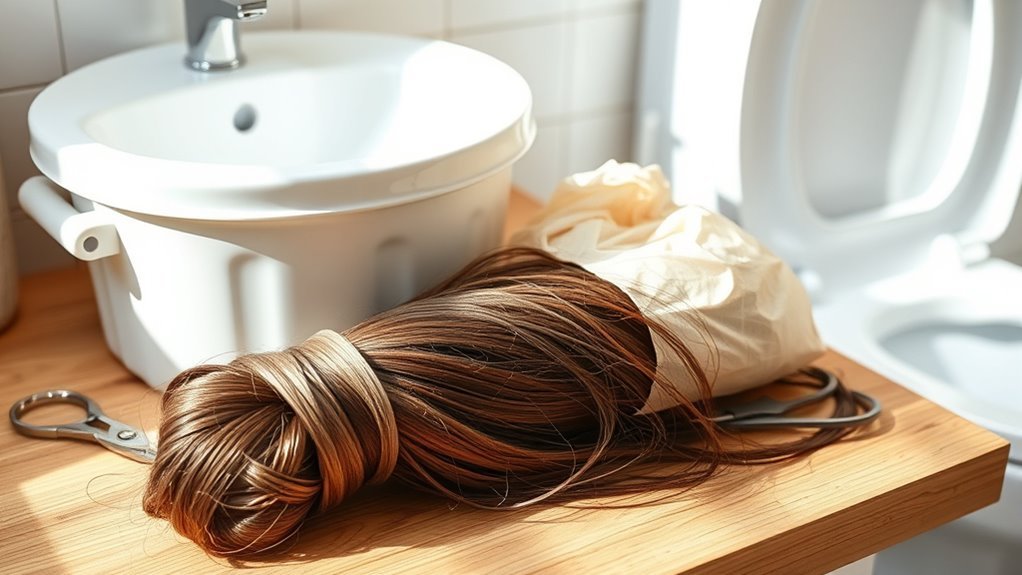
Although it might seem harmless, flushing hair down the toilet can cause serious plumbing problems because keratin, the main protein in hair, doesn’t dissolve in water. When you wash hair into the drainage system, it mixes with soap residue, grease, and other waste, forming dense clogs that resist breakdown.
Flushing hair clogs pipes as keratin won’t dissolve, mixing with grease and soap to block drains.
Unlike toilet paper, hair strands tangle and create blockages that slow drainage and lead to backups. These issues can damage your plumbing and increase maintenance costs.
Beyond plumbing concerns, flushing hair also poses health risks by potentially contaminating water infrastructure. To protect your home’s drainage system and public health, it’s best to dispose of hair in the trash rather than flushing it.
This simple step helps prevent costly repairs and safeguards the environment. So next time, just toss that hair in the bin instead of flushing it away!
Common Plumbing Issues Caused by Flushed Hair
When you flush hair down the toilet, it quickly combines with soap residue and grease to form tough clogs that block your pipes. Hair’s keratin proteins don’t dissolve in water, trapping other waste materials and creating dense blockages.
These blockages can cause slow drains that frustrate daily routines. They also lead to recurring backups that bring unpleasant odors.
Plus, the increased pressure strains your plumbing system. This can cause sewage overflows, which risk property damage and health hazards.
On top of that, expensive repairs might be needed due to pipe damage and leaks. Flushed hair also contributes to Household Hazardous Waste by complicating waste management and plumbing maintenance.
Proper Methods for Collecting and Disposing of Hair
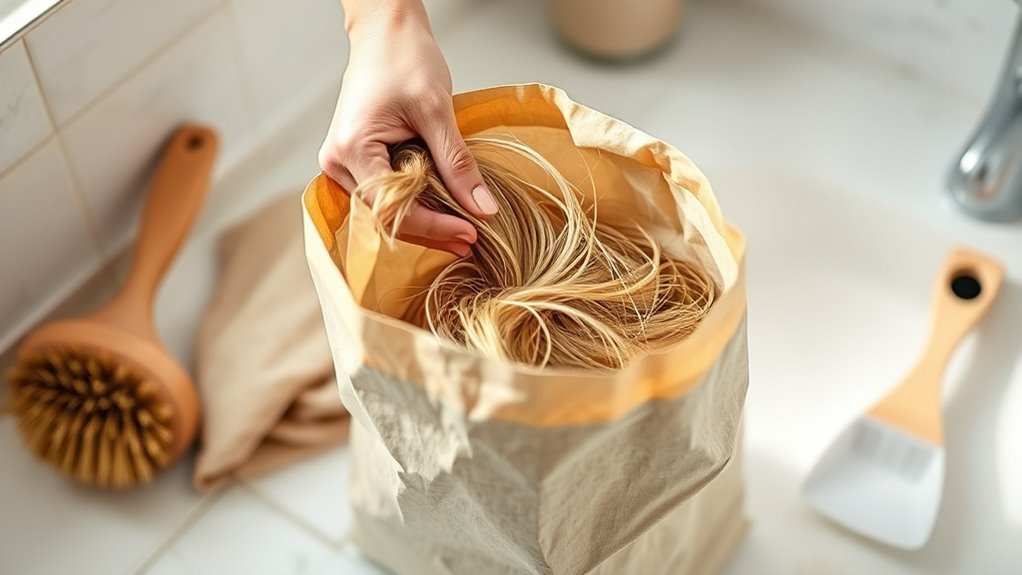
You should collect hair strands immediately after cutting or grooming to keep them from clogging drains. Use a disposable towel or a dedicated container to gather loose hair safely.
Avoid flushing hair down the toilet, and choose proper disposal methods to protect your plumbing. Trust me, it’s way easier to clean up right away than deal with a clogged drain later!
Collecting Hair Safely
Since hair strands can easily scatter and cause clogs, you should collect them using a dedicated trash bin or a compostable bag. This prevents plumbing issues and keeps your space clean.
To collect hair safely, follow these tips:
- Use a labeled container specifically for hair waste to avoid confusion.
- Wrap hair in paper or biodegradable materials to stop loose strands from escaping.
- Empty the hair container regularly to prevent buildup and odors.
- Avoid flushing hair down the toilet, as it clogs pipes.
- Keep your hair collection tools in a designated spot for easy access.
It just makes things simpler when you need them!
Disposal Options Explained
Although hair might seem harmless, disposing of it improperly can lead to clogged pipes and other issues. You should always collect hair using a lint roller or damp cloth and place it in a designated trash bag or container.
Avoid flushing hair down the toilet or drain. If your hair is natural and chemical-free, composting might be an option—check local guidelines first.
Some salons offer recycling programs for natural hair fibers. Here’s a quick guide:
| Disposal Method | How to Use | Notes |
|---|---|---|
| Trash Bin | Collect hair; toss in regular bin | Simple and effective |
| Composting | Confirm natural hair; compost | Follow local compost rules |
| Recycling Programs | Gather salon hair; drop off | Supports fiber reuse |
Proper disposal protects plumbing and helps the environment. It’s a simple way to keep things running smoothly and do your part for the planet.
Avoiding Plumbing Damage
When hair enters your plumbing system, it doesn’t break down and often causes stubborn clogs that lead to slow drains or backups. To avoid costly plumbing damage, you need to collect and dispose of hair properly.
Here’s how you can do it effectively: use a drain catcher or hair trap to catch loose strands. Make sure to gather hair right after showers or grooming before it enters the drain.
Always dispose of collected hair in a trash bin—never flush it down. And don’t forget to clean your hair traps regularly to prevent buildup.
Try to avoid relying on chemical cleaners since keratin, the protein in hair, resists breakdown. Taking these simple steps can save you a lot of hassle and expense!
Environmental Impact of Flushing Hair
You might not realize that flushing hair can clog your plumbing and harm local waterways. Hair traps grease and debris, creating stubborn blockages that lead to sewer backups and pollution.
Hair Clogs Waterways
Since hair is made of keratin, a tough protein that doesn’t dissolve in water, flushing it down the toilet causes clogs in plumbing systems that can lead to backups and expensive repairs. When hair accumulates, it forms blockages that trap grease and soap residue, worsening the problem.
These clogs can overflow, sending hair and debris into waterways, which pollutes the environment and threatens aquatic life. So, to protect both your plumbing and local ecosystems, it’s really important to dispose of hair properly.
Remember these points:
- Hair doesn’t break down in water.
- It clogs pipes and traps other debris.
- Blockages increase the risk of sewer overflows.
- Hair pollution harms aquatic ecosystems.
- Proper disposal keeps waterways cleaner and plumbing safer.
Plumbing and Ecosystem Damage
Although hair may seem harmless, flushing it down the toilet causes severe clogs that can back up your plumbing and lead to environmental contamination.
Hair resists decomposition, trapping waste and chemicals in pipes. These blockages may cause pipe bursts, leaking sewage and polluting water sources.
To clear clogs, chemical cleaners are often used, which harm aquatic life when they enter waterways.
Properly disposing of hair in the trash prevents these issues and protects ecosystems.
| Issue | Cause | Impact |
|---|---|---|
| Plumbing Clogs | Hair accumulation | Sewage backup |
| Pipe Bursts | Blockages | Sewage leaks |
| Chemical Usage | Clearing clogs | Aquatic toxicity |
| Environmental Harm | Sewage and chemicals in water | Water pollution |
| Prevention | Hair disposal in trash | Ecosystem protection |
Signs Your Pipes May Be Clogged With Hair
When your sinks or toilets start draining slowly, it’s often a sign that hair is clogging your pipes. You might also notice other clear indicators that hair buildup is causing blockages:
- Gurgling sounds or backups during flushing.
- Frequent need to use a plunger on the same fixture.
- Unpleasant odors coming from drains, signaling trapped hair and bacteria.
- Slow draining despite multiple attempts to clear the clog.
- Visual inspection or a professional camera check revealing hair obstructions.
If you experience these signs, it’s likely that hair is the culprit behind your plumbing troubles. Addressing this early can prevent more severe blockages and costly repairs down the line.
Tips for Preventing Hair From Entering Drains
To keep your drains flowing smoothly, you should take proactive steps to prevent hair from entering them in the first place. Start by using a hair catcher or drain screen in your shower and sink to trap loose strands before they go down the drain.
Make sure to clean and empty these traps regularly to avoid buildup. If you have long hair, tie it into a knot or braid before washing to minimize shedding.
Also, brush your hair thoroughly outside the bathroom to remove loose strands beforehand. Never flush hair down the toilet; instead, dispose of it in the trash or a compost bin.
These simple habits will save you from costly clogs and keep your plumbing in good shape.
Frequently Asked Questions
Can I Dispose of Hair in the Toilet?
No, you shouldn’t dispose of hair in the toilet. It clogs pipes and causes backups.
Instead, gather your hair after brushing or showering and throw it in the trash. This way, you keep your plumbing safe and working properly.
How to Dispose of Body Oil?
You should wipe off excess body oil with a paper towel and toss it in the trash. Avoid pouring it down drains to prevent clogs.
If you have a large amount, it’s best to take it to a hazardous waste facility. That way, you’re disposing of it safely and responsibly.
What Is the Best Way to Dispose of Hair?
The best way to dispose of hair is to toss it in a sealed trash bag. You’ll avoid plumbing clogs and environmental harm.
If your local compost accepts hair, you can compost it for an eco-friendly option. It’s a great way to keep things green!
Can You Put Hair in a Garbage Disposal?
You shouldn’t put hair in a garbage disposal because it can wrap around the blades and cause clogs.
Instead, collect the hair and throw it in the trash. This way, you avoid damaging your pipes and the disposal unit.
Conclusion
Think of your plumbing like a garden—flushing hair is like tossing weeds into the soil; over time, they choke the roots and block growth.
By collecting your hair instead of flushing it, you’re tending to this garden with care, keeping it healthy and flowing freely.
So, don’t let hair become an unwanted weed in your pipes—dispose of it properly.
By safely disposing of hair, you protect your plumbing from clogs and costly repairs. Remember, hair doesn’t break down easily in water, making it a common cause of blockages.
Instead of flushing hair down the toilet, gather it after brushing or showering and throw it in the trash. This simple habit helps maintain smooth drainage and prevents plumbing problems.
Taking these small steps keeps your home’s plumbing flourishing without a hitch, saving you time and money in the long run.