How to Do Shower Grab Bars Need to Be Installed in Wall Studs Safely
You need to install shower grab bars directly into wall studs to guarantee they hold firmly and support at least 250 pounds safely. This is the key to a secure and reliable grab bar setup that helps prevent slips and falls in the shower.
Using a stud finder is your first step to locate studs behind tile or drywall.
Once you’ve found the studs, drill pilot holes and fasten corrosion-resistant screws right into the center of those studs for maximum strength. Avoid relying solely on wall anchors unless they’re heavy-duty and specifically load-rated for this purpose.
Don’t forget to seal all the penetrations properly to keep your shower waterproof and prevent moisture damage. Keep going, and you’ll discover more tips for secure, long-lasting grab bar installation that keeps your bathroom safe and sturdy.
Key Takeaways
- Locate wall studs accurately using a deep-scanning stud finder and mark their centers before drilling for secure mounting. This step is key to making sure your grab bars stay put.
- Drill pilot holes slightly smaller than corrosion-resistant stainless steel screws, then fully drive screws into studs for strong attachment. Using the right screws really makes a difference in durability.
- Ensure grab bars are fastened directly into wall studs or reinforced backing to safely support at least 250 pounds. This is crucial for safety and reliability.
- Apply waterproof silicone caulk around mounting points and seal drilled holes to prevent water damage and maintain integrity. It helps keep everything dry and secure.
- Regularly inspect and tighten screws, check for corrosion, and reapply sealant to maintain safe, long-lasting installation. Keeping up with maintenance will extend the life of your grab bars.
Understanding Wall Studs and Their Role in Grab Bar Installation

Although it might seem straightforward, locating wall studs is essential when installing shower grab bars because they provide the strongest support. Wall studs are vertical beams, usually spaced 16 or 24 inches apart, that form your wall’s framework.
When you anchor grab bars directly into these studs, you’re ensuring a secure installation that can handle significant weight. Simply mounting grab bars into drywall won’t cut it, as drywall alone won’t support the force and may fail.
Properly anchoring into wall studs not only guarantees durability but also helps meet safety standards, like ADA’s requirement to support at least 250 pounds. So, before you start your installation, make sure you find those studs—they’re the backbone of a safe, reliable grab bar setup.
Techniques for Securely Mounting Grab Bars Into Wall Studs
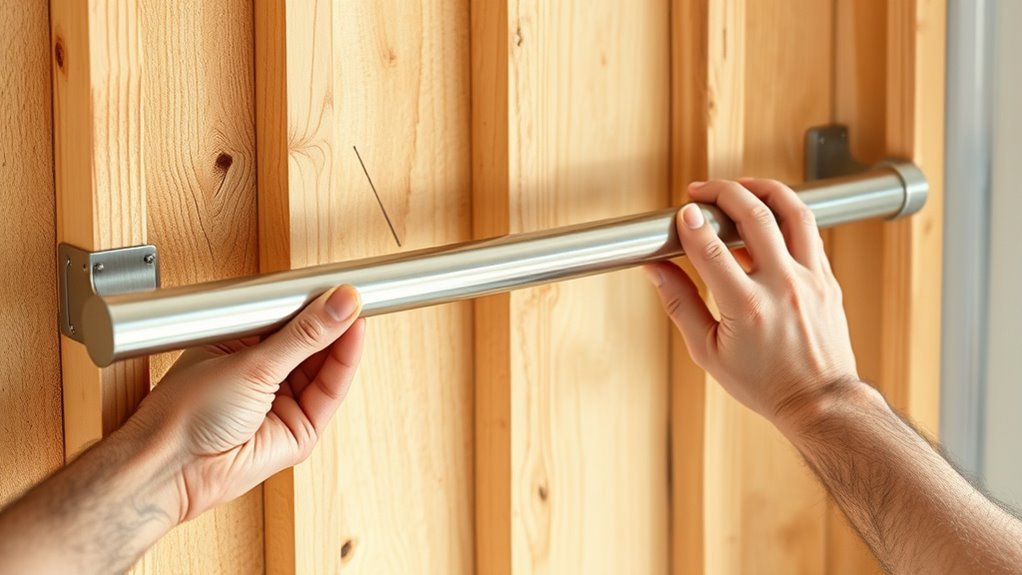
To securely mount grab bars, start by locating wall studs with a stud finder and marking your drilling points accurately. Choose long, heavy-duty screws designed for load-bearing to make certain strong support.
Finally, drill pilot holes and fasten the grab bar tightly into the studs to guarantee stability and safety. This way, you’ll have a grab bar that’s both reliable and safe for everyday use.
Locating Wall Studs
When you locate wall studs accurately, you guarantee your grab bars have the strongest support possible. Start by using a stud finder with deep scanning to detect wall studs behind tile or drywall.
If you don’t have one, tap the wall and listen for a solid thud indicating a stud. Mark the center of each stud with a pencil to ensure secure mounting and avoid damaging surfaces.
| Method | Description |
|---|---|
| Stud Finder | Deep scans reveal exact stud locations |
| Tapping | Solid sound indicates a stud |
| Measuring Spacing | Studs usually 16″ or 24″ apart |
Confirming stud placement before drilling is essential for safe, long-lasting grab bar installation. So, take your time and make sure you’re drilling in the right spot!
Proper Fastener Selection
Since securely mounting grab bars into wall studs is crucial for safety, choosing the right fasteners is important. Use corrosion-resistant stainless steel screws at least 2.5 inches long to ensure a strong hold in the studs.
Avoid relying on wall anchors alone, as they don’t provide the same level of support. Before installing, mark stud locations precisely with a stud finder and level.
Pre-drill pilot holes slightly smaller than your screws to prevent splitting the wood or drywall. Attach the grab bar using multiple screws per mounting flange, tightening each fastener firmly but not over-tightening to avoid damage.
Always follow the manufacturer’s recommendations on fastener type and torque to guarantee a secure installation. That way, your grab bar stays reliable and safe for daily use.
Ensuring Secure Attachment
Securely mounting your grab bars into wall studs demands careful attention beyond just selecting the right fasteners. First, use a stud finder to locate the center of the wall studs and mark precise points aligned with your grab bar’s mounting holes.
To guarantee secure attachment, drill pilot holes slightly smaller than your corrosion-resistant screws—usually 3 to 4 inches long—to avoid splitting the wood or damaging the wall. Next, drive the screws fully into the wall studs, tightening them firmly to prevent loosening over time.
Always follow manufacturer instructions for hardware specifics, and test the grab bar by applying force before sealing or finishing. These steps guarantee a reliable, safe installation that supports daily use effectively.
Alternatives When Wall Studs Are Not Available

If you don’t have wall studs available, you’ll need to explore alternative methods to guarantee your shower grab bars are safely anchored. One effective option is using load-rated wall anchors specifically designed for grab bars, like heavy-duty toggle bolts or molly bolts. These can support substantial weight even in drywall.
Another approach involves installing horizontal reinforcement or blocking behind the wall. This creates a solid backing that ensures secure mounting even without studs. This reinforcement considerably boosts stability and safety.
For tile walls, careful drilling and sealing help maintain the wall’s integrity while allowing anchor installation. It’s always a good idea to consult professionals who can help you select the right reinforcement and load-rated anchors. That way, you can be confident your grab bars will hold firm despite the absence of traditional wall studs.
Selecting the Right Anchors for No-Stud Grab Bar Installations
When you don’t have studs to secure your grab bars, choosing the right anchors is vital for safety. Look for heavy-duty toggle bolts or specialized anchors rated to hold at least 250 pounds.
Make sure to follow the manufacturer’s instructions carefully. This will guarantee proper installation and help prevent damage to your walls. It’s definitely worth taking the time to get it right!
Anchor Types Overview
Because grab bars often need to be installed where wall studs aren’t accessible, choosing the right anchors becomes crucial for safety and stability. You’ll want to use wall anchors specifically designed for load-bearing applications, like heavy-duty toggle bolts or snap toggle anchors, which can support at least 250 pounds.
Proper installation means drilling a hole that matches the anchor’s size, inserting it fully, then tightening it so it expands behind the wall, ensuring maximum support. Always follow the manufacturer’s installation instructions and verify the weight ratings before proceeding.
To further enhance strength, consider reinforcing the wall with blocking or backer boards behind the drywall. Selecting the correct anchor type and installing it properly ensures your grab bar remains secure and safe without relying on studs.
Load Rating Importance
Although installing grab bars without wall studs can be challenging, selecting anchors with the proper load rating is essential for safety. You need wall anchors rated for at least 250 pounds to meet standards like the ADA and ensure the grab bar supports full-body weight.
High-quality toggle bolts or specialized load-rated wall anchors designed for wet environments provide the necessary weight capacity. Always check manufacturer specifications to verify the load rating before installation.
Avoid standard plastic anchors—they typically lack the strength required for no-stud setups. Properly chosen and installed anchors distribute weight evenly, reducing pull-out risk and ensuring long-term safety.
Prioritizing the correct load capacity in your wall anchors is critical to creating a secure, dependable grab bar installation without wall studs. It’s all about making sure your grab bar stays put when you need it most.
Installation Best Practices
To guarantee a secure no-stud grab bar installation, you’ll need to select heavy-duty anchors like toggle bolts or molly bolts rated to support at least 250 pounds. Since you’re not fastening into a stud, choosing wall anchors specifically designed for grab bars is essential for safety.
Always check the load capacity and manufacturer ratings before installation to confirm the anchors meet safety standards. Drill holes precisely the size of the anchors and seal around them with silicone to prevent water damage.
Attach the grab bar hardware firmly into the anchors, tightening securely to avoid loosening over time. When unsure, consult professionals or manufacturer instructions to verify your installation provides the necessary support without relying on a stud.
Safety Standards and Weight Support Requirements for Grab Bars
When installing shower grab bars, you need to guarantee they meet strict safety standards that require supporting at least 250 pounds. To achieve this weight capacity, always mount grab bars directly into wall studs or reinforced backing like horizontal blocking or backer boards.
This ensures the bars can safely bear full body weight without risk of failure. Avoid adhesive-only options, as they don’t comply with safety standards or weight requirements.
Use corrosion-resistant stainless steel hardware with sturdy flanges to maintain strength and durability over time. By focusing on these critical factors—proper anchoring into wall studs, using approved materials, and meeting the 250-pound load requirement—you ensure the grab bars provide reliable support and comply with regulations like the ADA for safe shower use.
Best Practices for Ensuring Long-Term Stability and Safety
Installing shower grab bars securely into wall studs sets the foundation for long-lasting safety. For stud mounting, use a stud finder to locate studs precisely, ensuring secure installation with corrosion-resistant stainless steel screws.
Apply waterproof sealant to all drilled holes to prevent water damage and maintain integrity. Regularly inspect and tighten fasteners, reapplying sealant as needed to uphold stability over time.
| Practice | Description |
|---|---|
| Stud Mounting | Locate studs accurately with a stud finder |
| Secure Installation | Use stainless steel screws into studs |
| Waterproof Sealant | Seal holes with silicone caulk |
| Regular Inspection | Check and tighten screws periodically |
| Maintenance | Reapply sealant to prevent water damage |
Frequently Asked Questions
Do Shower Grab Bars Need to Be Installed in Studs?
Yes, you should install shower grab bars into studs whenever possible to guarantee they’re secure and safe. This helps make sure they can hold the weight without coming loose.
If studs aren’t accessible, don’t worry. Just use heavy-duty anchors or reinforce the wall to prevent accidents and provide strong support. That way, your grab bars will still be reliable and safe to use.
Can Grab Bars Be Installed Without Studs?
Yes, you can install grab bars without studs by using heavy-duty anchors, toggle bolts, or molly bolts.
You’ll want to select anchors rated for at least 250 pounds to guarantee safety and secure support. It’s all about making sure the bar can hold up when you need it most.
What Are the Rules for Grab Bars in Showers?
You need to install grab bars securely into wall studs or reinforced backing. They should support at least 250 pounds, and be placed 33-36 inches high.
Make sure to position the bars near slippery areas. This helps guarantee safety and keeps you compliant with ADA rules.
Are There Shower Grab Bars That Don’t Require Screws?
You can find shower grab bars that don’t require screws, but don’t put all your eggs in one basket—they usually rely on adhesives or suction.
These options aren’t as reliable for full support or fall prevention compared to stud installation.
Conclusion
Installing shower grab bars into wall studs is like anchoring a ship to a sturdy dock—your safety depends on a solid hold. When you secure grab bars into studs or choose the right anchors, you’re building a reliable lifeline in your shower.
Remember, strong installation isn’t just about strength; it’s about trust and stability. Follow safety standards and best practices so your grab bars stand firm, supporting you like a steadfast friend every time you need them.
To install shower grab bars safely, always locate wall studs first. Use a stud finder to ensure you’re drilling into solid wood. If studs aren’t available where you want the bar, opt for heavy-duty anchors designed for bathroom walls.
Proper installation into wall studs guarantees the grab bars can support your weight and prevent accidents. In summary, shower grab bars need to be installed in wall studs safely to provide reliable support and enhance bathroom safety. Taking these steps ensures your grab bars remain sturdy, giving you peace of mind every time you use your shower.