Can You Use Drano in Toilets?
You shouldn’t use Drano in toilets because its chemicals can’t effectively reach clogs due to the toilet’s water trap design.
The harsh reaction can produce heat and fumes that risk cracking porcelain and damaging seals. Plus, the toxic fumes can harm your health if inhaled.
Instead, better methods exist to clear toilet clogs safely. Keep going to find out why Drano isn’t the best choice and what you can do instead.
Key Takeaways
- Drano is generally ineffective for toilets because its chemicals cannot penetrate the water barrier in the toilet trap to reach clogs. The heat and gases produced by Drano’s reaction may damage porcelain, seals, and internal toilet components.
- Plus, using Drano in toilets poses health risks due to toxic fumes and potential chemical burns from splashes. It’s really not worth the risk.
- Mechanical methods like plungers or toilet augers are safer and more effective for clearing toilet clogs. They get the job done without the harsh chemicals.
- If the clog is persistent or pretty severe, it’s best to call a professional plumber. They know what they’re doing and can handle the problem safely without causing more damage.
How Drano Works and Why It Fails in Toilets

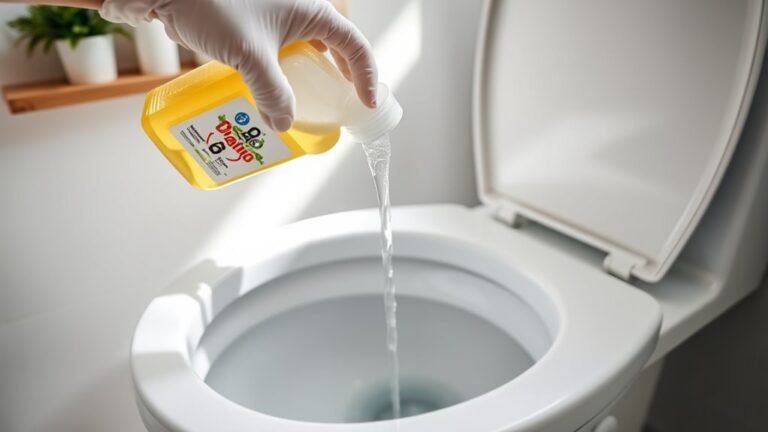
Although Drano is designed to tackle clogs by sinking to the bottom of drains and breaking down organic material like hair and soap scum, it doesn’t work well in toilets. When you pour Drano into a clogged toilet, its thick gel struggles to reach the blockage because of the toilet’s trap design, which holds water in a curve.
This water barrier stops Drano from contacting the actual clog, making it ineffective. Plus, the chemical reaction Drano creates produces heat and gases that can damage your porcelain toilet or seals.
The Unique Design of Toilet Traps

When you flush, the toilet trap’s U-shaped design holds water to block sewer gases from entering your bathroom. This clever shape creates a water pool in the bowl, which interrupts the flow of chemical cleaners like Drano.
Unlike simple sink traps, toilet traps are more complex and harder to access, so chemicals can’t reach clogs directly. Because of this, using Drano in toilets is usually ineffective and might even cause damage.
Instead, you’ll find that a drain snake is a better tool to clear blockages. The snake physically navigates the curved trap, breaking up or removing clogs without relying on chemicals.
Understanding this unique design helps you choose the right method to fix toilet clogs safely and effectively. So, next time your toilet’s clogged, think twice before reaching for chemical cleaners—they probably won’t do the trick!
Chemical Reactions and Potential Damage to Toilets
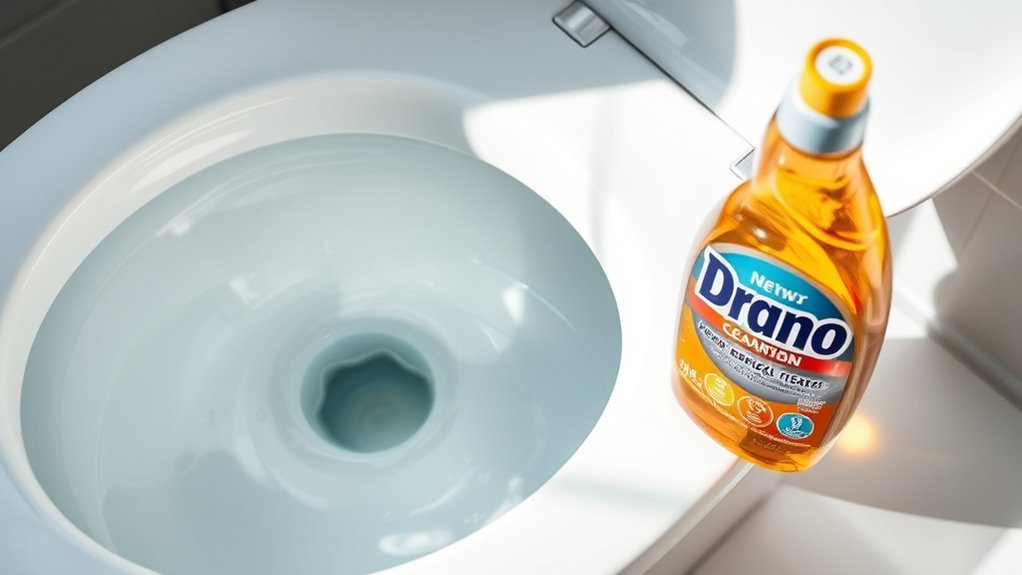
Because Drano’s chemical reaction produces intense heat and gases, it can seriously damage your toilet’s porcelain and internal parts. The exothermic chemical reactions generate heat that may crack or weaken the porcelain, especially in older or fragile toilets.
This heat can also harm internal components like the wax ring or trap, causing leaks. Plus, if the residual chemicals aren’t rinsed away properly, they can corrode or even eat through the porcelain surface.
These chemical reactions don’t just risk physical damage; they create fumes that can be harmful too. But we’ll get into that a bit later.
Health and Safety Risks When Using Drano
Besides risking damage to your toilet, using Drano poses serious health and safety hazards. The harsh chemicals in Drano, like lye and bleach, can cause severe skin burns and eye damage if they come into contact with you.
You also need to be cautious of the toxic fumes it releases, which can irritate your respiratory system, especially in poorly ventilated spaces. Chemical reactions in your toilet may produce dangerous gases such as ammonia, increasing the safety concerns when using Drano.
Mishandling or accidental splashing heightens the risk of chemical burns and respiratory issues. Given these serious health and safety risks, you should think twice before using Drano in your toilet to protect yourself and your home environment.
Effective Alternatives to Chemical Drain Cleaners
Although chemical drain cleaners like Drano might seem convenient, you can often clear toilet clogs more safely and effectively with alternatives. Make sure you try using a plunger with a tight seal first; it generates enough pressure to dislodge minor blockages without risking pipe damage.
Before reaching for Drano, try using a plunger with a tight seal to safely clear minor toilet clogs.
You can also take care by pouring hot water mixed with dish soap into the bowl. This helps dissolve organic waste and loosen debris.
For tougher plumbing issues, mechanical tools like toilet augers or drain snakes safely remove blockages without harmful chemicals.
Regular maintenance, such as flushing only toilet paper and avoiding non-degradable items, reduces clogs and the need for Drano. These methods protect your pipes and health while addressing common toilet clogs efficiently.
When to Call a Professional Plumber
If you’ve tried plungers, hot water, and even a toilet auger without success, it’s time to contemplate calling a professional plumber. Persistent clogs that won’t clear after you use Drano or other chemical cleaners often signal a deeper issue requiring expert attention.
Using Drano in toilets can sometimes worsen blockages or damage your pipes, especially if DIY methods fail repeatedly. When multiple attempts with mechanical tools and chemicals don’t resolve the problem within a reasonable time, don’t hesitate to get professional help.
Licensed plumbers have the right equipment and know-how to safely clear stubborn clogs and prevent further damage. Calling a plumber ensures proper diagnosis and repair, saving you from costly repairs later on.
Frequently Asked Questions
Who Makes Drano?
You’ll find Drano is made by S.C. Johnson & Son, Inc., a well-known company producing various household cleaning products.
They’ve been making Drano since 1923, ensuring reliable solutions for clogged drains across North America.
Pretty impressive, right? It’s been around for a long time, helping folks keep their drains clear and running smoothly.
What Are Drano Products Used For?
Drano products clear clogs in sinks, tubs, and drains by dissolving hair, grease, and soap scum. You’ll pour them into standing water, wait 15-30 minutes, and let the chemicals break down blockages effectively.
It’s pretty straightforward to use. Just pour it in, give it some time, and your drain should be flowing smoothly again!
What Is the Best Thing to Use to Unclog a Bathroom Sink?
You’ll get the best results using a plunger or drain snake to unclog your bathroom sink.
Hot water, baking soda, and vinegar can help with minor clogs, but mechanical tools usually clear stubborn blockages faster.
What Chemical Can You Use to Unclog a Toilet?
Like a gentle breeze clearing fog, you can use enzyme-based cleaners to unclog your toilet safely. They break down waste without harming pipes, unlike harsh chemicals that can damage plumbing and cause more problems down the line.
These cleaners work naturally, making them a great choice if you want to avoid harsh chemicals. Plus, they’re usually safe for septic systems too. So, next time your toilet’s clogged, think about giving enzyme cleaners a try!
Conclusion
You might be surprised to learn that over 60% of plumbing issues get worse when Drano is used in toilets. Since toilets have a unique trap design, Drano often fails to clear clogs and can even damage your porcelain or pipes.
Instead of risking costly repairs or health hazards, it’s smarter to try safer alternatives or call a professional plumber. Protect your home by avoiding the use of Drano in your toilet.
Choosing safer methods not only prevents damage but also ensures effective clog removal without the harsh chemicals that Drano contains. When dealing with toilet clogs, consider using a plunger or enzyme-based cleaners that are designed for toilets.
Remember, using Drano in toilets can lead to more harm than good, including pipe corrosion and cracks in the porcelain. So, skip Drano for your toilet maintenance and opt for safer, more reliable solutions to keep your plumbing problem-free.