How to Use Drano Safely for Toilet Clogs
To use Drano safely for toilet clogs, first make sure your toilet is free of cracks and any foreign objects. This helps prevent damage and ensures the product works effectively.
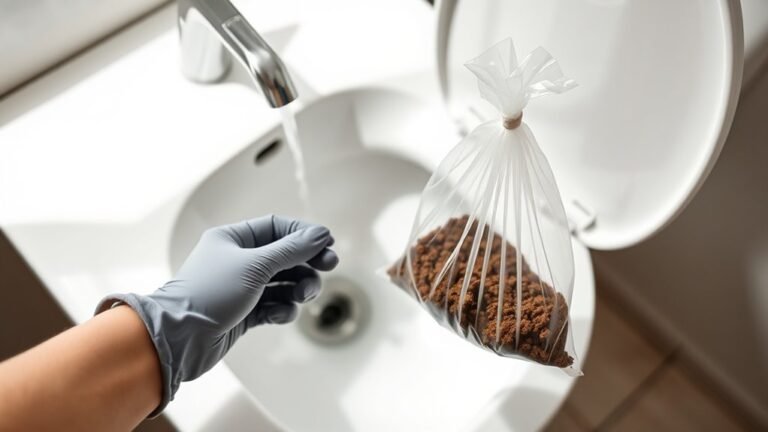
Always wear gloves and goggles to protect your hands and eyes, and ventilate the room well to avoid inhaling fumes.
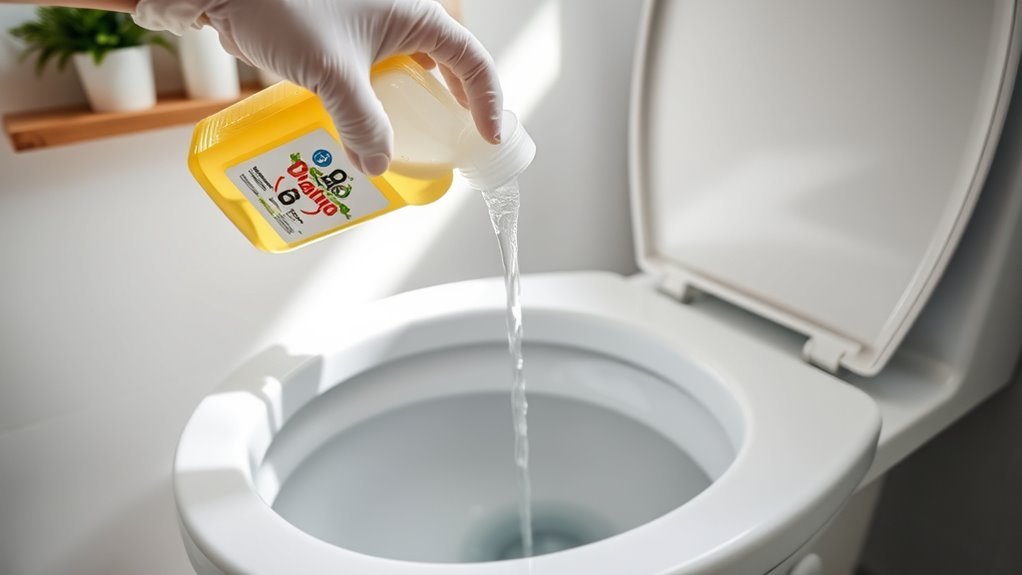
Protect nearby surfaces with towels to catch any spills. Pour the recommended amount slowly and directly into the toilet bowl. Then, wait as instructed—usually 15 to 30 minutes—and don’t flush during this time.
Avoid mixing Drano with other chemicals, as this can cause dangerous reactions. If you’re unsure about using Drano, consider alternative methods to clear your clog.
Keep reading to discover more safe techniques and helpful prevention tips.
Key Takeaways
– Always wear protective gloves and goggles. Open windows and ventilate the bathroom before using Drano in a toilet.
Safety first, right? You want to make sure the air is fresh and you’re shielded from any splashes or fumes.
– Confirm the toilet’s porcelain is crack-free. Also, check there are no foreign objects before pouring Drano.
You don’t want to pour chemicals into a damaged bowl or with something stuck inside. That could make things worse.
– Pour Drano carefully into the bowl. Avoid mixing it with other chemicals or flushing during treatment.
Mixing chemicals can be dangerous, and flushing too soon might mess up the whole process.
– Follow label instructions for wait time, usually 15–30 minutes. Avoid flushing immediately after application.
Patience is key here. Give Drano time to work its magic before you try to flush.
– If the clog persists or the toilet is old, seek professional plumbing help.
Trying to fix a tough clog on your own might cause damage or lead to expensive repairs. Sometimes it’s best to call in the pros.
Understanding the Risks of Using Drano in Toilets
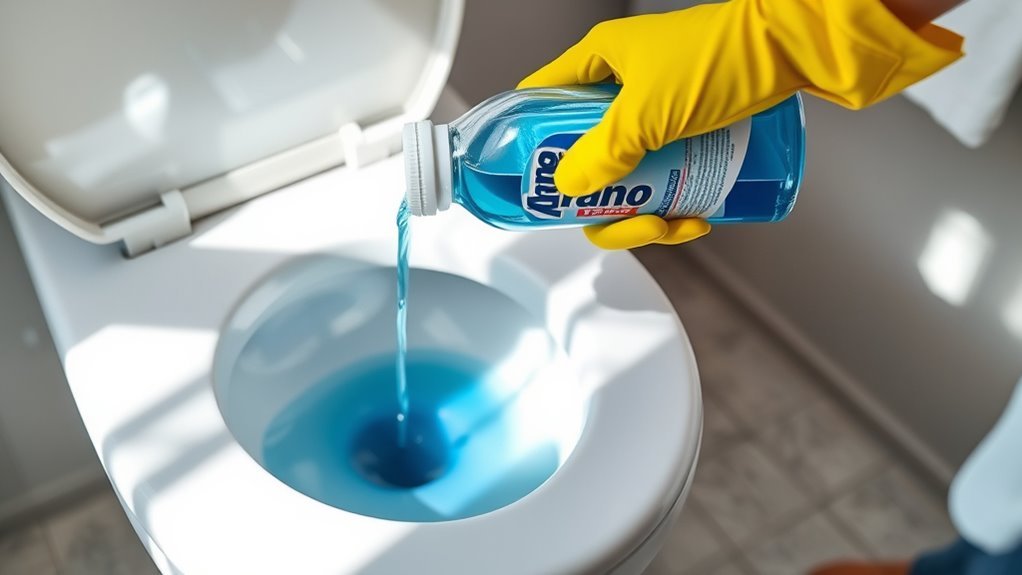
Although Drano is effective for many drains, you should avoid using it in toilets because the intense heat it generates can crack porcelain, especially in older models. Chemical drain cleaners like Drano create a strong reaction that produces thermal shock, risking damage to your porcelain toilets.
This reaction can also harm internal toilet components, leading to expensive repairs. Plus, if Drano doesn’t clear the clog, hazardous chemicals remain in the bowl, posing safety risks and requiring professional removal.
Mixing Drano with other household chemicals can cause dangerous fumes or even explosions, making it unsafe for toilet use. So, to protect your porcelain toilets and avoid costly damage, it’s best to steer clear of chemical drain cleaners like Drano in your toilet.
Preparing Your Bathroom for Safe Drano Application

Before you apply Drano, make sure to ventilate the bathroom by opening windows and turning on exhaust fans.
Put on protective gloves and goggles to keep your skin and eyes safe from chemicals.
Also, clear the area around the toilet to prevent accidental spills on your bathroom surfaces.
Ventilation and Safety Gear
Since Drano contains strong chemicals, you’ll want to prepare your bathroom properly to stay safe during use. Start by ensuring good ventilation—open windows and turn on exhaust fans to keep the air flowing and reduce fumes.
Next, put on your safety gear: always wear protective gloves to shield your hands, goggles to protect your eyes, and long sleeves to cover your arms. These precautions help prevent chemical burns or irritation.
Make sure to remove children and pets from the bathroom to avoid accidental exposure. Before applying Drano, lay down newspaper or a plastic sheet on the floor to catch any spills or splashes.
Following these steps will keep you safe while effectively tackling your toilet clog.
Protecting Bathroom Surfaces
When you’re getting ready to use Drano, protecting your bathroom surfaces is essential to prevent damage from spills or splashes. Start by laying old towels or newspapers around the base of the toilet to shield your flooring from chemical spills.
Next, remove any nearby objects or decorations to avoid accidental damage or contamination during the process. It’s better to be safe than sorry, right?
Maintaining proper ventilation by opening windows or turning on exhaust fans helps disperse fumes, which makes using Drano safer. Don’t forget to wear rubber gloves and eye protection to keep the chemical off your skin and out of your eyes.
Before you apply Drano, double-check that the toilet is free of foreign objects or solid waste that could react with the product. Following these steps ensures effective clog removal while protecting your bathroom surfaces and keeping you safe.
Step-by-Step Guide to Applying Drano in Toilet Clogs
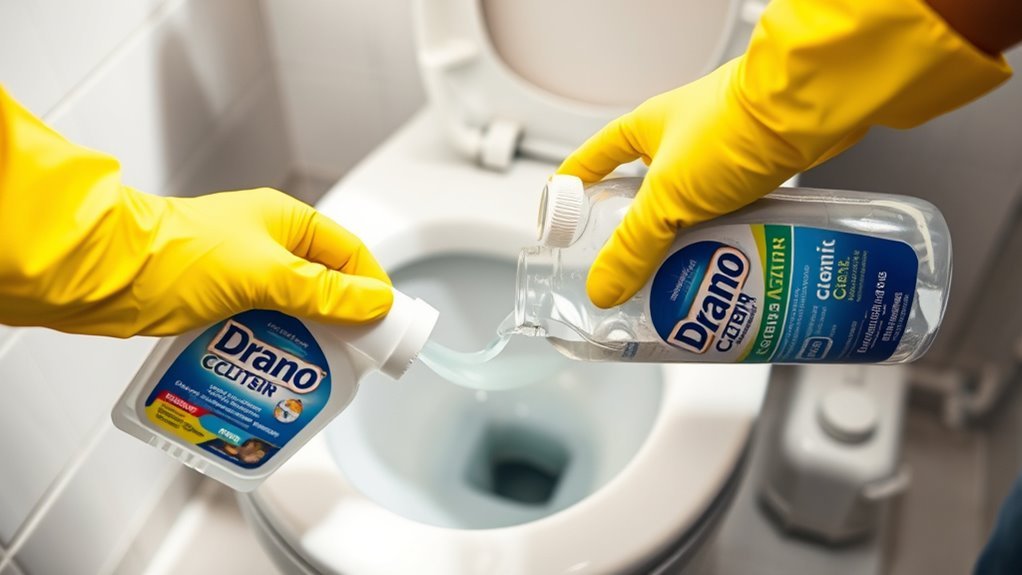
Before using Drano in your toilet, make sure it’s compatible to avoid damage. Prepare the bowl by clearing any standing water and ensuring the area is well-ventilated.
Then, apply Drano carefully, following the instructions to protect yourself and your toilet. It’s always better to be safe than sorry!
Assessing Toilet Compatibility
Although Drano can be effective for many drains, you should carefully assess whether it’s suitable for your toilet. Not all chemical drain cleaners are safe for toilets, so check the label to confirm toilet compatibility.
Many Drano formulas are designed for sinks and may damage your toilet’s porcelain or fail to clear solid blockages. Before use, ensure that the clog isn’t caused by solid objects like toys or wipes, which Drano won’t dissolve and could worsen the problem.
Always read the manufacturer’s instructions for the correct amount and waiting time. Taking these steps helps you avoid damage and increases the chance that the chemical cleaner will effectively clear your toilet clog without causing further issues.
Preparing the Toilet Bowl
After confirming that your toilet is compatible with Drano and the clog isn’t caused by solid objects, you can start preparing the toilet bowl for treatment. First, check the toilet for any cracks or damage, as chemical reactions could worsen these issues.
Next, put on protective gloves and eye protection to shield yourself from hazardous chemicals. Carefully pour the recommended amount of Drano directly into the toilet bowl, avoiding splashes or spills outside the bowl.
Make sure not to mix Drano with any other chemicals, as this can cause dangerous reactions. Once applied, leave the Drano undisturbed for the time specified on the label—usually 15 to 30 minutes—before proceeding with flushing or other removal methods.
Applying Drano Safely
Since using Drano in toilets can be risky and may cause damage, you should consult a plumber before proceeding. If you choose to move forward, follow these safety precautions carefully to guarantee proper clog removal with chemical products:
First, wear rubber gloves and safety goggles to protect your skin and eyes from splashes. Then, slowly pour the recommended amount of Drano into the toilet bowl, avoiding splashing or overflow.
Let the chemical sit for 15-30 minutes, or as directed, to break down the clog effectively. Make sure you never flush or add other chemicals during or immediately after treatment.
Also, ventilate the area well to avoid inhaling fumes. Following these steps minimizes risks and helps you apply Drano safely for toilet clogs.
Alternative Methods to Clear Toilet Blockages Without Chemicals
When you face a clogged toilet, you don’t always have to rely on harsh chemicals. You can eliminate clogs without using Drano by trying a few simple tools and techniques.
Start with a flange plunger and hot water to create a strong seal, then pump vigorously to dislodge the blockage. If that doesn’t work, pour half a cup of dish soap followed by hot water and let it sit for 10–15 minutes to loosen the clog.
A toilet auger is another effective tool; insert it into the bowl and turn the handle to break up or hook the obstruction. For tougher blockages, a wet/dry vacuum can remove standing water and debris safely.
These methods help you clear clogs without damaging your toilet or plumbing. So, give them a try before reaching for those harsh chemicals!
Recognizing When to Call a Professional Plumber
How do you know it’s time to call a professional plumber? When a clog resists your efforts, including using chemical drain cleaners like Drano, it’s a clear sign you need expert help. Don’t wait until the problem worsens.
Here are four key indicators:
- The clog persists after trying a plunger or auger.
- Chemical drain cleaners fail to clear the blockage.
- Multiple fixtures back up, signaling a bigger plumbing issue.
- You notice cracks or damage to the toilet or pipes after attempts to clear the clog.
Complex or deep blockages often require a plumber’s specialized tools and knowledge. Calling a professional ensures the problem is safely and effectively resolved without risking further damage.
Preventive Tips to Avoid Future Toilet Clogs
Although toilet clogs can be frustrating, you can prevent many of them by adopting simple habits and maintenance routines. One of the best preventive tips is to avoid flushing non-degradable items like wipes, paper towels, or sanitary products.
Always use a moderate amount of toilet paper per flush to reduce the risk of blockages. Installing a hair trap in your shower drain can also help minimize hair buildup that might clog your toilet system.
Don’t forget to schedule regular drain cleaning and professional inspections to catch potential issues early. And hey, make sure everyone in your household knows about proper flushing habits.
These small steps will keep your toilet running smoothly and reduce the need to use Drano or call a plumber frequently. Easy, right?
Frequently Asked Questions
Where Can You Use Draino?
You can use Drano safely in kitchen sinks, bathroom sinks, and shower drains. It’s designed to dissolve grease, hair, and soap scum.
How to Unclog a Toilet That Won’t Plunge?
Since 70% of clogs respond to plunging, if yours won’t budge, use a toilet auger to break the blockage gently.
Avoid harsh chemicals; they can damage pipes. Persist with steady pressure for best results.
What Drain Cleaner Is Safe to Use in a Toilet?
You should use enzyme-based drain cleaners for toilets since they break down organic waste safely without damaging porcelain or internal parts.
Avoid harsh chemicals like Drano, and rely on plungers or augers for tough clogs instead. They’re much gentler and safer for your plumbing.
What Causes a Toilet to Keep Clogging?
Your toilet keeps clogging because you’re flushing non-flushable items, using too much toilet paper, or dealing with pipe buildup from hard water or damaged traps.
Also, check venting issues. Poor airflow slows drainage and causes backups.
It’s a good idea to be mindful about what you flush. That can save you a lot of trouble down the line!
Conclusion
So, you’ve bravely tackled that stubborn clog with Drano—just remember, toilets aren’t exactly designed to handle chemical warfare. While it might seem like a quick fix, using harsh chemicals can sometimes cause more trouble than the clog itself.
If your toilet starts acting like a science experiment, maybe it’s time to call in a pro. After all, sometimes the best way to “clear” a problem is knowing when not to mess with it.
Using Drano safely for toilet clogs means understanding its limitations. It’s great for certain drains but can damage your toilet’s plumbing if misused. So, if you face a persistent clog, consider alternative methods or professional help to avoid costly repairs. Remember, the key to effective clog removal is using the right product in the right place—keeping your toilet safe and clog-free.